In 2013, Kola* wrote UTME for the first time. The plan was to study Computer Science at the University of Benin, one of Nigeria鈥檚 foremost universities. Unfortunately, he didn鈥檛 meet the cut-off mark for the course.
Every year, sit for the exam organised by the Joint Admission and Matriculation Board (JAMB) as a prerequisite for applying to any Nigerian tertiary institution. Kola had two choices: try his luck with another university or wait until the following year to rewrite the exam.
鈥淚 couldn鈥檛 stay at home for an entire year,鈥� he says.
He and his parents eventually found a seemingly perfect alternative. They decided that he would attend Igbinedion University in Okada, a town in Edo State, 51 kilometres from Benin.
鈥淚 didn鈥檛 even know the school existed before I wrote UTME, but it was a good alternative.鈥�
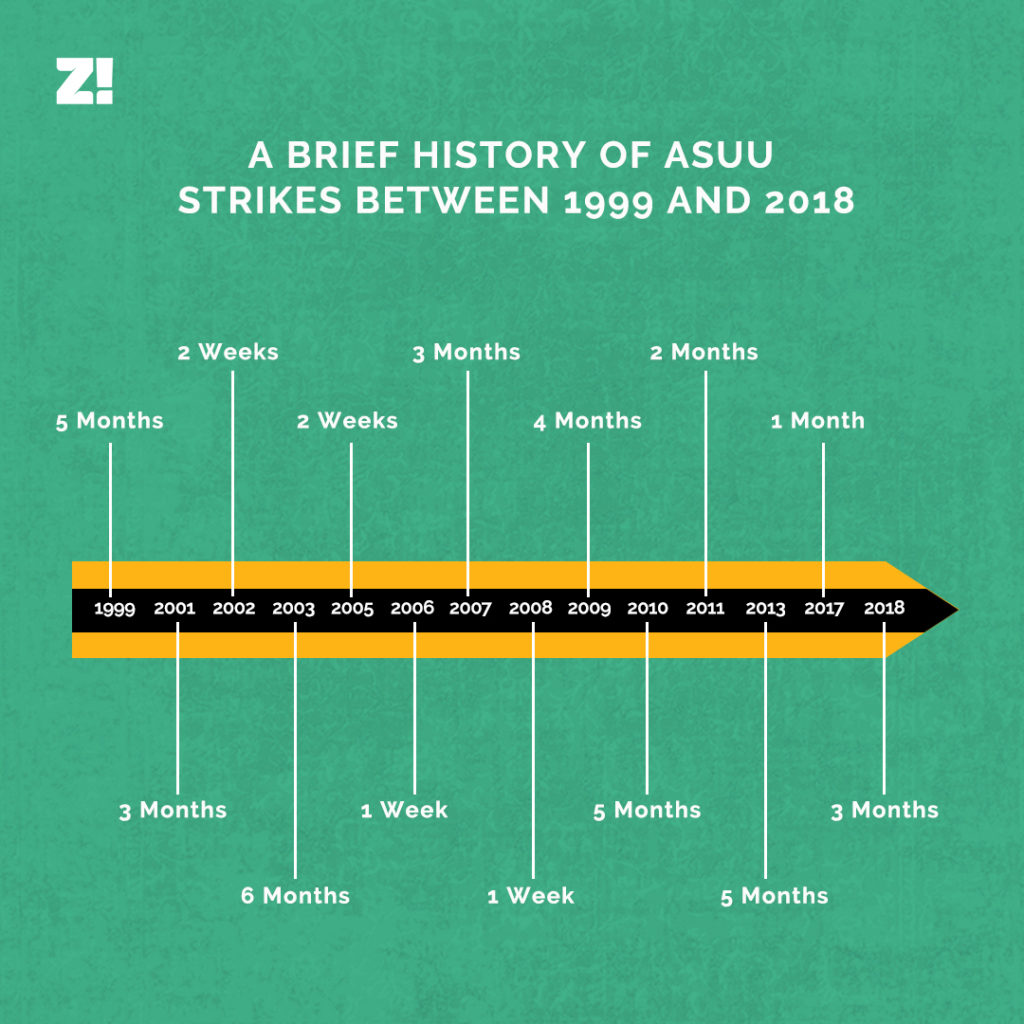
Changing his university of choice from a federal university to a private university wasn鈥檛 a decision he took lightly. For starters, there was the tuition to consider. The average fees at University of Benin was 鈧�42,000 ($108) per session. At Igbinedion, he would have to pay 鈧�800,000 ($2,000). One thing was sure though. He wouldn鈥檛 have to worry about the crippling strikes Academic Staff Union of Universities (ASUU) and other staff unions embarked on every session.
What he didn鈥檛 know at the time was that there was something else he would have to worry about.
He was going back to his hostel after writing an exam in the second semester of his first year when he overheard a group of students talking about sourcing for money to give a lecturer.
鈥淚 was not bothered when I heard this. It wasn鈥檛 my problem. But I got to the hostel and more students were talking about it.鈥�
His curiosity got the better of him, prompting him to ask someone what the fuss was about. He got his answer: lecturers in his university were demanding money from students before they passed them.
They called it
In several universities across the country, students and lecturers are in a symbiotic relationship of exchanging money for marks. More often than not, it happens at the prodding of the lecturer. While it is common and, maybe, not surprising to see this phenomenon play out at public universities, it is strange to see it happen at private universities like Igbinedion University where lecturers are relatively well-paid, aren鈥檛 owed salaries and have higher standards to follow. But if Kola鈥檚 story is anything to go by, this happens there too.
You either pay up or risk failing a course
Bianca*, a graduate of Ambrose Alli University, a public university at Ekpoma, also in Edo State, was certain that she wouldn鈥檛 pay money to any lecturer before she made good grades. She had known about this practice before she started at the school. Her sister had gone to the university and used to talk about it with their dad. At Ambrose Alli University, they called it 鈥渂locking.鈥�
Bianca was so comfortable in her certainty that when a classmate advised her to block a course in her first year, she brushed it off.
鈥淚 always felt that it was for students who didn鈥檛 study and wanted to pass courses by any means necessary.鈥�
She got an F in two courses in her first semester at the university. And instinctively, she realised that she had read the situation wrong. She got the message loud and clear.
鈥淔rom that moment, anytime I heard that there was an opportunity to block a course, I went for it.鈥�
Like Bianca, Kola was also indifferent about it until he failed a course he thought he should have passed in his second year. The truth stared at them 鈥� they had to play ball if they wanted to graduate with their mates.
How does it work?
Richard*, a postgraduate student at Kogi State university 鈥� the same school where he got his undergraduate degree 鈥� told me that the lecturers didn鈥檛 outrightly demand money from students. Instead, they relied on other students, whom they had relationships with, to do their dirty jobs for them.
This is the same mode of operation in Igbinedion University and Ambrose Alli University according to Kola and Bianca respectively: to maintain plausible deniability, the lecturers don鈥檛 handle the transactions directly.
鈥淭he deals are usually brokered by the class reps. They ask you to meet them if you鈥檙e not sure how you would perform in an exam, so you can 鈥榳ork鈥� it,鈥� Bianca says.
She added that students, especially female students try to steer clear of the lecturers for fear of being propositioned.
Students who can鈥檛 pay in cash are expected to pay in kind. For female students, the lecturer may expect sexual favours in return for grades. Male students, on the other hand, are tasked with buying gifts or rendering some form of service to the lecturer.
After the payment stage, the lecturers gather the students into their offices and give them fresh answer sheets to rewrite the exam. Only that this time, they鈥檙e allowed to use their study materials to answer the questions.
Lecturers at Ambrose Alli University don鈥檛 always go through this trouble, especially when they鈥檙e dealing with 100 and 200 level students. They simply upgrade their marks. So, a potential D will change to an A, a B or a C, depending on how much the student paid.
鈥淪tarting from 300 level, the lecturers can鈥檛 stamp grades on scripts indiscriminately anymore because there are external examiners who go through scripts to ensure transparency,鈥� Bianca explains.
The deal is usually upheld, but I wondered what would happen if a lecturer collects money from a student but doesn鈥檛 hold up to his or her end of the deal. Bianca and Kola don鈥檛 think this ever happens. However, Richard said that any lecturer who attempts this is making himself a target of violent attacks from disgruntled students.
鈥淚f a student pays a lecturer and he reneges on his promise, all bets are off. Chances are that the lecturer will be attacked.鈥�
Sorting is not cheap
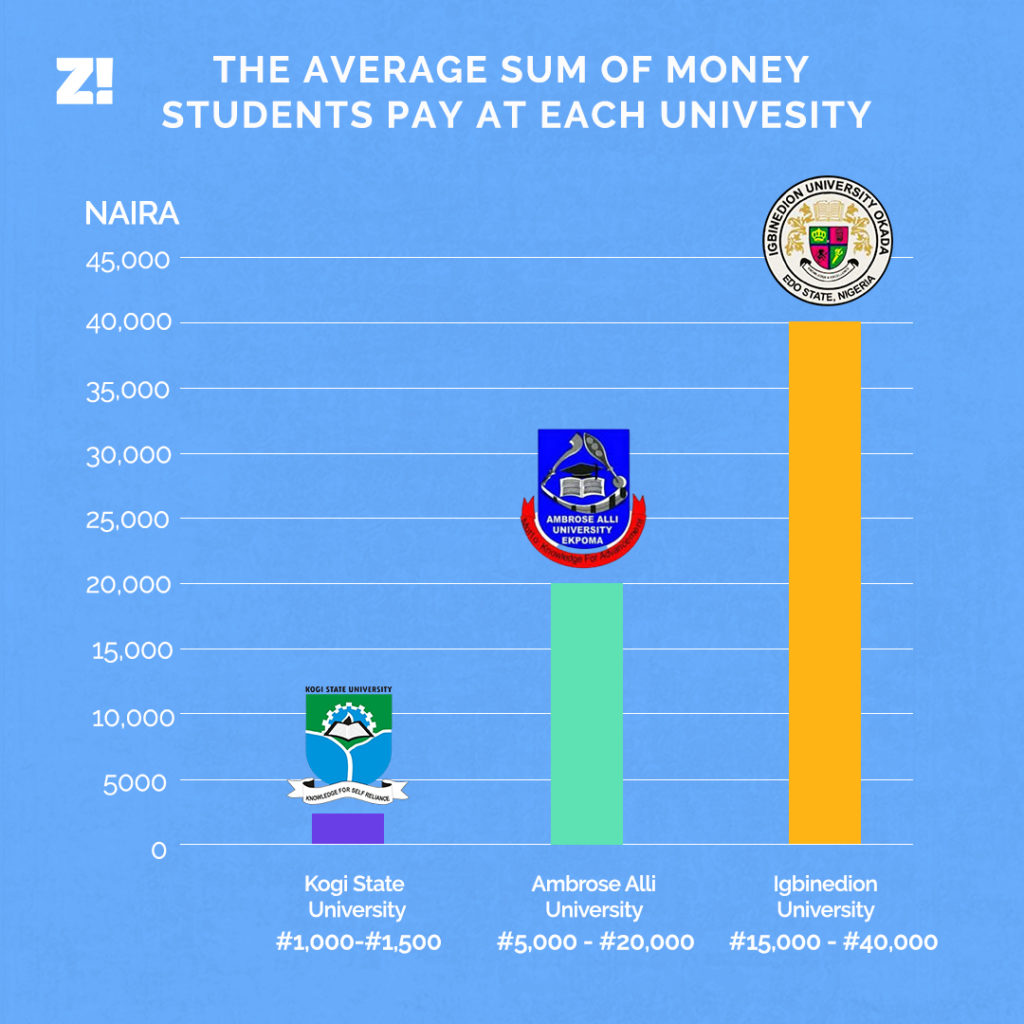
At Ambrose Alli University, students pay between 鈧�5,000 and 鈧�20,000 to sort courses.
鈥淔or a 2-unit course, you pay 鈧�10,000 for an A, 鈧�8,000 for a B and 鈧�5,000 for a C.鈥� For 4 and unit courses, you could pay as high as 鈧�20,000,鈥� Bianca breaks it down.
The minimum wage in Nigeria is currently 鈧�30,000 (about $77), which doesn鈥檛 cut it for a lot of people. Numbers from the suggest that about 40% (representing 82.9 million Nigerians) live in poverty. Yet, Nigerian lecturers don鈥檛 care that most students aren鈥檛 working and many of them struggle to get by.

Things are even more interesting at Igbinedion University. The lecturers rely on their own discretion to set a price tag, although the student鈥檚 relationship with them plays a role here.
鈥淭he average price to sort a course is between 鈧�15,000 and 鈧�40,000. But nothing less than 鈧�15,000. Students pay up to 鈧�90,000 (300% the minimum wage) to sort courses in a semester,鈥� Kola reveals.
The grade a student also gets depends on their relationship with the lecturer. Usually, they settle on a B or a C. A student who sorts his or her course shouldn鈥檛 expect an A.
Students at Kogi State University pay the least amount of money to sort their courses. Richard said that the highest sum of money he ever heard anyone pay a lecturer was 鈧�4,000. The standard charge rests between 鈧�1,000 and 鈧�1,500.
鈥淢ost of the students at KSU simply cannot afford to pay huge sums of money. Even when I wrote final year projects for some of my classmates, it was a struggle before I got someone who agreed to pay me 鈧�17,000. I could have gotten up to 鈧�40,000 at another university.鈥�
You may wonder how the students afford to pay the lecturers, considering that students register several courses every semester. Bianca鈥檚 dad knew about the arrangement and sent money to her every semester.
鈥淢y dad usually sent me about 鈧�60,000 every semester to take care of this thing.鈥�
Kola had to handle it himself for the most part.
鈥淚 dipped into my savings to pay lecturers. It wasn鈥檛 until I got to 300 level that I told my parents about it. It was hard to convince them that it was just the way things were.鈥�
Richard didn鈥檛 partake in sorting, at least not in the conventional sense. He built relationships with the lecturers and leveraged them to get out of paying money.
鈥淚 try to get the lecturer’s attention by asking them questions in class. Sometimes, I visit them at their offices and try to see how I can help them. I made sure to never ask them for favours. Basically, I developed mentor-mentee relationships with them.鈥�
鈥淓veryone knows it happens but no one cares鈥�
Actions have consequences. The authorities responsible for sanctioning the lecturers for their offences are the university management boards. Kola, Bianca and Richard said that if the management knew about the practice, they did nothing about it. One could argue that the management of these schools are not on top of the situation because the students, who are directly affected, keep quiet about it. But it鈥檚 more complicated than it seems. Students are scared of reporting to the authorities for fear of retribution. They cannot know which members of the academic staff to trust.
鈥淔rom the vice-chancellor to the porter, everyone seems to be corrupt. I don鈥檛 think that there鈥檚 a lecturer that hasn鈥檛 tampered with marks. All of them are guilty. Everyone in management used to be lecturers too,鈥� Richard quips.
He noted, with sadness, that students have also contributed to the precarious situation.
鈥淔rom my experience, the proportion of students who are willing to pay money to sort their courses are far greater than those who aren鈥檛.鈥�
This suggests that students also drive the demand and supply model of this practice. Here鈥檚 the thing 鈥� students want to pass their courses and want to get the highest grade possible. However, not everyone wants to put in the work. Conveniently, there鈥檚 another option they could explore: they part with some money and they pass. These kinds of students will not require a lot of convincing before they embrace grade sorting. In fact, they actively seek it out.
The Aftermath
Bianca, Kola and Richard are out of school, but they are still reeling from the experience.

鈥淚 hated giving those fuckers my money,鈥� Bianca fumes. 鈥淓ven though my dad sent about 鈧�500,000 in total throughout my stay at the school, I used about 鈧�130,000 to sort my courses.
Interestingly, Bianca isn鈥檛 even sure of the grade she graduated with.
鈥淢y statement of result states that I graduated with a 2.1. But I found my name under the 2.2 category in the convocation list. At the moment, I鈥檓 not sure of what I actually graduated with.鈥�
While she might not know her final grade yet, she knows how much the whole experience affected her self-confidence and attitude towards learning.
鈥淚t really fucked with me. At a point, I didn鈥檛 see the point of going to classes. But I studied for courses I knew that I didn鈥檛 have to block.鈥�
Kola is also demoralised by the sheer insanity of paying to pass courses, especially in a university where he had to pay about 鈧�800,000 as tuition every year to remain a student.
鈥淢y attitude towards learning took a beating the more I paid to pass courses. The enthusiasm totally fizzled out. If you asked me to mention something useful I gained from the university, I would be at a loss for words.鈥�
Richard is determined to not let the situation haunt him for the rest of his life. He wants to be a part of the system and fight the rot from inside.
鈥淚 want to be a lecturer. I want to bring my own principles and weird ideas to life. I鈥檓 not saying that I will be able to stop grade sorting in its entirety, but my students will know me as the lecturer that doesn鈥檛 partake in it.”
Editor’s note: Names have been changed to protect the identity of the subjects.