At exactly 9:12 p.m on a humid Lagos night, Rukayat (not real name) sat cross-legged on her bed, listening to the sound of raindrops hitting the roof and trickling down her windowpane.
Her thumb hovered over the screen of her phone. She had been replaying the same thought for weeks, a whisper that grew louder with every conversation among her friends and cousins: 鈥�what if using contraception makes me barren?鈥�
She was 23, single, and deeply aware of the consequences of being discovered asking such questions in her community. The shame would be heavy and the judgement unbearable. Yet, tonight, something about the quiet, the hum of her ceiling fan, and the privacy of her room gave her just enough courage to type the words.
鈥淲ill family planning make me barren?鈥�
She expected nothing. Maybe a robotic error message or no reply at all. But within seconds three dots began to dance on her screen, as if someone on the other end was taking her question seriously. Then came the response: a clear explanation of her options, from pills to injectables to implants. It acknowledged the myths she had heard, clarified what was true and what was not, and even shared the location of the nearest clinic if she wanted to talk to a professional.
鈥�For the first time, I felt like someone was listening,鈥� she said. 鈥�I didn鈥檛 feel judged. I could ask anything.鈥�
That exchange was not with a family member or friend. It was with , an AI-powered, multilingual sexual and reproductive health chatbot, a tool designed to quietly rewrite the rules of family planning for a generation caught between cultural silence and digital curiosity.
The crisis of silence
Nigeria has long struggled with low uptake of modern contraception, particularly among adolescents and young women. The statistics tell a sobering story with (mCPR) among married and sexually active unmarried women aged 15 to 19 years stands at just 3.3% according to the 2023 Nigeria demographic health survey (NDHS). This is among the
In addition, the 2023 NDHS shows that the unmet need for family planning among girls in this age group is about 16%, rising to over 21% for women in their early twenties. These figures are not just statistics; they reflect millions of young women facing unintended pregnancies, unsafe abortions, disrupted education, and worsening gender inequality.
Comprehensive sexual and reproductive health education policies exist on paper but are . providers hold biases, openly discouraging unmarried adolescents from seeking contraceptives. Clinics are underfunded and often unwelcoming. , including fear of judgement from family, community, and health providers leaves many young people afraid to even ask questions, and where silence dominates, misinformation fills the gaps. Stories about contraception causing infertility, cancer, or promiscuity spread far more easily than evidence-based answers.
It is in this context that Honey & Banana emerged, a collaboration between , an AI-focused social enterprise; , one of the largest providers of contraceptives and family planning products in Nigeria, and .
What they created is a chatbot that feels like chatting with a friend, yet its answers are medically accuracy and available in : English, Hausa, Yoruba, and soon Igbo and Pidgin.
A different kind of answer
At first, the idea seemed almost too simple. A chatbot? To address something as complex as reproductive health stigma? However, the design was intentional. is one of Africa鈥檚 largest smartphone markets, with over active social media users.
For a young woman who cannot ask a question in class or at a clinic, a private chat window becomes a safe space, a barrier that shields her from judgement and stigma.
From the outset, DSN wanted the chatbot to do more than repeat medical jargon. It needed to feel alive, attuned to slang, and sensitive to cultural nuance.
Users can ask about 鈥�konji鈥�, and it knows they mean being sexually aroused. Users say they are worried about a pregnancy after having unprotected sex and ask, 鈥淢y bobo don score me; I wan handle am,鈥� and it responds not scolding, but with empathy and proceeds to walk users through steps to take, including providing a referral to the nearest health facility to get emergency contraceptives.
When users ask where to get 鈥�better tampoline for knacking鈥� and the AI app replies objectively, providing them with condom brand options, referring them to the closest pharmacy to procure their preferred brand choice.
This localisation, made possible by training the model with data from the DKT call centre, enables the bot to understand the way Nigerians speak, including local slang and street terms related to reproductive health. This is one of its standout features, setting it apart from generic AI models like MetaAI and ChatGPT, which are not as proficient at interpreting these nuanced expressions.
From curiosity to care
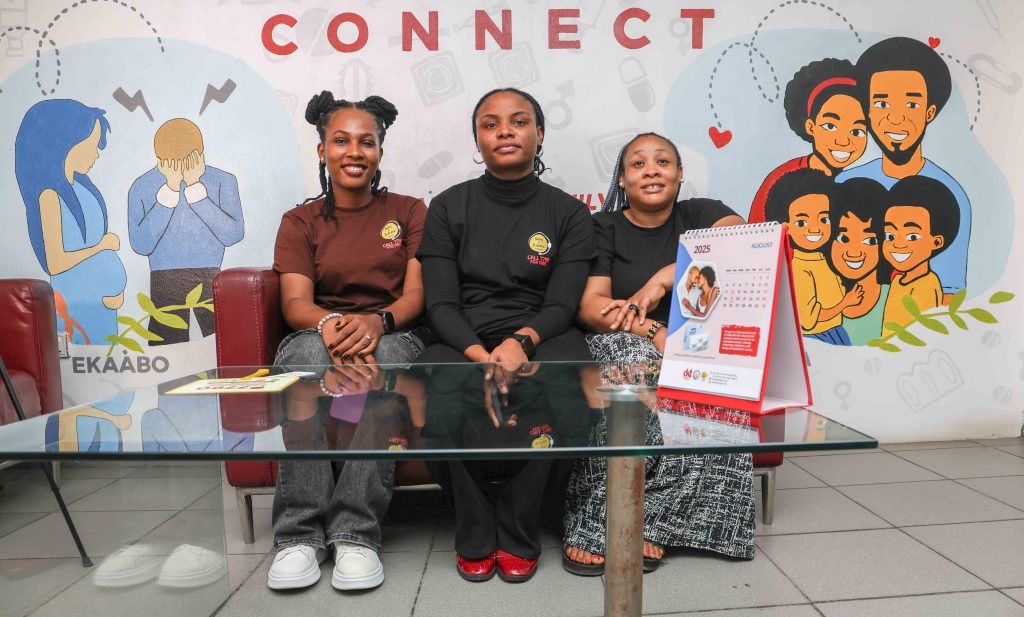
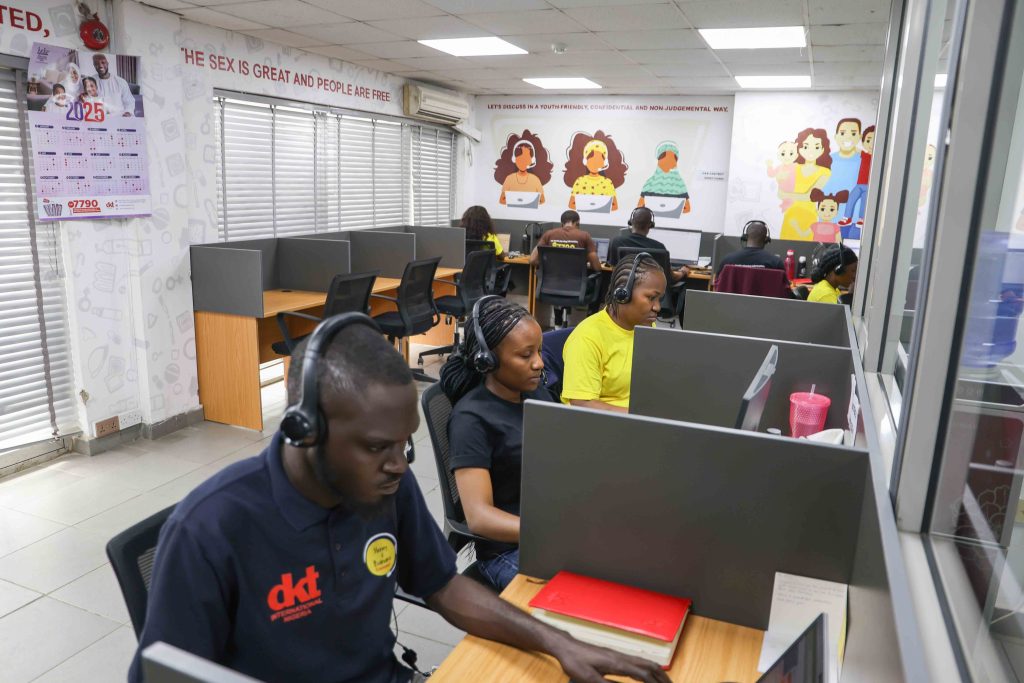
The chatbot is only the front door. Behind it sits a larger ecosystem designed to ensure continuity of care, including a dedicated human call centre that provides family planning counselling and referral services. When a user鈥檚 questions reveal a need for deeper support, the system escalates seamlessly: offering the option to speak with a call centre agent or to be referred to a nearby clinic within DKT鈥檚 network.
Those who consent receive follow-up calls to ensure they got the service they need, and even months later, they might receive check-ins about whether they are still satisfied with the service rendered. In a healthcare landscape where follow-up is often nonexistent, this continuity stands out.
Precious Nwaogbo, who is the Associate Programme Director at DKT, explained that 鈥�access to information is one of the core components to behavioral change. DKT set up the Call center to cater to individuals who want family planning information and stigma free information to allow them make informed decisions on what contraceptive method to use and where to access services. We partner with clinics and maternity homes so that after giving information they know where to access these services鈥�.
The DKT call centre responds to 300 to 500 successful calls each day. 鈥�Last year, 70% of the people who called us had never used modern contraceptives before,鈥� Precious Nwaogbo, who is the Associate Programme Director at DKT, explained. 鈥�That shows we are reaching those who are curious but hesitant, exactly the audience we need to serve.鈥�
The relationship between the chatbot and the call centre is cyclical. The chatbot acts as the initial entry point for many users, directing those who need deeper support to a call-centre agent. In turn, insights from call-centre conversations are continuously used to train and refine the chatbot through context-aware augmentation, ensuring it stays current, recognises local slang, and adapts to emerging family planning service-demand patterns.
DKT鈥檚 approach is not just digital; it is hybrid. Community mobilisers raise awareness on the ground, social media campaigns amplify the message online, the call centre offers family planning counselling guided by standardised protocols.
Together, they form what some experts describe as an 鈥渋ntegrated digital-physical ecosystem,鈥� that mirrors how people live, online, offline, and in constant motion between the two.
For Dr. Olubayo Adekanmbi, DSN鈥檚 founder, the goal was always to blend technology with empathy. 鈥淲e felt that there was a need to create a more personal interactive platform, where you can ask any question at any time,鈥� he said, adding that, 鈥�we saw the need to create an AI platform that leverages the capability of a chatbot to deliver personalised information in a very interactive manner that is also standardised.鈥�
Kenya has also experimented with youth-focused reproductive health apps like ; India with Interactive Voice Response (; and South Africa with . However, Honey & Banana stands out for its blend of AI personalisation, language diversity, and integration with a live provider network. It is not just an information tool; it is an access pipeline.
Nigeria鈥檚 digital divide poses a challenge
Every innovation comes with limits and the remains wide. Many rural communities lack stable internet connectivity, and the cost of data- with average monthly data cost at – can be prohibitive, with over of Nigerians currently living below the international poverty line of $2.15 per day.
Smartphones are widespread, but not universal and for all its promise, Honey & Banana cannot reach women and girls in remote villages with no phone or the young man whose church condemns contraception outright.
The team is experimenting with ways to close these gaps. DSN intends to roll out an IVR version of the service, accessible on basic feature phones without internet. Videos are being compressed to reduce data costs. Community mobilisers continue to fill offline gaps.
鈥�The next phase is designed for people without internet or smartphones. This way, even people with basic 鈥渒palasa鈥� phones [A Nigerian slang for non-browsing phones] can still access the service, making the platform more inclusive” says Olubayo.
However, scalability will require not just ingenuity but sustained funding. Donor support has powered much of the work so far, raising questions of long-term sustainability.
Lessons beyond Nigeria
Even with its limitations, Honey & Banana offers lessons for others trying to navigate the complexities of adolescent sexual and reproductive health in conservative societies. First, speak the language of users, not just linguistically but culturally. Second, blend technology with empathy, recognising that AI is most powerful when paired with human support. Third, design for continuity, ensuring that uptake is not the end but the beginning of a journey. And fourth, harness data responsibly, because every chat query is not just a conversation but a data point that can illuminate emerging myths, shifting needs, and evolving trends.
Already, the platform鈥檚 analytics have proven useful beyond individual care. All conversations with the chatbot are catalogued on the backend for intensive research. These analyses help identify emerging patterns and insights.
The human thread
The stories behind the numbers are often the most powerful. In Abuja, Peace (not her real name) a 27-year-old university student discovered emergency contraception for the first time through the chatbot. 鈥淥verall, the chatbot was easy to navigate. I was able to place a call, and it directed me to a clinic for family planning services, including details on costs,鈥� she shared. 鈥淭he call was completely free, and even when the network dropped, I received a call back for further assistance. It was a pleasant experience.鈥�
For Buchi (not her real name), a married woman who was referred from the call centre to a nearby facility, the experience was equally positive. She praised the quality of care she received when choosing a method. 鈥淭hey asked me what I preferred. I said the three-year method,鈥� she explained. 鈥淭hey also encouraged me to share any challenges I might notice afterward. I鈥檝e had none so far.鈥�
From the other end of the line, Blessing (not her real name), a call center manager in Lagos emphasised how important follow-up is for clients who adopt a method. 鈥淲hen clients realise someone is there to guide them through the use of their preferred method, they are less likely to drop off,鈥� she said.
For her, the most rewarding moments are hearing the relief in a caller鈥檚 voice when they realise they are not alone in their fears and that what they are experiencing is not a death sentence.
A quiet revolution
As Nigeria pushes toward its commitments under , aiming to expand access to modern contraception and reduce unmet needs, the need for innovations like this will only grow.
For Rukayat, the journey did not end with her first chat. A week later, she spoke with a call centre agent who walked her through her options again, this time with even more detail. Two weeks after that, she visited a clinic where she received counselling and chose a method that suited her. She still receives occasional follow-up messages, reminders that her choice matters and that someone is invested in her wellbeing.
鈥�I used to feel like family planning was a secret I was not supposed to know about,鈥� she said. 鈥�Now I feel like it鈥檚 my right.鈥�