鈥淭hanks to these women, we do not pay tax to any British monarch who has no jurisdiction on our God-given corner of this globe.鈥� 鈥� Ndanyongmong H. Ibanga
The last episode of Citizen History, marks the beginning of our historical exploration of Nigerian women and their fight against British colonialism. We started with the Egba Women鈥檚 Tax Revolt. The mass protest lasted three years, with arrests and assaults by British police on Abeokuta market women. Funmilayo Ransome-Kuti was the leader until their demands were met in January 1949.
Egba women were indelible forces of anti-colonial resistance. UNESCO.
Read More Here: The Women鈥檚 War: Egba Women鈥檚 Tax Revolt
This week, we travel back to a similar event in Eastern Nigeria. The year is 1929.
This year, women in southeastern Nigeria rose up in protest against British colonial rule. The uprising, known as the Aba Women’s Riot, was sparked by introducing direct taxation on women.
Scholars have to this protest as West Africa鈥檚 first women鈥檚 revolt.

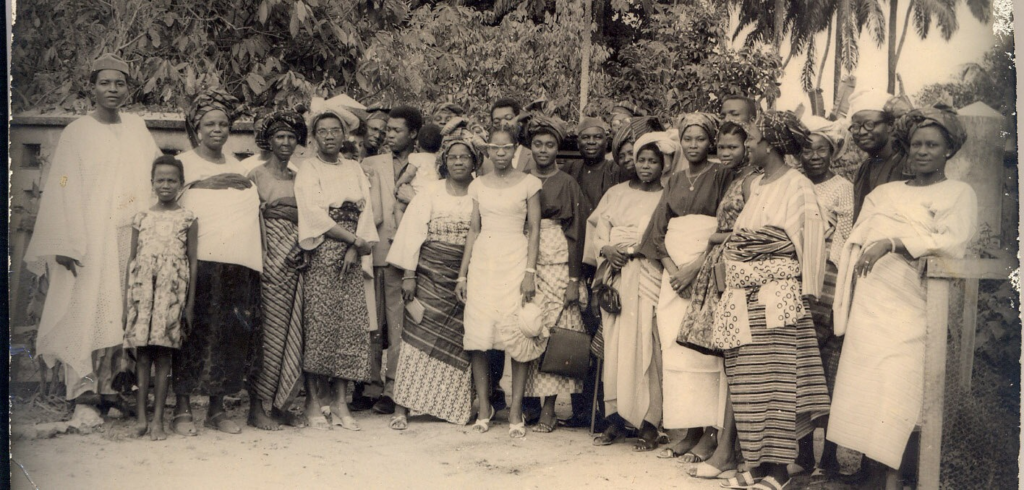
Aba Women of Nigeria in the first half of the 20th century. Archival photograph
What birthed the Aba Women鈥檚 Riot?
Two words come to mind鈥�indirect rule. We鈥檝e discussed indirect rule as the default mode of governance in colonial Nigeria, but for those who missed it, let鈥檚 do a quick recap of the key details:
The Recap
- Indirect rule is a system of administration in the colonies where local leaders鈥攁lthough front-facing with the people and ruling with native politics鈥攄ance to the British tune and follow all orders the administration gives.
- Britain adopted this system of governance because they didn鈥檛 have enough personnel for Nigeria鈥檚 enormous land mass.
- Applying this method in Eastern Nigeria was troublesome because the ethnic groups (Igbo, Ibibio, Efik, Ekoi, Ogoni, and others) did not believe in the existence of one ruler but rather lived in autonomous communities. To solve this problem, the British devised a solution in the form of 鈥渨arrant chiefs鈥�.
- The colonial administration made warrant chiefs tax collectors and used them to conscript youths as unwilling labourers for the colony and oversee judicial matters.
To add more context, men and women had and worked collaboratively. Women could even if married to elite husbands.聽
However, the British colonial officers couldn鈥檛 comprehend this practice. They male-dominated political organisations but ignored female ones. Combined with the extortion of the warrant chiefs, the women eventually became with the increased school fees and forced labour.
Now that we understand the full context, let鈥檚 visit a major event that made everything go from bad to worse for these women鈥攖he introduction of direct taxation.
The Native Revenue Amendment Ordinance of 1927
In April 1927, Lord Lugard a colonial resident, W.E. Hunt, to enforce the Native Revenue Ordinance in the five provinces of East Nigeria.聽
Under this ordinance, taxes or tributes were paid to the 鈥淐hief鈥� (warrant chief). The 鈥淐hief鈥� thereafter was to pay a portion of the tax into the General Revenue and the remainder to the Native Treasury. This was the first official tax documented in the East and was used to prepare the people for direct taxation in 1928.
When direct taxation was first launched, only men were obligated to pay taxes. That is, until an assistant District Officer, Captain James Cook, entered office temporarily in September 1929.
Cook鈥檚 Tax Revision As A Catalyst of War

In September 1929, the serving district officer, Hill, went on leave. Cook was sent as his substitute until November.聽
Upon taking over, he saw the ongoing direct tax roll count as insufficient because it didn鈥檛 include the number of wives, children, and livestock in the household, and he set about correcting this.
With his revision, women now had to bear the brunt of paying taxes alongside men. Combined with their other obligations, was too much for them. The tax for women became effective on October 14, 1929.
This tax revision led to a fight between a widow and a census worker鈥攖he legendary moment that set the tone of the Aba Women鈥檚 War.
The Nwanyeruwa-Emeruwa Fight

Madame Nwanyeruwa [BlackPast]
On the morning of November 18, 1929, a representative of the Warrant Chief of Oloko town, Mark Emeruwa, had one duty鈥攖o of the people for taxation. However, he didn鈥檛 know that the women had already decided not to have themselves or their property counted!聽
This was due to, which affected women鈥檚 trade and production. But let鈥檚 get back to the story.
When Emeruwa reached the house of a widow, Nwanyeruwa, he her to 鈥渃ount her goats, sheep and people,鈥� (which meant that she would be counted based on her people and livestock). In response, if 鈥渉is widowed mother was counted.鈥� This led to a serious fight between the duo, which made Emeruwa choke Nwanyeruwa by the throat.
In anger, Nwanyeruwa went to the market square to meet other Oloko women discussing the issue of taxation and told them about the incident. When they heard of it, they decided they would no longer accept the leadership of Warrant Chief Okugo.
They used palm tree leaves to call nearly ten thousand women from other areas in the Bende District, Umuahia, and Ngwa to protest Okugo鈥檚 resignation and trial.
How Aba Women 鈥淪at on Men鈥� In The Riot
Under the leadership of Nwanyeruwa and the Oloko Trio (Ikonnia, Nwannedia, and Nwugo), the women Okugo鈥檚 resignation by 鈥�.鈥澛�
This is a traditional practice where women chant war songs and dance around a man, making his life miserable until demands are met. The protests eventually spread to the factory town of Umuahia, which sparked fear among the colonial officers.聽
The British District Officer Okugo for two years to appease the women, ending the Oloko riot.

But that wasn鈥檛 the only protest
Another protest began in the Owerri district of Aba. This was after another census taker, Warrant Chief Njoku Alaribe, a pregnant woman during a fight. It eventually led to a miscarriage of the pregnancy.
Like the Oloko women, the women of Owerri would not take the matter lying down.
On December 9, 1929, the women in Njoku鈥檚 compound, during which two women were killed and many others wounded in an encounter with British police. This also led to the arrest and detention of their leader in Aba City.
On December 11, 1929, ten thousand women went to Aba City to protest against their leader鈥檚 arrest. On their way, a British medical officer was driving on the road when he knocked down two protesters, fatally wounding them. These made the women the nearby Barclays Bank and the prison to release their leader. They also the native court building, European factories, and other establishments. According to reports, soldiers and policemen killed about one hundred women in Aba.聽
The Women鈥檚 War then spread to the Ikot Ekpene and Abak divisions in Calabar province. Government buildings were , and a factory was looted at Utu-Etim-Ekpo on December 14. These left eighteen women dead and nineteen wounded. Thirty-one dead and thirty-one wounded women reportedly died on December 16 at Ikot Abasi near Opobo, also in Calabar province.
The Aftereffect
Until the end of December 1929, when colonial troops order, ten native courts were destroyed, houses of native court personnel were attacked, and European factories at Imo River, Aba, Mbawsi, and Amata were looted. Women attacked prisons and released prisoners.
When order was restored, the colonial troops about fifty-five women. The last soldiers left Owerri on December 27, 1929, and the last patrol in Abak Division withdrew on January 9, 1930. By January 10, 1930, the revolt was regarded as successfully
The Rise of Female Eastern Movements
The position of women in society was. Once only allowing the wives of elite husbands to participate in politics, the protests allowed women of lesser backgrounds to join native politics. Women were appointed to serve in native courts; some even became warrant chiefs.
The Aba Women鈥檚 Riot also many other female movements in the 1930s and 1940s. This includes the Tax Protests of 1938, the Oil Mill Protests of the 1940s in Owerri and Calabar Provinces, and the Tax Revolt in Aba and Onitsha in 1956.