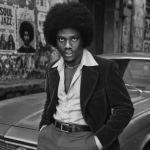
President Bola Tinubu had just turned 40 when his political career started in 1992, an era when Nigeria鈥檚 democracy was far from stable. Now, at 73, after what many would describe as a controversial journey, Tinubu is the President of Nigeria under democratic rule.

Today, Nigeria commemorates Democracy Day, and while it鈥檚 normal to ask how democracy is faring under different Presidents, that question is particularly interesting during Tinubu鈥檚 time as president because of his history.
Tinubu鈥檚 ties with Nigeria鈥檚 democratic struggles
Tinubu his political career in 1992, when he joined the Social Democratic Party (SDP) and was elected into the Senate in December of the same year, as the Senator representing Lagos West district. Barely six months after Tinubu鈥檚 election, the events that would shape Nigeria鈥檚 democratic journey were set in motion, and he would somehow find himself in the mix.
On June 12, 1993, a charismatic businessman, Moshood Kashimawo Olawale (MKO) Abiola, contested for the position of President under the SDP. Early results from the National Electoral Commission (NEC) that Abiola had overwhelmingly won, but the military leader, General Ibrahim Babangida, the election, preventing the announcement of the final results that would have seen Abiola declared president.
The surprise move threw Nigeria into chaos. Pro democracy protests erupted in the country, reportedly leading to the death of . With tensions as high as ever, Babangida resigned in August 1993 and appointed Ernest Shonekan to head an Interim National Government pending another election, but this barely lasted because in November of the same year, General Sani Abacha orchestrated a coup and .
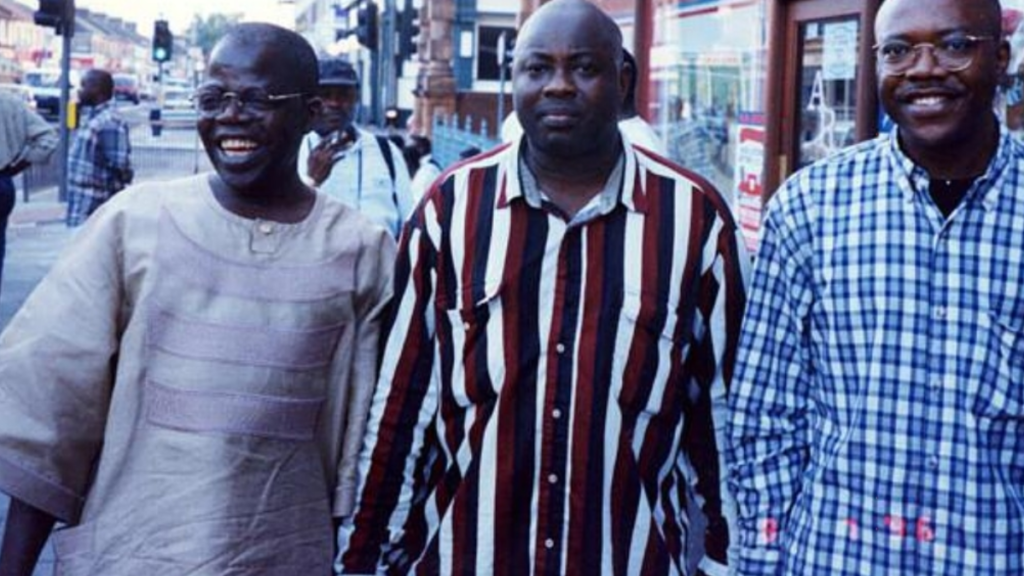
Shortly after this, a pro-democracy movement called the National Democratic Coalition (NADECO) was formed to get the government in power to acknowledge Abiola鈥檚 victory at the June 12 polls; Bola Tinubu was a member of this group.
Naturally, Abacha did not like what NADECO stood for, so he went after its members, including the young Tinubu. Fearing for his life, Tinubu fled Nigeria and in 1998 after Abacha鈥檚 death.
As Nigeria transitioned back to democratic rule in 1999, Tinubu made the crossover too, winning the election to become the governor of Lagos State till the end of his two-term tenure in 2007.
But even after his time as governor of Lagos State, Tinubu remained influential in the country鈥檚 politics. In 2013, Tinubu, among other stakeholders, felt that Nigeria鈥檚 democracy was not thriving under the People鈥檚 Democratic Party (PDP), which had been in power since 1999. So, like in 1994, Tinubu again became part of a group that sought to influence Nigeria鈥檚 democracy, except this time, it was a political party.

And so, the Action Congress of Nigeria (ACN), Congress for Progressive Change (CPC), the All Nigeria People鈥檚 Party (ANPP), and the All Progressive Grand Alliance (APGA) to form the All Progressives Congress (APC), which won the 2015 Presidential election and has remained Nigeria鈥檚 ruling party to date.
Tinubu believed APC would make Nigeria鈥檚 democracy healthier, or at least, that was what he told everyone who cared to listen. In May 2015, for instance, while former President Muhammadu Buhari was being sworn into office, Tinubu told Nigerians in the most elaborate words possible that they were about to experience democracy like no other.
鈥淢ay 29, 2015, shall be recorded in our history as the moment when democracy finally was allowed to participate in Democracy Day,鈥� he .
鈥淭he reason for this is the legion of average Nigerians who voted to make this happen. Should any of you wish to see a true hero of democracy, don鈥檛 fret. Just look in the nearest mirror. The celebrations prior to this were false showings; they were the commemoration of wrong.鈥�
鈥淟et it be said that on this day, the nation consecrates itself to the ideal that governance is the sacred instrument of the people and never again shall it be the exclusive recreation of a select few. No longer shall Democracy Day be a shallow ritual. Henceforth, it is a living truth,鈥� he said.
A decade later, and a few elections later, Bola Tinubu is now the President of Nigeria. It鈥檚 only right to ask: is the country鈥檚 Democracy Day still a 鈥渟hallow ritual鈥� or 鈥渁 living truth?鈥�
[newsletter type= z-daily]Is Nigeria鈥檚 democracy healthy under Tinubu?
The answer to this question is highly dependent on who you ask. People like the President鈥檚 son, Seyi Tinubu, and the Senate President, Godswill Akpabio, will likely tell you the President is the best thing that has ever happened to the country鈥檚 democracy, but you might want to pause for a moment, examine some crucial events under Tinubu, before you take their word for it.
The not-so-seperated powers

One way many countries around the world maintain their democracy is through a practice called the This principle ensures that power is not controlled by one arm of government. It does this by allowing all three arms of the government 鈥� the legislature, judiciary, and executive 鈥� to exercise their powers without any arm overshadowing or seizing the power of the other.
Nigeria practices this principle, and ordinarily, this would mean that the legislative arm of government (made up of lawmakers in the Senate and House of Representatives) should be helping the executive (made up of Presidents, governors, and the like) stay in line. However, under Tinubu, the legislature has almost been absorbed into the executive branch. This near absorption has resulted in a number of things, which will be listed below:
The hurried approval of the national anthem bill

In October 2024, Nigerians woke up to a new national anthem. This was mainly because of the express approval given to the bill鈥攂oth the House of Representatives and the Senate approved the bill within one week, hardly giving Nigerians a say in the matter. 鈥淭he lack of public engagement also doesn鈥檛 show a legislature able to provide necessary checks on the executive,鈥� Political analyst Afolabi Adekaiyaoja to Financial Times, pointing out the lack of accountability.
The hurried approval of a $2.2 billion loan
Nigerians had barely recovered from the shock of the anthem change when the National Assembly a $2.2 billion loan request from Tinubu, a record 48 hours after he made it, drawing criticisms from stakeholders.
鈥淚t鈥檚 quite unfortunate that the lawmakers give blanket approval to the president鈥檚 demands. They have become more than rubber stamps by ensuring they side with the president at all costs,鈥� The Executive Director of the Civil Society Legislative Advocacy Centre, Auwal Rafsanjani, , pointing out that the interest of Nigerians must come first.
The ratification of the state of emergency in Rivers State

The biggest attack on Nigeria鈥檚 democracy under the Tinubu administration might just be the current state of emergency rule in Rivers State.
On March 18, 2025, President Tinubu declared a six-month-long state of emergency in Rivers State, suspending its governor, Sim Fubara, Deputy governor, Ngozi Odu, and the entire Rivers assembly. He appointed Vice Admiral Ibot-ette Ibas (rtd) as the state鈥檚 military administrator, pending the end of the six-month period.
Tinubu said he made the declaration to solve the political unrest in the state (which coincidentally had his ally, Nyesom Wike, in the mix). He cited Section 305 of the 1999 Constitution, which allows a president to declare a state of emergency in cases of national danger, disaster, or threats to public order and safety. This much is true, except that what happened in Rivers at the time did not constitute a condition warranting such a heavy declaration.
According to the Nigerian constitution, a President is only allowed to declare a state of emergency in cases of war, major security threats, breakdown of public order and safety, natural disasters, the inability of the government to function properly, or a direct request from a governor 鈥� none of these things were true for Rivers State. Even if they were, the President is still not empowered by the Constitution to suspend a democratically elected governor (and elected officials), yet he did. This action, according to the Nigerian Bar Association (NBA), was an 鈥渦nconstitutional usurpation of power and a fundamental breach of Nigeria鈥檚 federal structure.鈥�
While this happened, Nigerians looked to the National Assembly to steer Tinubu鈥檚 hands towards due democratic processes, but the lawmakers two days later.
The clampdown on press freedom
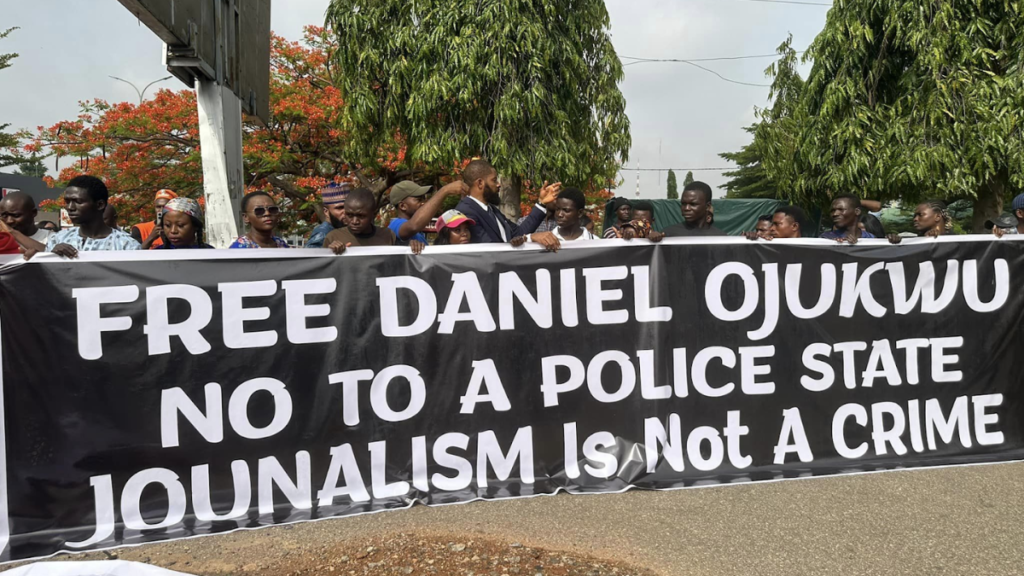
In 2023, while he campaigned for the position of President, Bola Tinubu promised to respect press freedom if elected, but that has not been the case. Tinubu鈥檚 two years in office have been marked with a clampdown on the very people he swore to protect.
In 2024, the Committee to Protect Journalists (CPJ) that about 56 journalists in Nigeria were attacked while they covered the #EndBadGovernance protests.
A separate 2024 report from the International Press Centre (IPC) that over 65 journalists and two media houses were attacked in 40 different incidents between January and September of 2024 alone. The report showed that government forces were responsible for the majority of the attacks. The nature of the attacks recorded by the IPC ranged from physical assault, confiscation of equipment, vandalism, and abductions.
One of the victims of these attacks was Segun Olatunji, who was abducted on March 15, 2024, blindfolded and flown to Abuja aboard a military aircraft because he published a story connecting Tinubu鈥檚 Chief of Staff, Femi Gbajabiamila, to a $30 billion loot.
The military first denied abducting the journalist, but bowed to pressure and him 14 days later.
鈥淚 was not interrogated until three days after my arrest and detention by the DIA in Abuja in an underground cell, bound with hand and leg cuffs, which were not loosened until the right part of my body was becoming numb. Up till now, I still feel the numbness on my right hand and leg,鈥� Olatunji , weeks after his release.
Olatunji, who was still an editor of online news outlet FirstNews at the time, resigned weeks later due to safety concerns. The news outlet apologised to Gbajabiamila, but Olatunji Foundation for Investigative Journalism (FIJ) in a May 30 interview that he stands by the story he wrote.
Other journalists who suffered similar attacks include FIJ reporter, Daniel Ojukwu who in May 2024, by the Intelligence Response Team (IRT) of the Inspector General of Police (IGP), Premium Times reporter, Yakubu Mohammed whom policemen until he sustained a head injury, and many more journalists.
A general clampdown on freedom of speech

Journalists are not the only group that has undergone human rights abuses under the Tinubu administration; Nigerians in different capacities have had their rights to free speech eroded by Nigerian authorities, and these abuses have been carried out mainly through a particular section of the Cybercrime Act鈥� section 24.
Though the Cybercrime Act was first signed into law by former President Goodluck Jonathan in 2015, Tinubu amended it in 2024 with particular emphasis on section 24, which criminalises messages (or other types of content) sent via a computer system that are a threat to life, are 鈥淧ornographic: or he knows to be false, for the purpose of causing a breakdown of law and order.鈥�
Though some that the latest amendment has eliminated certain ambiguities and made the Act less dangerous, others disagree. The 鈥淎ct is ambiguous with no clear definition, which makes it easy for it to be weaponised to target journalists and dissenting voices in the country,鈥� Nigerian lawyer, Ayisat Abiona, African Arguments in 2024.
Nigerian citizens whose rights have been eroded through this Act include a nurse, Olamide Thomas, who was tracked down and arrested in December 2024 after she made a video cursing President Tinubu, his children, the Inspector-General of Police, Kayode Egbetokun, and Force Public Relations Officer Muyiwa Adejobi. She had made the video back in October after she, among other #EndSARS commemorators, was teargassed by the Police.
A TikToker, Olumide Ogunsanwo, popularly known as Sea King, was arrested for similar reasons. Sea King made a video cursing President Tinubu, Lagos Governor Babajide Sanwo-Olu, Inspector General of Police (IGP) Kayode Egbetokun, and the Police force itself.
Other Nigerians have also been punished for different reasons using this same Act.
The one-party system allegations

Over the past months, there has been an undeniable wave of mass defections across opposition parties鈥攖he People鈥檚 Democratic Party (PDP) and politicians from the New Nigeria People鈥檚 Party (NNPP), Labour Party, have been moving to the ruling All Progressives Congress (APC).
The loudest yet has been the defection of the Delta State Governor, Sheriff Oborevwori, his predecessor and former PDP Vice Presidential candidate, Ifeanyi Okowa, from the PDP to the APC.
On the day he officially defected, Oborevwori made a jaw-dropping revelation: 鈥淎ll our members in the Delta State House of Assembly have agreed to defect. The state exco, council chairmen, councillors, LG chairmen, and others are all moving to the APC,鈥� he
While Nigerians still reflected on the implications of this defection, the governor of Akwa Ibom State, Umo Eno, announced in May that he would be defecting from the PDP to the APC. In what may have been an attempt to carry out a similar defection as his Delta State counterpart, Eno made it compulsory for his cabinet members to join him.
鈥淚 am told that some of you are saying that you will not come, you are free, absolutely free not to join me, but you won鈥檛 be in my state executive council.
鈥淪o, you better just be prepared to resign the day I announce that I鈥檓 moving because you are an appointee and your loyalty is to me. You can鈥檛 be in my cabinet and play anti-party, it鈥檚 not a threat, it is what it is. I won鈥檛 beg you to come, you should normally not even expect it,鈥� he told his appointees.
Eno officially on June 6, and so far, only one cabinet member has . It remains to be seen what the rest have decided.
While defections are quite normal in politics, especially in Nigeria, many stakeholders have found these ones to be particularly disturbing and fear they could plunge the country into a one-party system, ultimately killing the country鈥檚 democracy.
Although concrete proof of the true motivation behind the mass defections has not been provided, politicians, activists, and academics the defectors are driven by bribery, coercion, and outright threats. In a statement released on April 27, an 18-person group made up of activists and academics shared their fears for Nigeria鈥檚 democracy.
鈥淣igeria risks returning to a culture of impunity, where the absence of opposition breeds arrogance and unaccountable governance,鈥� the group鈥檚 statement read in part.
On May 22, Tinubu was quoted as , 鈥淭here鈥檚 nothing wrong with a one-party system.鈥� In the same breath, he said that the APC is not pushing for a one party system because
The APC also dismissed fears of a one-party system, but a recent statement from the President鈥檚 former aide tells a different story.
After he resigned on June 8, Aliyu Audu, the former Senior Special Assistant to President Bola Tinubu on Public Affairs, released a statement criticising Tinubu鈥檚 approach to opposition and dissenting voices.
鈥淚f we now begin to silence or crush opposition simply because we have the upper hand, then we are no different from the very system we once criticised under Obasanjo in 2003,鈥� he .
While the allegations of a deliberate push for a one-party system technically remain debatable, other events under the Tinubu administration point towards a weakened democracy.
[ad]