How much do you know about Nigeria’s coat of arms? You probably know that it鈥檚 one of the country鈥檚 national symbols, but do you know what the features represent?
Let鈥檚 have a quick history lesson.
We can鈥檛 talk about Nigeria’s coat of arms without talking about its history.
The concept of a coat of arms can be traced back to , where they were used as a means of identification during battles. Its uses continued to evolve as the years passed, most notably to show family descent, property ownership, and alliances. Now, among its many other uses, the coat of arms is a country鈥檚 symbol of national unity, state power, and authority.
Nigeria’s coat of arms
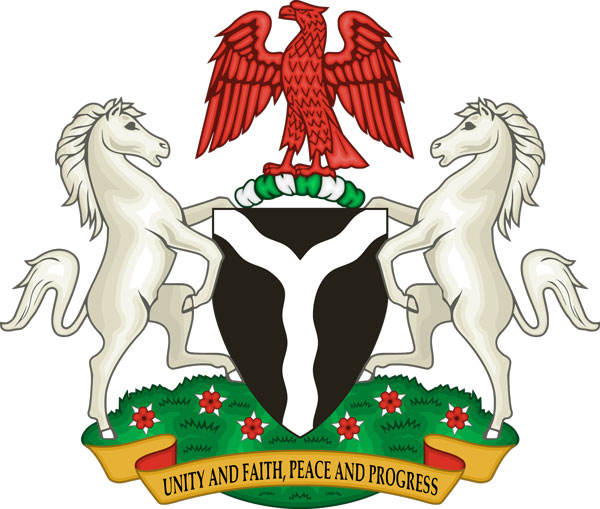
Nigerian became an independent nation in 1960 and subsequently a sovereign state in 1963. Slowly, the country began to wash off its colonial past, which meant the adoption of new symbols to reflect this change.
More recently, Nigeria brought back its original national anthem in 2024 鈥� a move that sparked mixed reactions across the country. Supporters saw it as a return to the values of independence, while critics questioned the relevance of reviving an old anthem instead of addressing more pressing issues. Like the coat of arms, it鈥檚 a reminder that national symbols often carry complicated histories and meanings.
The country had designed a in 1959 and hoisted it for the first time on October 1st 1960. Although the coat of arms was designed and recognised in 1960 in accordance with the , No. 48, 1960, it wasn鈥檛 adopted until 1975. The coat of arms designs went through a series of changes, during this time before the final designs were approved and adopted.
Here鈥檚 something interesting: the designer of Nigeria’s coat of arms is not known or officially documented, which is a departure from some of the processes that led to the creation and adoption of the Nigerian national flag 鈥� , the designer of the flag is credited.
Features of Nigeria’s coat of arms
Nigeria’s coat of arms has seven features, and each one represents a unique quality attributed to Nigeria. Let鈥檚 take a look at them.
- The black shield: The black shield is a reference to the country鈥檚 fertile soil.聽
- The wavy white pall: This occupies some space in the middle of the black shield. The symbol that forms the shape of the letter 鈥淵鈥� is a nod to the country鈥檚 two main inland rivers 鈥� and . Both rivers meet at a point in Lokoja to form a confluence, hence the 鈥淵鈥� shape.聽
- The two horses: The horses on each side of the black shield are symbols of Nigeria鈥檚 dignity. Nigerians are proud people, so this is very fitting.聽
- The red eagle: This represents the country鈥檚 strength.聽
- The green and white wreath: This rest on top of the shield and beneath the eagle. It is a reference to the agricultural potentials of the country.聽
- The grassy field and flowers: The flowers at the bottom of the coat of arms are called , and they were Nigeria鈥檚 national flower. The decision behind the inclusion of this flower is that it is found all over the country. It represents the country’s beauty.
- The National motto: It reads 鈥淯nity and Faith, Peace and Progress鈥�.
That’s everything to know about the features of the coat of arms and their significance. Interesting, isn’t it?
It鈥檚 also a reminder that national symbols are never just decorative 鈥� they carry history, meaning, and sometimes controversy. A recent example is the new national anthem of Nigeria, reinstated in 2024. The change sparked mixed reactions: while some Nigerians welcomed the return to a familiar, independence-era anthem, others questioned its relevance in today鈥檚 context.
Have you read our interview with the Coat of Arms?
Interview With Nigeria鈥檚 Coat of Arms