Someone you know has left or is planning to leave. 1,000 Ways to Japa speaks to real people and explores the endless reasons and paths they take to japa.
When Opemipo got laid off five months after moving to Sweden for work, Finland wasn’t part of the plan. In this story, she shares how her friend referred her for a life-changing role, how the company handled her full relocation to Sweden without her spending a kobo, and the one piece of advice she’s giving anyone in this job market.
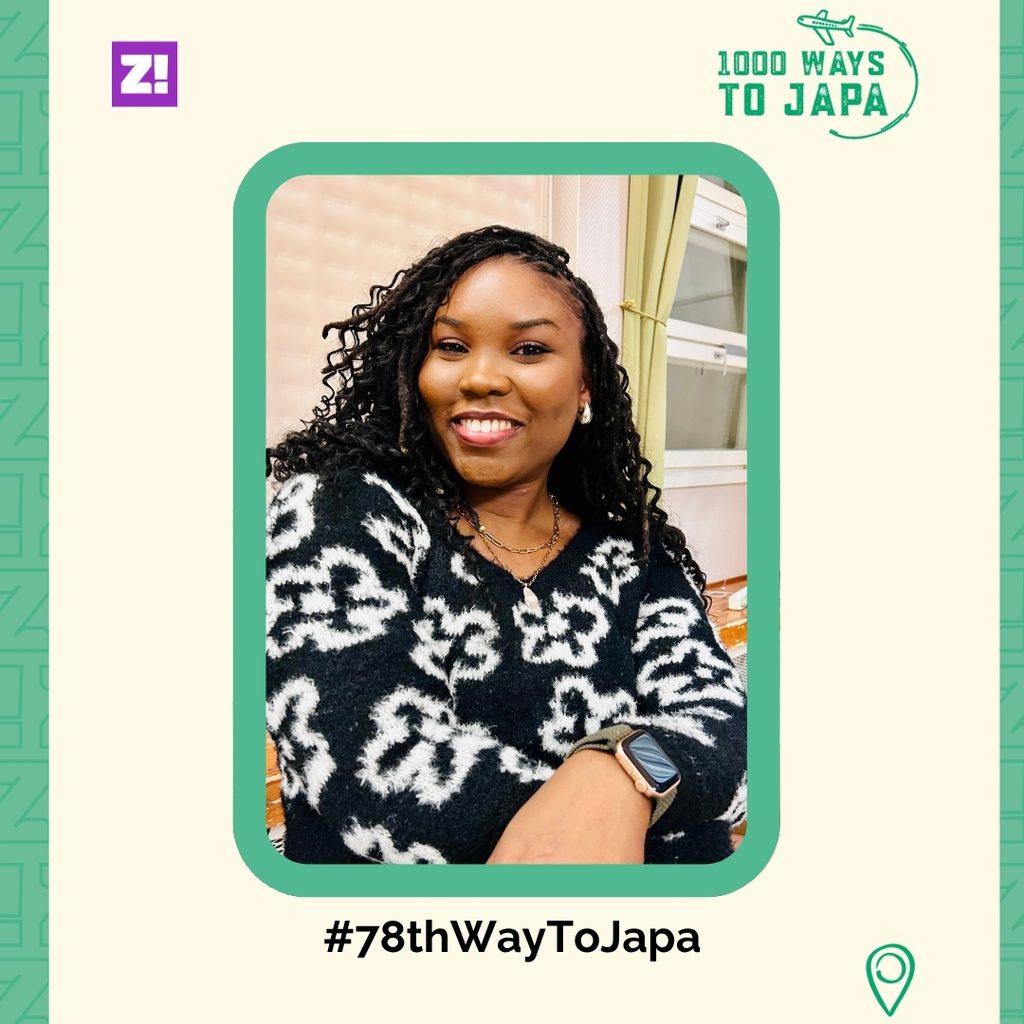
Where do you currently live, and when did you leave Nigeria?
I left Nigeria in February 2022 for Sweden, but I now live in Finland
Take us back to your life in Nigeria. What was life like for you in Nigeria before the move?
Before the move, I was actually doing really well in Nigeria. I had built a life and a career that I was proud of. I was growing, learning, and beginning to feel like I was finding my place in my career.
Then life took a beautiful turn. I got married in 2019, and in 2020, I had my daughter – right at the start of the COVID lockdown. Becoming a mother changed a lot for me. Suddenly, I was thinking not just about my career, but also about the kind of life and opportunities I wanted for myself and my growing family.
Around that time, I started looking into remote opportunities. I remember interviewing with Opera Mini/Opay, and at one point, I received an offer. But because I was pregnant, the offer was eventually rescinded. Honestly, that was difficult. It felt like I was being penalised for something that was such a beautiful and important part of my life.
But that experience didn’t stop me. I kept looking, and sometimes, the opportunities you don’t get make room for the ones you were actually meant to have.
A friend of mine, Kevwe, eventually referred me for a remote Project Coordinator role. I got the opportunity and joined in 2021. At the time, I didn’t realise just how significant that moment would be. That role became the beginning of a completely new chapter for me – one that would eventually take my career and my family in a direction I never could have imagined.
So, What Happened Next?
About six months into the job, something completely unexpected happened: the company was acquired by Klarna, the Swedish buy-now-pay-later company.
At the time, there were only about a few of us working remotely from Nigeria. We were settled into our roles and getting on with our lives, so the acquisition was already a big change in itself. But then came another surprise.
Because of GDPR requirements, Klarna couldn’t continue having us work remotely from Nigeria. Instead of simply ending our contracts, they decided to relocate us.
I remember how surreal that felt. I had only recently found my footing in this new remote career when I was suddenly told I might have the opportunity to move to Europe.
I hadn’t planned for it. Moving abroad wasn’t something I had been actively pursuing at that point. But sometimes, life opens a door you weren’t even looking for, and you have to decide whether you’re brave enough to walk through it.
That’s wild. So this wasn’t really a planned japa?
Not at all, honestly. Moving abroad wasn’t really part of some big, carefully planned “japa� strategy.
My husband is a British citizen, and around that time, with the economy the way it was, we had quietly started exploring our options. We talked about possibly moving to Scotland or somewhere else in the UK. Nothing was certain – we were just having conversations, looking at possibilities, and praying about what the right next step would be for our family.
And then, completely out of nowhere, the company was acquired.
Suddenly, an opportunity arose to relocate to Sweden. Sweden wasn’t even on our radar. We had been thinking about the UK, and here we were being offered a completely different path to Europe.
Looking back, it was one of those moments where you just have to pause and say, “Okay, God, I see what you’re doing.â€�
We had been praying for a way forward, but we were imagining one thing, and God opened a completely different door. We didn’t plan for Sweden. We didn’t even see it coming. It just happened.
So, for me, it really did feel like one of those “God did this� moments. What we thought would require years of planning and figuring everything out somehow came together through an unexpected opportunity.
What did the company handle, and what did you have to do yourselves?
Honestly? Almost nothing on our end. Looking back, I realise just how incredibly favoured and blessed we were.
Klarna partnered with a consultant to handle almost the entire relocation process for us. They took care of the documentation, visas, and all the complicated paperwork that comes with moving to another country.
The consultant verified our marriage certificate, checked our academic records, and made sure all our documentation was legitimate and in order. We didn’t even have to provide proof of funds. In fact, there was very little we had to figure out ourselves.
We had just one appointment in Abuja, and after that, everything moved incredibly quickly. It was honestly surreal because I kept thinking, “Is this really happening?�
When we arrived in Sweden, Klarna also covered our relocation costs and paid for our first month’s rent. They even arranged for a relocation specialist to help us find permanent accommodation.
So, in many ways, we didn’t have to navigate the relocation process alone. The company took care of the things that would normally be some of the most stressful parts of moving abroad, and we were able to focus on preparing ourselves and our daughter for this completely new chapter.
It was a very different experience from what I had imagined relocating to another country would be. There was still a lot of uncertainty and emotion around leaving Nigeria, but having that level of support made the transition so much easier.
That sounds almost too smooth.
Yeah, I know, right? But there’s a catch.
Oh no.
So when I got to Sweden, I moved from project coordinator to scrum master in my original team, but I didnt think the role was challenging enough, so I pushed to move into a role within an existing Klarna team. The thing is, there’s usually a 2-year waiting period before contractors are fully integrated into Klarna’s workforce, but I skipped that since I was already working at a company that Klarna owned. When I moved over, I was treated like a brand-new employee.
Five months later, I got laid off. “Last in, first out,” was what they told me. It was devastating. I’d just uprooted my whole family, my daughter was barely two, and now this.
How did you even survive that financially and emotionally?
Honestly, what came next was probably the most depressing period of my life.
The excitement of relocating to Sweden had faded, and suddenly I found myself dealing with a completely different reality. I had moved my life and my family to a new country, and now I was facing uncertainty about my career and what would happen next.
Thankfully, Swedish labour law gave me a bit of a safety net. Because I still had my original employment contract from before the Klarna acquisition, I was entitled to six months’ salary upon my termination.
And that turned out to be incredibly important.
In Sweden, your residence permit can be tied to your employment, so losing your job also meant I had to think carefully about how much time I had to find another one. That six months of salary effectively gave me around nine months of breathing room, rather than the three months I would otherwise have had to find new employment.
I remember being very deliberate about how I wanted the money paid. I told them, “No, please don’t pay it as a lump sum. Pay me monthly.â€�
I needed that structured income. I needed to know that every month, I could still pay our bills while I focused on finding another job.
Looking back, that period was incredibly difficult emotionally. I had gone from feeling like everything was falling perfectly into place, moving to Sweden through what felt like a God-ordained opportunity, to suddenly wondering what I was going to do next. But that six-month salary gave me something I desperately needed at the time: time. Time to breathe, time to figure things out, and time to look for my next opportunity without immediately having to panic about how we were going to survive.
That’s such a specific, useful detail. What did those months of job hunting actually look like?
I knew I couldn’t sit around feeling sorry for myself. I was on LinkedIn every single day. I took online courses, attended Swedish language classes, reached out to Nigerians working at companies I was interested in, and asked for referrals, interview tips, and advice. I was willing to learn, adapt, and do whatever I could to find my footing again.
But one of the biggest things that carried me through that period was the Nigerian community in Sweden. People I had never met were willing to help me simply because they understood what it meant to be starting over in a new country.
There was one particular moment I’ll never forget. A man I’d never even met saw that I was looking for a job and offered to write a post about me on LinkedIn, in Swedish, to help me reach a wider audience.
He didn’t have to do that. He didn’t know me. But he saw someone in need and decided to help. That one simple act of kindness opened a door I never expected.
Suddenly, I wasn’t just sitting alone in a new country trying to figure everything out. I had people to talk to, people who understood, people who could share their experiences and point me in the right direction.
It reminded me of something I’d almost forgotten during that difficult period: I wasn’t alone.
Sometimes, when you’re going through a difficult season, you don’t need someone to solve everything for you. Sometimes, you just need someone to say, “I see you. Let me help.â€�
And that was exactly what the Nigerian community did for me.
Six months of that must have taken a toll. How did you keep going?
My belief in God and my faith in Him kept me going.
Also, instead of applying narrowly based only on what I had done before, I started applying broadly. I stopped looking at job descriptions and thinking, “I don’t have 100% of this.â€� Instead, I started asking myself, “Can I learn this? Can I figure this out? Can I bring something valuable to the role?â€�
That shift made a huge difference.
I still had moments of doubt, of course, but I stopped allowing the things I hadn’t done before to define what I believed I was capable of doing.
Looking back, I think that period taught me to be much more confident in my ability to learn and to just be audacious.
And did that pay off?
It did. And somehow, right when my severance was about to run out in December, I finally got an offer.
But there was a catch: the job was in Finland, not Sweden.
And honestly, that broke my heart a little.
By that point, Sweden wasn’t just the country I had moved to for work anymore. It had become home. I had built a community there, made friends, found people who had supported me through one of the hardest periods of my life, and started to build a life for my family. So when the opportunity in Finland came, I was excited to finally have a job again, but I was also conflicted. I remember thinking, “Really? Just when I’m finally finding my feet here, I have to leave again?â€�
It felt like another chapter was closing just as I had started to settle into it.
But once again, life was taking me somewhere I hadn’t planned to go.
Wow. What was moving to Finland like?
Thankfully, this relocation was also company-funded, which made a huge difference.
They arranged for all our belongings to be moved from Sweden to Finland by boat—a 16-hour journey. So, in a very literal sense, our entire life was packed up and sent across the Baltic Sea while we prepared to start yet another chapter.
The amazing thing was that we already had our housing sorted before we even arrived. So when we landed in Finland, we didn’t have to worry about temporary accommodation or figuring out where we were going to live. We could simply move straight in.
And, as if the timing couldn’t have been more interesting, my husband’s company also asked him to relocate to Estonia around the same time.
At first, it sounded like yet another major complication. But then we looked at the map and realised Estonia is only about two hours from Finland by boat. So, thankfully, it wasn’t a dealbreaker.
Looking back, I sometimes laugh at how much our family moved around in such a short period of time. We went from Nigeria to Sweden, built a life there, then moved to Finland, while my husband’s work was taking him towards Estonia.
Were there any blockers you faced when moving from Sweden to Finland?
There was actually one more hurdle before we could fully settle in Finland.
Initially, we were told that we would need to go back to Nigeria to have our marriage certificate re-certified. The Finnish authorities sought additional verification due to concerns about documentation issued by Nigeria’s Ministry of Interior.
At first, we thought, “Wait, do we really have to go all the way back to Nigeria for this?�
We had already gone through the verification process for Sweden. Our marriage had been verified, our documents had been reviewed, and we had been approved to live there without issue.
So we decided to push back. We explained that we had already been thoroughly vetted for our relocation to Sweden and asked why Finland would need us to start the entire verification process from scratch.
Thankfully, they listened.
Smart. Okay, and then, please tell me Finland went smoothly.
For about a year, yes. Then I got laid off again. This time, from a startup that wanted to raise more money and needed to lay people off to satisfy investors.
No way. Again?
I had a full panic attack, honestly. I wasn’t going to lie about that.
I had just gone through so much change already, moving countries, rebuilding my life, finding my feet again and then suddenly I was faced with the possibility of losing my job all over again. It felt like everything was happening at once.
But somehow, things turned around much faster than I expected.
By March, the same month I lost my job, I had already been approached on LinkedIn by another company. I went through the process, and before I knew it, I had a new offer letter in my hands.
I remember looking at that offer and thinking about everything that had happened over the previous few months. The uncertainty, the fear, the job applications, the moments when I wondered if I was going to figure everything out—and then suddenly, there I was, starting another chapter.
I’ve now been with that company for over three years.
When I look back at that period, I’m reminded of how quickly things can change. One moment, you can feel like everything is falling apart, and the next, a door opens that you couldn’t have seen coming.
Let’s talk life abroad. What genuinely shocked you in your first week in Sweden?
Honestly, the weather was probably the biggest culture shock.
We arrived in February, and it was cold. And not just cold, it was dark for what felt like the entire day. Coming from Nigeria, where you’re used to sunshine and warmth, I remember thinking, “What exactly have we gotten ourselves into?â€�
Then summer came, and Sweden completely flipped the script. Suddenly, it felt like the sun just refused to go to bed. It would stay bright for what seemed like forever, and I remember thinking, “Wait, when does it actually get dark here?�
The underground train system was another thing that completely blew my mind. I remember getting lost a few times. Coming from Nigeria, I wasn’t used to having such an organised public transport system that you could just rely on to get around. It was one of those everyday things that made me realise, “Okay, I’m really living in a different part of the world now.â€�
And then there were the little financial and lifestyle differences you don’t necessarily think about before moving. For example, paying rent monthly instead of annually took some getting used to. In Nigeria, you often think of rent as a huge annual expense, so having it structured completely differently felt strange at first.
What’s one thing you loved about living in Sweden specifically?
. It’s this very Swedish tradition of taking a break for coffee and a small pastry or bun. I really got into it.
And what didn’t you love about Sweden?
The Swedish people themselves could feel a bit pretentious and fake, honestly, not all of them, but a good number of the ones I interacted with. The Nigerian community there, though, is incredibly warm.
How does the cost of living in Sweden compare to Finland?
Sweden’s actually cheaper, mostly because Finland’s taxes are high. And they tax EVERYTHING.
What’s the biggest difference between the two countries for you?
Finland has way more nature, and Finnish life is more attuned to it. It’s much slower and calmer even in the capital area. Sweden felt more like an urban race track by comparison.
You’ve been able to get these international jobs multiple times. What’s your job-hunting secret?
LinkedIn. Every single time.
If you’re job hunting in the Nordics, I genuinely believe you need to take LinkedIn seriously. Don’t just create a profile and forget about it; be strategic. Optimise your profile, make sure your experience is clearly presented, and let people know what you actually bring to the table.
And don’t underestimate your CV. Keep it sharp, relevant, and tailored to the role you’re applying for. But beyond the CV, learn how to talk to people.
When a recruiter or hiring manager calls you, that conversation matters. Be warm, be confident, be genuinely interested, and let your personality come through. Technical skills can get you through an application, but the way you communicate and connect with people can take you much further than you might expect.
Salary negotiation is also important, so you don’t get cheated. What’s your best salary negotiation advice?
Ask. Always ask. Once you’re in the role, there’s rarely another chance to renegotiate unless you switch jobs entirely. Companies that extend an offer are not going to rescind it because you asked for more money. The worst, they say, is “no, the salary range for this role doesn’t go that high.â€� Then you ask for other non-salary benefits.
What do you love most about life in Finland?
Nature is what I love most about Finland.
Do you miss Nigeria?
Honestly, no. I haven’t stopped being Nigerian just because I live abroad.
I still eat all my Nigerian food—pepper soup, suya, goat meat, all of it. I’m still glued to Nigerian social media, I still follow what’s happening back home, and I still feel very connected to the culture.
But there’s another side of Nigeria that I don’t miss: the constant state of alertness.
When you’re living there, you’re often thinking about safety without even realising how much mental energy it takes. You’re thinking about where you’re going, what time you’ll get home, whether a particular road is safe, and what you’ve heard about kidnappings or other security issues. That constant awareness can really take a toll on you.
I think living abroad made me realise just how much of that stress I’d normalised.
On a scale of one to ten, how would you rate life in Finland?
An eight. It’d be a ten if not for the weather; it’s brutally cold for months. Life in Finland is very chill and slow-paced; you get to breathe fresh air daily. Any last words for anyone reading this?
Be audacious. Genuinely. Don’t box yourself into one role or one skill set because of what you’ve done in the past. There is so much you can learn on the job. If you have the ability to learn, adapt, and figure things out, don’t disqualify yourself before you’ve even given yourself a chance.
And fight your imposter syndrome, because nobody is going to fight it for you.
There were plenty of moments when I questioned whether I was qualified enough, experienced enough, or whether I really belonged in the room. But eventually, I realised that waiting until I felt completely confident would only hold me back.
Apply anyway. Have the conversation anyway. Put yourself forward anyway. And perhaps most importantly, don’t tie your entire identity to your job.
Your job is something you do; it isn’t the entirety of who you are. You are more than your title, your company, your salary, or the role you currently hold. Especially in today’s job market, things can change incredibly quickly. I learned that the hard way.
So build your career, work hard, keep learning, but remember to build a life and an identity outside of your career too. Because when the job changes, you are still you.
Want to share your japa story? Please reach out to me .