You know that confident, unbothered way you move when you know there鈥檚 nothing standing in your way? That鈥檚 exactly how Bola Tinubu has been operating. For the average person, that might be admirable, but for the president of a democratic country, it鈥檚 unsettling 鈥� and we have the National Assembly to blame for it.
What鈥檚 happening?
On Tuesday, March 18, President Bola Ahmed Tinubu made a national broadcast declaring a six-month-long state of emergency in the South-South state of Rivers. As part of this sweeping action, he also suspended the state鈥檚 governor, Sim Fubara, his deputy, Ngozi Odu, and the entire Rivers’ House of Assembly. Finishing off with a flourish, he appointed Vice Admiral Ibot-ette Ibas (rtd) as the state鈥檚 military administrator.聽
According to Tinubu, the move was necessary due to political unrest in the state. He cited Section 305 of the 1999 Constitution, which allows a president to declare a state of emergency in cases of national danger, disaster, or threats to public order and safety.
But here’s the thing鈥� the Nigerian constitution does empower a sitting president to make such declarations, but it also clearly outlines the conditions under which the powers can be exercised. These include war, major security threats, breakdown of public order and safety, natural disasters, the inability of the government to function properly, or a direct request from a governor 鈥� none of which apply to the situation in Rivers. And even if they did, Section 305 doesn鈥檛 give the president the authority to suspend elected officials like the governor or his deputy.
Unsurprisingly, the backlash against this was swift. Political stakeholders, legal experts and organisations condemned the president鈥檚 glaring disregard of the Constitution. The Nigerian Bar Association (NBA) 鈥渦nconstitutional usurpation of power and a fundamental breach of Nigeria鈥檚 federal structure.鈥� Femi Falana, a Senior Advocate of Nigeria (SAN), Tinubu that 鈥渢he office of an elected governor can only become vacant upon death, ill health, resignation, or impeachment. Even where the office of the Governor becomes vacant for any reason whatsoever, the Deputy Governor shall be sworn in as the Governor.鈥�
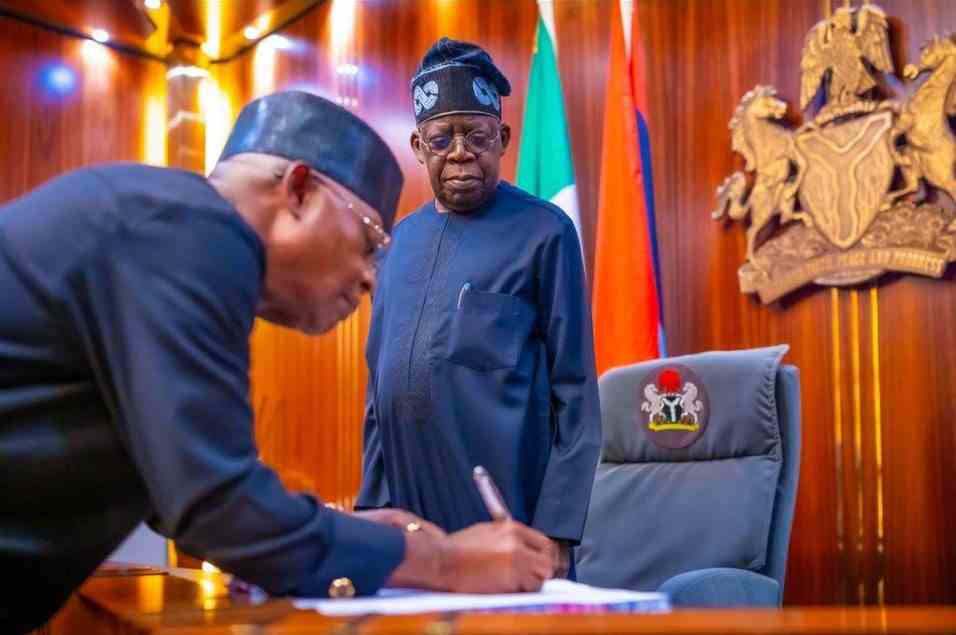
If the president heard any of these criticisms, he sure didn鈥檛 act like it. Barely 24 hours after his declaration, on Wednesday, March 19, Vice Admiral Ibot-ette Ibas as Rivers鈥� state military administrator.
The Nigerian constitution also requires that the president publish such a proclamation in the official government gazette and obtain the National Assembly鈥檚 approval via a two-thirds majority. But on Thursday, March 20, instead of doing their job and rejecting this blatant overreach, both chambers of the National Assembly
Why are we dragging Nigeria鈥檚 parliament?

In most democracies, the legislature exists to keep the executive arm of government in check. But Nigeria鈥檚 National Assembly seems to have left that group chat and deleted the app. If you think this is the first time they鈥檝e rolled over for Tinubu, then you鈥檙e in for a ride.
The assembly has gotten so cosy with the president, that they have been deservedly tagged a 鈥�&苍产蝉辫;yes-men who agree to anything the President says, no matter how ridiculous. And they鈥檙e not even subtle about it.
Take November 2024, for example. After months of delay, Tinubu finally presented the 2025 budget 鈥斅� 鈧�49 trillion, a whopping 36.8% increase from the previous year. But it wasn鈥檛 just its size that had Nigerians bothered; it was also the plan for financing it. According to Tinubu鈥檚 minister of finance, Wale Edun, 鈧�35 trillion would be gotten through revenue, while the remaining 鈧�13 trillion (4% of the country鈥檚 GDP) would come from borrowing. Financial experts and anyone with half a brain raised eyebrows and voices over the negative impact this would have on the country鈥檚 sorry public borrowing tab, already at聽 at the time.
So, what did the National Assembly do? Grill him? Ask hard questions? Nope. On December 18 2024, when Tinubu entered the Senate chamber, Senate President Godswill Akpabio immediately 鈥極n your mandate we shall stand,鈥� even before the man got the chance to begin his presentation. By the next day, December 19, the budget had the first and second readings at the Senate and was on its way to the committee stage.
And it doesn鈥檛 stop there.

In October 2024, Tinubu proposed changing Nigeria鈥檚 national anthem. Within a week, his besties in the National Assembly passed it, . Political analyst Afolabi Adekaiyaoja Financial Times, 鈥淭he lack of public engagement also doesn鈥檛 show a legislature able to provide necessary checks on the executive 鈥� which doesn鈥檛 encourage citizens [that there is] effective accountability.鈥�
[ad]In March 2024, the National Assembly gave Usain Bolt a run for his money when they a whopping 鈧�1.2 trillion FCT budget just three legislative days after Tinubu submitted it.聽
In November 2024, they outdid themselves again, Tinubu鈥檚 $2.2 billion loan request barely 48 hours after he made it.
In October 2023, Tinubu 10 Resident Electoral Commissioners (RECs), four of whom聽 were his loyalists (including two card carrying members of the APC). Despite public outcry, the National Assembly confirmed them without hesitation..
Why does this National Assembly hardly oppose the President?
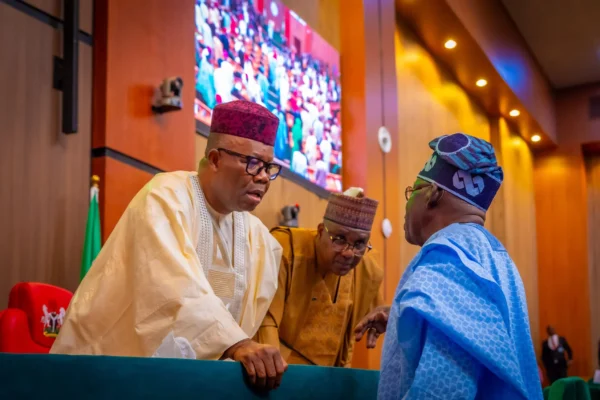
If you think Tinubu simply lucked out with this assembly, think again. The president was very intentional about setting up a National Assembly that would cause him little to no stress.
He played a central role in installing the leadership of both chambers 鈥� Godswill Akpabio as Senate President and Abbas Tajudeen as Speaker of the House.
Tinubu was so public with his support that others openly talked about it as well. In May 2023, while National Assembly members prepared to select the leaders of both chambers, Tinubu鈥檚 current Chief Of Staff, Femi Gbajabiamila and Godswill Akpabio (before becoming聽 Senate President) held a meeting with members of the House of Representatives where they warned them against opposing Tinubu鈥檚 anointed candidates. Akpabio was quoted as 鈥�…In your daily dealings, my late mother told me that I should be aware of the 3Gs: The first G is God; the second G is Gun, and the third G is Government.
鈥淭he first G is God Almighty. The second G is what? Gun, and the third one is Government. May you conduct yourself mindful of the admonition of my late mother by respecting the 3Gs, particularly the government,鈥� he said.
Tinubu likes to be thorough, so he didn鈥檛 stop at securing leadership spots for Akpabio and Tajudeen; he reportedly did the same hard work for Barau Jibrin and Ben Kalu, who emerged as deputy senate president and deputy speaker.
The minority leaders 鈥� Kingsley Chinda (an ally of Nyesom Wike) and Abba Moro (announced by Akpabio) 鈥� weren鈥檛 left out. Neither were the chief whips of both chambers.
But capturing the leadership of the Senate and House of Representatives wasn鈥檛 enough. Tinubu, through his loyal allies 鈥� Gbajabiamila, Akpabio, and Wike 鈥� ensured that the entire National Assembly would fall in line throughout his presidency. First, they formed a multi-party coalition within the Assembly. Then, they instilled the fear of God in lawmakers. Finally, Tinubu sealed the deal by dazzling them with a 鈧�70 billion 鈥済ift.鈥�
In July 2023, Tinubu submitted a bill to the National Assembly seeking to increase the 2022 supplementary budget originally signed by the previous Assembly. 鈧�185 billion was slated for the Ministry of Works and Housing for flood recovery, 鈧�19.2 billion to the Ministry of Agriculture to assist farmers affected by the flooding, 鈧�35 billion to the National Judicial Council, and 鈧�10 billion to Federal Capital Territory (FCT) projects. But most notably, 鈧�70 billion was earmarked for the National Assembly to 鈥渟upport the working conditions of new members.鈥�
Despite widespread criticism of both the 鈧�35 billion judiciary allocation and the 鈧�70 billion Assembly 鈥渟upport,鈥� lawmakers from both majority and minority parties rushed to the budget without hesitation.
And just like that, Tinubu secured the most devoted fan club a president could hope for. From rubber-stamping his controversial proposals to singing his praises on the floor, this National Assembly has gone all in. The recent approval of his outrageous emergency rule? That might just be the tip of the iceberg.
Why this is dangerous
The Nigerian government is fashioned to run under . The entire idea behind this doctrine is to ensure that the three arms of government (the judiciary, legislature, and executive) are independent of each other and that the powers of each arm do not conflict with the others.
In order to ensure that the separation of powers is maintained, Nigeria also practices the principle of checks and balances. This is essentially a method designed to keep each branch of government in line. How does this principle work? By arming each branch of government with enough constitutional power to defend itself in the event that any arm tries to cross the lines drawn between them.
Tinubu鈥檚 bromance with the National Assembly blurs these lines and renders them useless so that instead of watching his steps and his actions to be careful of overstepping his bounds, Tinubu confidently does whatever he likes, knowing his buddies would always have his back, even if he single-handedly suspends a democratically elected governor, something only the legislative arm of government (specifically the State House of Assembly) can do. Today, the President suspended the governor of Rivers State; tomorrow, it could be in multiple states. Who will keep him in check then?
[newsletter]How can you help to fix this mess?
Nigerians might just have to step in if the National Assembly cannot call the President to order. Here are some of the ways you can help prevent Nigeria from descending into even bigger messes in the future:
- Call your representatives in the National Assembly and tell them how you want them to vote on issues. You can find the lawmaker representing your constituency .
- Recall your lawmaker if you are convinced they are not performing. Here are the steps for recalling and . If you have questions about this process, you can find your answers .
- Name and shame lawmakers who support illegality.
- Speak up on social media using hashtags.
- Start digital campaigns demanding that the National Assembly shut down laws unfavourable to Nigerians or decisions that disregard the constitution. Petitions are easy to create, and you can create one on platforms like .
[ad]