Abortion dates back to ancient Egypt, making it one of the oldest medical practices known to man. We know this because the Egyptian pharaohs preserved all their medical techniques in the .
Ancient Egyptians have also been described as “鈥�, so if they did it, why is the practice of abortion so taboo today? The answer is equally religious, cultural and political.

Abortion is now a safe and modern process thanks to technological advancements. Yet thousands of African women die, and millions suffer disabilities, from botched abortions administered by unskilled individuals annually.
RELATED:
About 93% of African women aged 20 to 45 live under restrictive abortion laws. Even in African countries with more liberal laws, a safe, legal procedure is difficult to access. We have the stigma surrounding abortion, and the social attacks on them, to blame for this.
But what many don鈥檛 know is that restrictive abortion laws mean limited access to comprehensive abortion care, which includes counselling to make sure the woman won鈥檛 regret it later, contraceptive services to prevent unwanted pregnancies, post-abortion care to prevent dangerous complications, and , regulation, research, etc.
RELATED: What She Said: I Was 4 Months Gone, But I Had To
What do these African countries think of abortion?
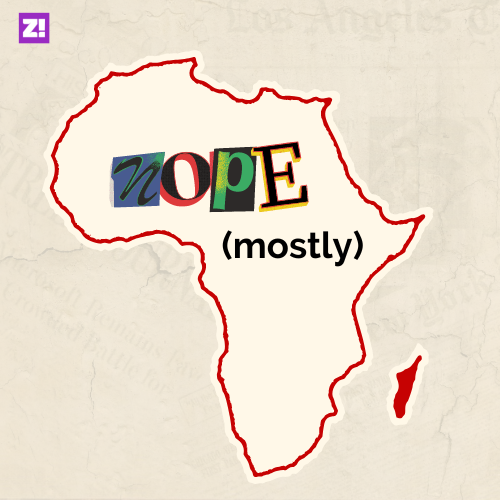
For these ten, a big NO
Angola, Congo-Brazzaville, Congo-Kinshasa, Egypt, Gabon, Guinea Bissau, Madagascar, Mauritania, S茫o Tom茅 and Pr铆ncipe and Senegal, do not permit abortions for any reason.
Four of them are mostly for it
Zambia allows abortion, but only for health and socioeconomic reasons. While the only restriction in Cape Verde, South Africa and Tunisia, is gestational 鈥� it鈥檚 illegal past the first trimester.
Then, the rest
The other 40 countries in Africa permit abortion only to save the woman鈥檚 life or preserve her physical or mental health. Mauritius and Equitorial Guinea still require the permission of her husband and/or parents though.
RELATED: Sex Life: I Started Using Condoms After My Second Unplanned Pregnancy
So what are Nigeria’s abortion laws?
You must have already figured out that Nigeria is part of 鈥渢he rest鈥�, one half is anyway. Our abortion laws are one of the most restrictive in the world! Even more so depending on the woman鈥檚 location, since the northern and southern regions have separate criminal law systems.
In the south, there鈥檚 the , under which abortion is a felony punishable by 14 (doctor), seven (patient) or three (drug seller) years of imprisonment, according to the abortion laws in sections 228, 229, and 230 respectively.
On the other hand, the surprisingly more considerate abortion laws govern the north. Sections 232, 233, and 234, of this code, give 鈥渟aving the woman鈥檚 life鈥� as a legal reason for aborting a foetus 鈥� the southern laws have no such allowance 鈥� otherwise, perpetrators would be imprisoned and/or fined, successful or not.
RELATED: Abortion Laws And Policies In Nigeria
The Timeline
Throughout Nigeria鈥檚 history, there have been both societal attacks on abortion and movements to liberalise the laws. Here鈥檚 the journey of abortion law in Nigeria, from its criminalisation following independence, to the wavering battles for women鈥檚 rights.
1960: The Penal Code Act
On 30th September, the legislature adopts the 25th Penal Code (Northern States) Federal Provisions Act into the laws of Nigeria. It contains 12 chapters and 67 sections that criminalise certain acts, including abortion, derived from customary and Islam-based Sharia law.

1963: Code of Medical Ethics
The Medical and Dental Council of Nigeria (MDCN) publishes the Nigerian code of medical ethics 鈥� reviewed in 1995 and 2004 鈥� based on the core principles of the Hippocratic oath. The code references sensitive subjects like abortion, euthanasia, assisted conception, transplantation and amputation. And its conclusion aligns with Nigerian culture, religion and laws.
1972: First Call for Reform
The Nigerian Medical Association (NMA) makes the first recorded attempt to reform our abortion laws. It pushes for revisions at their 1972 conference, but receives little support and is ultimately unsuccessful.

1975: Women鈥檚 Right to Abortion
The National Population Council (NPC) advocates for the health and welfare of women through access to 鈥渟afe and legal鈥� abortion, proving ineffectual as well.
1976: The Federal Government Speaks Up
The NMA and the Society of Gynecologists and Obstetricians of Nigeria (SOGON) support the NPC鈥檚 movement. The Minister of Health, Kafuru Tinubu, gives a speech at the annual SOGON convention, saying that a national reform of abortion laws is possible. Still, nothing changes.
1981: A Termination of Pregnancy Bill
The SOGON pushes a Termination of Pregnancy Bill to the national assembly that permits abortion if two physicians certify that the pregnancy is harmful to the mother or her other children, or if the foetus has physical or mental abnormalities. The bill falls through because of overwhelming opposition from religious groups.
1982: Strong Moral Values Above Health
The National Council of Women’s Societies acts against the proposed bill because they think teaching people about family planning and against extramarital sex is more important. They call the reps 鈥減arents鈥� 鈥� sound familiar? (looking at you, Bubu) 鈥� and urge them to 鈥渆nforce strong moral values鈥� instead.
RELATED: What She Said: I Had An Abortion, I Regretted It
1990: The Apex Law of Nigeria
The Legislature consolidates the Nigerian Criminal Code into the apex law for criminal punishment in Nigeria. Mostly influenced by English laws, it reinforces the criminalisation of abortion. It even omits the one provision the penal code offered.
1991: Another Campaign for Women鈥檚 Rights
The Campaign Against Unwanted Pregnancy (CAUP) is set up on 17th August, to defend the sexual and reproductive rights of Nigerian women, eliminate unsafe abortion and teach public health.
1992: Another Failed Movement
The CAUP organises a reform meeting with the Minister of Health, Professor Olikoye Ransome-Kuti, and the NMA president, Dr M. I. L. Shehu, Mni, to review the abortion laws. The proposed reform is strongly opposed and fails to pass.
1997: A New Angle
The CAUP does not relent, however. They establish the Action Group for Adolescent Health (AGAH), training medical students to educate the general public on sexual and reproductive health.
1998: Women’s Health Advocacy
The Women’s Health Research Network of Nigeria is set up to bring all relevant groups together to advocate for women’s health.
1999: A Longterm Plan
The CAUP begins its five-year advocacy journey, giving workshops and lectures to educate Nigerians so they can lead healthy lives and advocate for change. They , a total of $920k, from the MacArthur Foundation to spearhead this.
2003: Finally, Some Hope of Change
The CAUP brings a group of experts together to propose and outline appropriate changes to the abortion laws. By the next year, a national reform bill is in its eighth stage of revision, thanks to their resilient work.

RELATED: What She Said: I鈥檇 Never Keep A Child I Didn鈥檛 Want
2012: Society isn鈥檛 Ready Yet
The general public accuses the Governor of Imo State, Rochas Okorocha, of using a Violence Against Persons Bill to secretly amend the abortion laws. The bill passes, permitting it on the grounds of incest or rape, but is , thanks to the resistance from several religious and cultural organisations, including the Association of Catholic Medical Practitioners of Nigeria. They even force the governor to give a public apology!
2015: An Indirect Reform
The is repassed into Nigerian law. It assures victims of sexual assault and domestic violence some justice and grants women legal access to contraceptives. This act tackles the leading causes of abortion, only offering indirect reform.

2018: The Current Status
During its 52nd Annual General Meeting and Scientific Conference, SOGON calls for more liberal abortion laws, to give all Nigerian women access to quality healthcare. They remain at the forefront of the movement for abortion law reforms in Nigeria.
While criminalising abortion , it denies Nigerian women access to comprehensive abortion care. According to data from 2017, our country has one of the, with little improvement over the years.
Over sixty years of local and international pressure for access to safe and legal abortion in Nigeria, and still, only a woman on her literal death bed has that privilege today.
READ ALSO:4 Nigerian Women On How Nigeria鈥檚 Abortion Laws Have Affected