The Nigerian experience is physical, emotional, and sometimes international. No one knows it better than our features on #TheAbroadLife, a series where we detail and explore Nigerian experiences while living abroad.
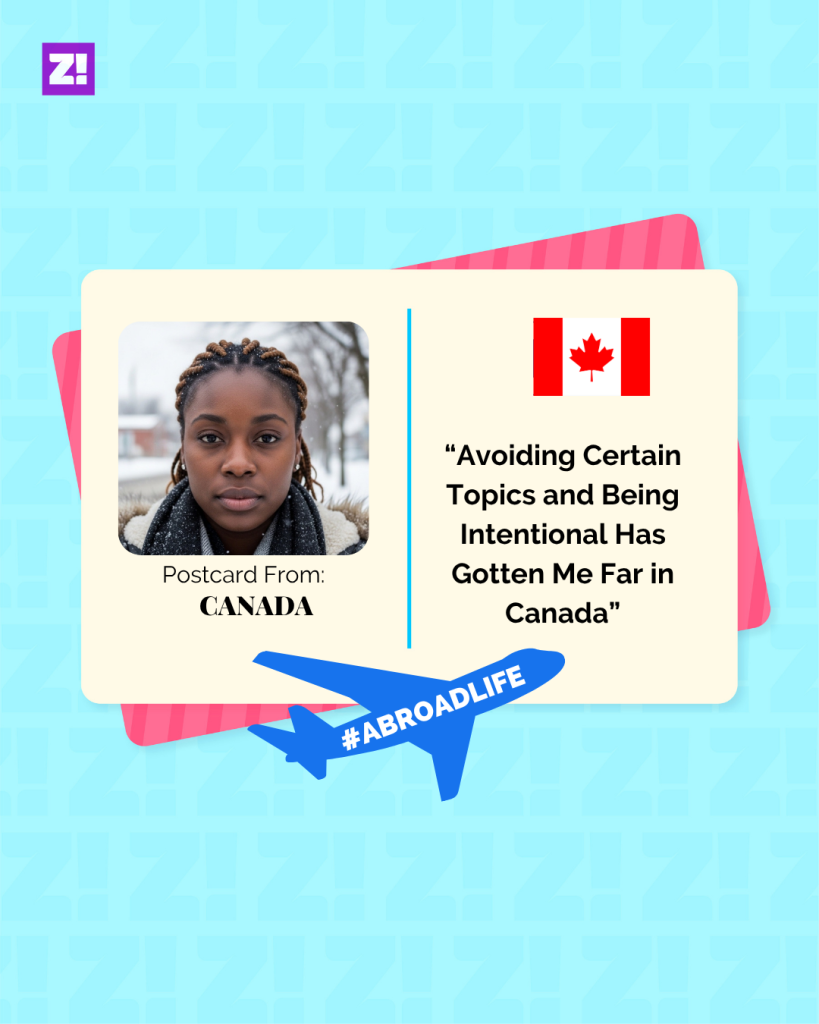
Beatrice* (30) moved to Canada in 2023 after losing hope in a future in Nigeria. In this story, she shares her experiences, from getting a job to meeting her fiancé, and how her near-obsessive level of intentionality got her Permanent Residency in Canada in less than three years of living there.
Where do you live now, and when did you leave Nigeria?
I live in Ontario, Canada. I left Nigeria in 2023.
What inspired you to leave Nigeria?
I looked at Nigeria’s economic situation and saw no clear path to success. The government was doing nothing to support the youth. In contrast, I saw how other countries set up programmes for young people and how much easier it was to succeed there.
After serving in the mandatory National Youth Service Corps (NYSC), I took up some side hustles, like sewing, and then applied for a postgraduate programme in Canada.
Why Canada?
Canada was the first and only country I applied to. I chose Canada because my brother had been there for years and was already established. The college I got into ended up being close to his house, so I stayed with him, which made everything easy for me.
That sounds convenient. What was it like when you first arrived?
I had the softest landing you could ever imagine. My brother picked me up from the airport and took me home. He prepared everything for my arrival to the point of even making my bed. I had everything I needed to start up. He reassured me that all I needed to do was focus on my studies, and that’s what I did. I focused on school and graduated with honours.
I also ensured that while living with my brother, I respected his space. I didn’t disrespect the common areas; I cooked his favourite meals, kept the house clean, and always sought his permission before inviting friends over. He’s my brother, but I didn’t want to cross a line because disrespecting someone’s space can make them feel a certain way. Living with him meant getting a job wasn’t an immediate priority until I graduated. I got a job just a few months after finishing school.
How was your social life at first?
I had some Nigerians in my class, and we would go out once in a while and host each other at our places. I arrived during the spring, which is short, so summer came quickly with many activities.
To integrate, I gathered all the information I could. I asked a lot of questions. I also followed many Canadian-based creatives on social media who shared their struggles and how they navigated the system. Following them helped me stay informed because they broke things down in an easy-to-understand way.
What is your situation like now?
Financially, I’m doing well, I have a good job, I’m engaged and planning for my wedding. So, it is going well so far.
I think a mistake many people make when they come to a new country is bringing the old mindset from wherever they are coming from. I acknowledged from the onset that this was a new environment. I learned how to talk to people, what to talk about and what to avoid. At work right now, there are certain things I wouldn’t mention or ask because I understand the culture is different.
Also, I was very intentional about many things, including the relationships I kept and the quality of the people I surrounded myself with. Everything I have now in terms of a social life is because of that intentionality. I have a very strong friend group that supports each other. I actually met my fiancé through a friend of a friend.
Nice. You mentioned knowing what topics to avoid in the workplace. Could you give some examples?
It’s best to avoid talking about politics here. People aren’t going to declare who they’re voting for like we might do in Nigeria. On the other hand, in Nigeria, people are usually secretive about certain things, like pregnancy, for instance. But here, people talk about pregnancy very openly. You can ask a colleague about their due date, and they will tell you.
It’s also best to avoid sharing too many details about your personal life, especially with white colleagues. For example, if you’re constantly telling them during check-ins that your weekends are “stressful” or you have too much going on at home, they start to notice trends. If you start to flop at work, they might use that as a reason to lay you off, saying they want you to go “take care of yourself.” You have to be smart and not give them a pattern they can use to put you in a box.
Sounds like smart advice. You said you were intentional about relationships. What were you looking for in a partner?
I wanted a kind person. Kindness lies at the foundation of everything else. A kind person will care for you, support you, and won’t want to see you suffer. My fiancĂ© had that quality, so it triggered our conversations.
Is your partner Nigerian?
Yes, he is Nigerian.
Have you been back to Nigeria since you left?
No, I haven’t. We will go home soon for our wedding. I wanted to get my permanent residency (PR) before travelling, which I have now.
Oh. That was quick.
Yes. That’s something else I was very intentional about. Some people have been here longer than I have and aren’t permanent residents yet because they didn’t do proper research into the system. I got my permanent residency in less than three years, and that even includes my study year.
How did you get your PR so quickly?
Before I even entered the pool, I used the to check my score. I researched current trends and accepted scores. Then I used the website to see what I needed to improve my score to ensure I had enough points. I realised I needed a very high English test score, so I prepared hard and got a score of 11 out of 12.
When I was unemployed, I was very vocal about it. I talked to everyone I knew to get advice, which helped me shape my resume. Also, I made sure to get a job in a field that would give me extra points for PR. Some people work for a long time only to realise later that the job they’ve been doing doesn’t count towards their PR score. I made sure to research all of these things from the beginning, and it influenced the job I chose. I also got extra points because my brother is a resident here.
Do you see yourself returning to Nigeria permanently?
With the state of things right now, no. It doesn’t look like the government is working for the people or prioritising their needs. I don’t live there, so I am not in the know of everything, but I see what is in the media and have conversations with my parents who are still there. In Canada, I see the government’s efforts to make life easier, more affordable, and of higher quality for people. I don’t see that same effort in Nigeria.
What culture shocks have you experienced in Canada?
The first was politeness. People are polite, but I wouldn’t say they are “nice.” They will smile as they say something you don’t want to hear. You might go for a job interview, and they will smile and chat, making you think you’re getting the job for sure. Then they’ll turn you down with that same smile. In Nigeria, if someone doesn’t like you, it’s easy to know even from a distance. Here, a smile doesn’t mean friendship, and you shouldn’t cross lines just because someone is smiling at you.
Another shocker was the tax. When you buy something, the price on the shelf is not the final price because taxes aren’t embedded. You go to check out, and the price changes. Everything is taxed—water, candy, and services like getting your hair done. That is separate from the tax taken from your paycheck.
Then, the weather, there is no getting used to it. The weather is brutal; you just have to embrace it every year. You have to layer up and stay warm, or you will get sick. My body is still trying to adjust. Sometimes I just think to myself, “It doesn’t make sense for a place inhabited by humans to be this cold.”
What has been your worst experience in Canada?
I don’t think I’ve had a significantly bad experience. But job hunting was a humbling time. Having people look impressed in an interview only to ghost me afterwards was hard, but luckily, I didn’t have to deal with that for too long.
What has been your best experience?
Meeting my circle of friends. I am so grateful for the people I have. We are always there for each other—visiting, celebrating, and supporting one another. Knowing I have people who care for me outside my family makes life easier. Meeting my fiancé is also one of the biggest highlights.
What are your favourite and least favourite things about Canada?
My favourite thing is that no one cares about your status. No one cares about your bank account or what car you drive. There is no pressure to perform or fake your life. I have colleagues who earn much more than I do but take the train to work; being normal is normal here.
The public facilities are also great. I take the train, and I can nap, work, or watch a movie in it because it’s comfortable and safe. During the summer, even if you are broke, there are so many free third spaces and activities—lakes, parks, and gardens. It doesn’t cost much to live a decent life here.
My least favourite thing is the taxes. I understand they make public services good, but it feels like too much. I probably feel this way because I don’t have kids yet and am not enjoying the full benefits, like free education or healthcare.
Have you ever experienced racism?
Not directly. And honestly, I don’t think I’d care if I did. I have high self-esteem. If you’re being racist to me, I might not even notice it at first because my mind doesn’t go there. I know the value of my life, and you don’t define me. If you think I’m different because of my skin colour, it tells me your mind is shallow, so why should I care what you think?
What are your long-term plans?
I want to be financially stable, own a home, and own a business. I see Canada as home, and I am not looking to migrate anywhere else.
On a scale of one to ten, how happy are you in Canada?
Ten. I know certain things worked in my favour, but a lot of what I have was also due to my intentionality. I have what I need: a job and a system that supports me. Why wouldn’t I be happy?
Do you want to share your Abroad Life story? Please reach out to me . For new episodes of Abroad Life, check in every Friday at 12 PM (WAT).
Click here to see what other people are saying about this article on Instagram.