

The average girl starts menstruating between the ages of 11 and 13; however, it differs per person. Despite being a completely normal biological process, periods are still treated as taboo in many Nigerian homes, schools, and even religious spaces. They鈥檙e often surrounded by silence, fear, shame, and confusing rules that leave girls unprepared and unsupported.
Getting your period is frequently labelled as a rite of passage. You hear things like, 鈥�You鈥檙e a woman now,鈥� but what does that really mean? What comes next? For many Nigerian girls, the first period isn鈥檛 marked by care, conversation, or clarity. It鈥檚 met with scolding, restrictions, and unspoken expectations.
We spoke to seven Nigerian women about their first periods and how those around them reacted. Because what happens during that first experience can shape how you see your body for years to come.
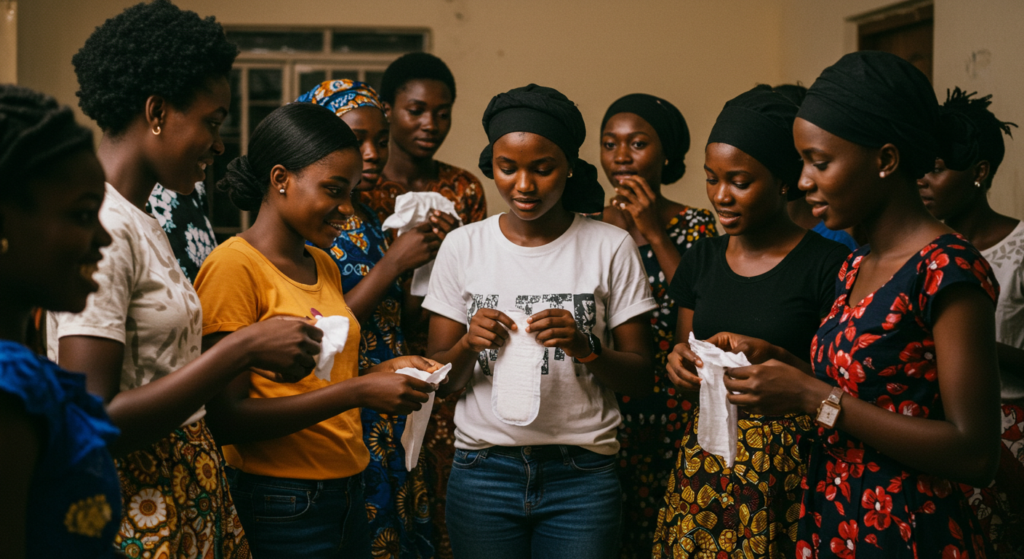
“You’re no longer a girl. Any little thing can get you pregnant” 鈥擡lla*, 25
I was 12 and in church when I felt something strange in my underwear. I rushed to the toilet and saw blood. I was scared. My mum didn鈥檛 help me; she just handed me a pad and said, 鈥�You’re no longer a girl. You can’t go around playing with boys and misbehaving. Any little thing can get you pregnant.鈥�
Just like that. No conversation, just a warning. I went from child to potential shame in one day. From that moment, I began to watch myself. I crossed my legs when I sat, I checked my chair before standing up, and I learned to count my cycle by instinct because no one taught me.
Every month came with different thoughts. Would I leak? Would they know? Would I smell? It was never mentioned at home, even when I had very painful cramps and could barely stand. I had to pretend. I鈥檇 take painkillers and drink hot Lipton, and still sweep, still go to school.
That one moment in church taught me something I鈥檝e only recently unlearned: that my body is something to manage quietly.
“I felt impure, like I was doing something wrong just by bleeding” 鈥� Deborah*, 22
It happened over a weekend at home. I was 13. My mum was super nice about it. She explained what was happening, taught me how to use pads, and even made me my favourite meal. I was so shocked.
But the next day, everything changed. I couldn鈥檛 pray. I had to hide my pads. I wasn鈥檛 allowed to enter the kitchen.
I felt impure, like I was doing something wrong just by bleeding. My body had changed, and so had how I was treated. Even inside my own home. It was subtle. My younger brother wasn鈥檛 allowed to rough play with me anymore. My older cousins told me to close my legs more often.
I was still the same girl, but suddenly it felt like any slip-up and I鈥檇 ruin my life. The hardest part wasn鈥檛 the rules. It was the silence. I couldn鈥檛 pray, enter the mosque, or fast, and no one explained why. So I just felt dirty.
Yes, my mum was kind, but I still felt alone. I couldn鈥檛 ask questions, and when I bled through my uniform during a test, I just sat there in fear, pressing my thighs together.
Now, I make it a point to check on my younger sister. No girl should feel shame for something so natural.
This content is sponsored by , an MTV anthology of short films about gender-related issues women face. Watch 鈥淧eriod,鈥� a short film from the anthology, which tackles menstrual hygiene and affordability.
“At home, my mum gave me old clothes and wrappers. Pads were too expensive for us” 鈥� Chinwe*, 37
I stained my uniform and the boys laughed at me. I was so embarrassed. A female teacher pulled me aside and scolded me, saying I should know better. That was my first time. No comfort, just blame.
At home, my mum gave me old clothes and wrappers. Pads were too expensive for us. I was told to never talk about it around men, so I learned to disappear every month. I became an expert at silence. Folding cloth, washing blood out of fabrics, trying to erase every trace.
I couldn鈥檛 afford pads until I got to university, and even then, it felt like a secret. I鈥檇 hide them between other items when shopping.
I became a teacher because I wanted to be the woman I never had. The kind who tells girls a stain isn鈥檛 the end of the world, who answers awkward questions. Because if we don鈥檛 unlearn the shame, who will?
“Be careful now. Boys can smell it when you鈥檙e on your period” 鈥擜maka*, 23
I got my period during a sleepover at my cousin鈥檚 house. I was 14. I woke up to blood on the bedsheet and immediately panicked.
My aunt saw it first. She didn鈥檛 shout, but the way she looked at me made me feel like I鈥檇 done something wrong. She called me into the kitchen and handed me a pad, then said in that classic aunty tone, 鈥�Be careful now. Boys can smell it when you鈥檙e on your period.鈥�
I nodded, even though I was confused. What exactly did she mean? But it stuck with me for weeks. I was paranoid about my body. I used a lot of deodorant. I checked my skirt in the mirror every thirty minutes.
In school, I didn鈥檛 tell my friends. It felt like every sound my body made was up for judgment. When I finally told my mum a few days later, she was calm but vague. She said, 鈥�Now you have to be responsible.鈥�
I hated that word. Responsible for what? For bleeding? For not making people uncomfortable?
It took me years to realise periods aren鈥檛 shameful. They鈥檙e natural.
“Before then, my body was just mine” 鈥� Zinny*, 21
I was 9 and nobody warned me. I thought I had internal injuries. I hid my underwear until my sister found it. She told my mum, and she laughed, saying, 鈥�You鈥檙e grown now.鈥�
I didn鈥檛 like that. I didn鈥檛 feel grown. I felt scared. I couldn鈥檛 sit next to boys in school. I felt dangerous just because I bleeding.
It felt like I had crossed a line no one told me was there. Suddenly, I was hearing things like, 鈥�Cover yourself well,鈥� and 鈥淒on鈥檛 go too close to boys.鈥� Before then, my body was just mine. But the moment I started my period, it became a topic in other people鈥檚 mouths. Something they monitored, controlled, and warned me about.
I didn鈥檛 understand how bleeding led to danger. I just knew I had to be careful. I couldn鈥檛 play too much, talk too loud, or openly talk about blood.
“Stand well. It鈥檚 just your period” 鈥� Bisi*, 38
It happened while I was grinding pepper with my mother in the market. I was 12. I felt wet and checked myself, only to see blood. I cried. My mum just said, 鈥淪tand well. It鈥檚 just your period.鈥�
No compassion. No softness.
She gave me tissue and an extra wrapper, saying we鈥檇 buy pads once we got home. That day taught me that pain didn鈥檛 matter. Duty did.
But there鈥檚 a cost to always moving. To managing your pain so it doesn鈥檛 slow others down. After she gave me the wrapper and tissue, I went back to grinding pepper. I didn鈥檛 say a word. Customers were waiting. I was expected to smile, carry bags, and count change.
There was no space for softness. I didn鈥檛 understand what a period meant. I just knew I had to hide it. If a man noticed, it was embarrassing. If a woman noticed, she鈥檇 just nod and say, 鈥�She don grow.鈥�
No one asked how I felt. I started carrying pads and extra clothes that day because I was paranoid.
Sometimes I鈥檇 get dizzy from cramps, but my mum would say, 鈥�You think my own was easier?鈥� And that was the end of the conversation.
Now that I鈥檓 older, I tell my younger cousins to rest if they need to. They aren鈥檛 lazy. They鈥檙e bleeding and in pain. It鈥檚 not a sin.
“E don come o, e don come” 鈥� Ibifiri* 27
I was 10 or 11. I don鈥檛 quite remember. I was on holiday at my gran鈥檚 house. The night before, I was in a lot of pain. My stomach felt like it was being torn apart. No one suspected anything though. I鈥檇 always had digestive issues and was often bent over in pain.
But this pain was something I had never felt before. Intense was an understatement.
The next day, I went to pee and saw dried brown stains on my pink polka-dotted pants. I hmmed. I went to show my mum. She took it to my grandma. My cousin overheard them saying, 鈥�Na em, e don come,鈥� and started singing and dancing, 鈥�E don come o, e don come!鈥� It was hilarious, and I was a little uncomfortable.
Afterwards, my mum had a conversation with me about cleanliness during my period. I think there was some mention of pregnancy and men, but I barely remember. She taught me how to put on a pad. It wasn鈥檛 a bad first time, I guess.


