Let鈥檚 have the talk that nobody wants to have, but everyone needs to hear.
During foreplay, when you feel like things are about to get spicy, but your body is cosplaying the Sahara Desert, or when friction is threatening to ruin the fun, that鈥檚 exactly where lubricant comes in. And no, we鈥檙e not talking about that random bottle of baby oil that鈥檚 sitting in your bathroom.
Why Lube is Actually Your Best Friend
Lube is that friend who shows up exactly when you need them, loyal and helpful to a fault. If you鈥檙e dealing with vaginal dryness, trying something new in the bedroom, or you just want to make things feel so much better, lube should be your go-to, anytime, any day.
The truth is that even when you鈥檙e fully in the mood, your body might not produce enough lubrication. This can happen for . Maybe you鈥檙e breastfeeding, going through menopause, stressed about work, or your hormones are simply showing you shege during your period.
One of the benefits of using lube is that it reduces friction during sex, which means that there are fewer in your vagina and surrounding areas. Those micro tears aren鈥檛 just painful; they could also make you more susceptible to sexually transmitted infections. If you鈥檙e using condoms (which you absolutely should be), lube makes them less likely to break or slip off.
For anal sex, lube isn鈥檛 an option; it鈥檚 mandatory. Your anus doesn鈥檛 produce any natural lubrication, so trying to have anal sex without proper lube isn鈥檛 just uncomfortable; that鈥檚 you asking for injuries. Don鈥檛 do it.
Things You Should Never Use as Lube
We get it, sometimes you鈥檙e in the mood, but you don鈥檛 have proper lube handy. Still, there are some things that are simply not meant to go anywhere near your vagina.
Saliva might seem convenient because it鈥檚 free and always available, but it鈥檚 actually terrible as lube. Your mouth harbours bacteria different from those in your vagina, and mixing the two can lead to infections. Plus, saliva dries up pretty quickly, so you鈥檙e back to square one in minutes.
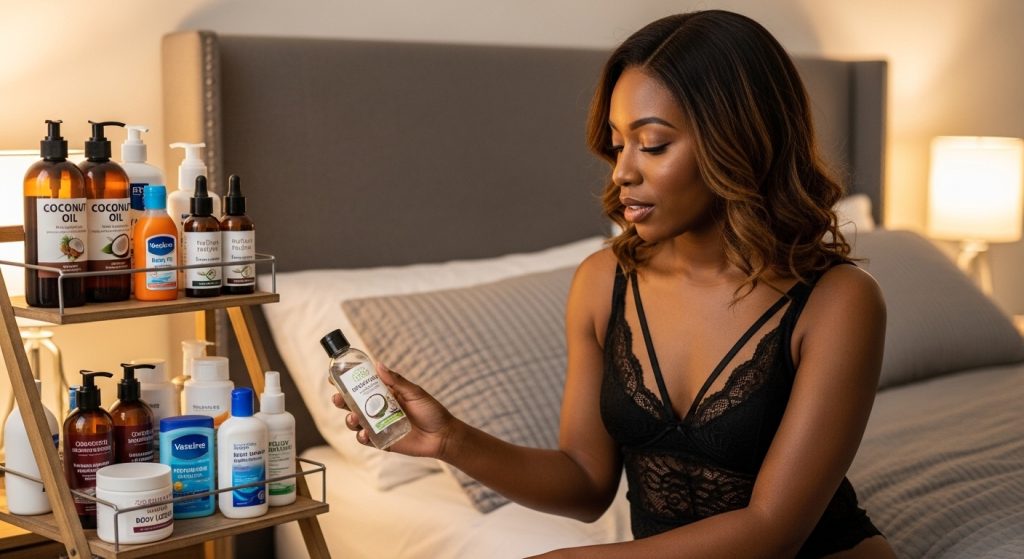
Vaseline and petroleum jelly are the worst offenders. Yes, they鈥檙e slippery, but that鈥檚 basically where the good news ends. Research shows that women who use petroleum jelly inside their vagina are Petroleum jelly doesn鈥檛 wash away easily with water, so it stays in your vagina for days. That鈥檚 basically saying 鈥楬i bacteria, here鈥檚 a perfect breeding ground for you.鈥� It also completely. And good luck getting those greasy stains out of your sheets.
Baby oil, and cooking oil have the same problems as Vaseline. They can irritate your vaginal tissue, upset your pH balance, damage condoms, and are incredibly difficult to clean up. Save the coconut oil for your hair. Cooking oil should stay in the kitchen; it doesn鈥檛 belong in your vagina.
Lotion, body cream, or moisturiser might feel smooth, but they contain fragrances, preservatives, and other chemicals that will These products are designed for your external skin, not your internal organs. They also tend to dry out too quickly to be effective during sex. Body wash, soap, or shampoo are absolutely off limits. Using them can cause burning and irritation. Plus, no one wants to explain to their doctor why their vagina smells like lavender shower gel.
The Right Stuff: Types of Lubes
The good news is that proper sexual lubricants exist and are accessible, both online and in pharmacies. Here鈥檚 what you should actually be using.
Water-based lubricants are the gold standard and safest choice for most people. Popular brands available in Nigeria include (available at Supermart, OneHealth, and most pharmacies), (available at Padek Health Pharmacy and Jumia), and LUBRICA.
Water-based lubes feel most similar to your body鈥檚 natural lubrication. They鈥檙e safe to use with all types of condoms, sex toys, and barrier protection. They鈥檙e easy to clean up with just water and soap, and they鈥檙e less likely to cause irritation. The only downside is they can dry out during longer sessions, but you can just reapply or add a little water to reactivate them.
Silicone-based lubricants are thicker and last longer than water-based options, which makes them great for anal sex or marathon sessions. They鈥檙e also safe with condoms. However, it is important not to use them with silicone sex toys because they can damage the material.
When shopping for lube, check pharmacies and supermarkets, though you might need to ask the pharmacist or an attendant directly, since they鈥檙e often kept behind the counter.
What to Look For When Buying Lube
Choose a lubricant that matches your vagina鈥檚 pH (around 3.8 to 4.5) to keep your vaginal flora balanced. Avoid products with glycerine if you鈥檙e prone to yeast infections because the sugar can feed the yeast. Stay away from anything with parabens, petroleum, or string fragrances. The simpler the ingredient list, the better.
If you鈥檙e trying to conceive, look for lubricants labelled as 鈥渇ertility friendly鈥� because many regular lubes can affect sperm motility. For anal sex, look for thicker lubricants specifically marketed for anal sex, usually silicone-based or thick water-based formulas.
Stop raiding your kitchen or bathroom cabinet for makeshift solutions. Invest in a proper lubricant. These products are not luxury items; they鈥檙e basic sexual health necessities, just like condoms. Don鈥檛 let anyone or anything make you feel embarrassed about using lube. It shows you鈥檙e informed, responsible and care about having great sex.
Next Read: Aramide Balogun, Wamide Animashaun and Adeife Adeoye on What Locking Into 2026 Really Takes