Talk True is a limited 91´óÉń medical myth-busting series. With each episode, we’ll talk to medical professionals about commonly misunderstood health issues to get actual facts.
If you paid close attention the first time you heard the term “toilet infectionâ€, there’s a high possibility it was in a danfo. It probably involved someone standing in one corner of the bus selling pills they swore were the solution to all your life’s problems.

Sigh
If it wasn’t a danfo, it was one of those loud voices that repeatedly thundered from hidden speakers in the market urging you to buy “Dr Iguedo’s Goko Cleanser†to clear the million toilet infections in your system. If you asked the danfo entrepreneur or the cleanser marketers about what the symptoms of toilet infections are, their responses would range from “itching in the vaginal area†to “watery smelly discharge†and even “infertilityâ€.
But are toilet infections really a thing? What state must your toilet be in to “infect†you? Itohan, a general medicine practitioner, speaks on this.
What’s a toilet infection?
“Toilet infection is a layman — and often misleading — term for vaginitis,†Itohan says.

Google-trained doctors be like‌
(or vaginal infection) is an inflammation of the vagina that may result in itching, unusual discharge and pain. It is usually caused by either one/or a combination of a bacterial or fungal infection, a change in the normal balance of vaginal bacteria, a sexually transmitted infection (like ) or even menopause. And it’s actually a common medical condition.
“About one-third of women — especially those in the reproductive age — will have vaginitis at one point or another.â€
But is it gotten from toilets?
The list of probable causes above doesn’t mention toilets, but I ask Itohan to be sure.
“No. It’s definitely not. A dirty toilet doesn’t lead to a vaginal infection. To know what might be causing inflammation, it’s important to look at the symptoms and more likely causes.
When due to a fungal infection, vaginal inflammation is caused by an overgrowth of yeast (a fungus called Candida). This type of vaginitis is called a yeast infection or vaginal candidiasis and is characterised by intense itching around the vulva, a burning sensation after sex or urination, thick white cottage-cheese-like discharge and general soreness.
Another type of vaginitis is bacterial vaginosis, and it’s typically a result of an imbalance in the normal vaginal bacteria due to factors like douching or unprotected sex with a new partner. The difference here is, this type usually comes with an abnormal offensive odour. Some people don’t even experience itching or any symptoms with bacterial vaginosis.â€
While Itohan insists dirty-toilets-causing-infections are a myth, she admits irritants can upset the vaginal environment and cause vaginitis.
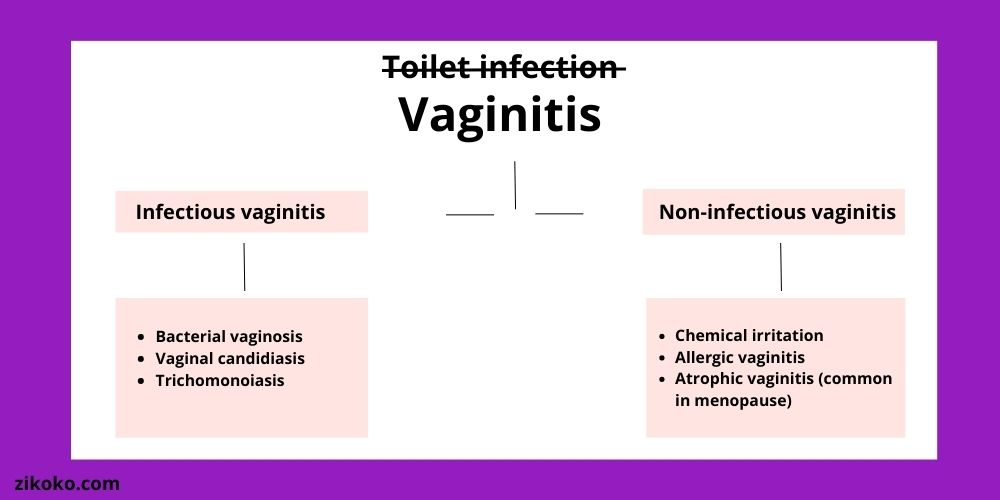
“We call this type non-infectious vaginitis, and it’s often caused by an irritation or allergic reaction. Some people will start to itch when they come in contact with chemicals from perfumed soaps, detergents or tissues. This is why your doctor will always advise you to clean the vulva with water and mild soap. Vulva, not vagina, please. That’s another recipe for bacterial imbalance.â€
And definitely don’t do this:
Generalising can be dangerous
As someone who’s seen several cases of vaginitis, Itohan understands the dangers of blanketing every symptom as a “toilet infectionâ€.
“Most people attribute every itch or discomfort they feel to yeast or some toilet infection and just use to relieve the itching. But you need to know the actual cause if you want long-term relief.
Imagine treating vaginitis caused by , a sexually transmitted infection, with boric acid (which treats yeast infections). You’d get temporary relief but left untreated, trichomoniasis can last years and cause complications like premature delivery in pregnant women and poses an increased risk for cervical cancer.â€
ALSO READ: After Surviving Cervical Cancer, I Just Want Peace
Should you be worried?
Even though vaginitis may be concerning, it’s not something to be too worried about.
“Whatever the cause of vaginitis is, it’s usually treatable. It’s nothing to be ashamed of. Don’t be scared to visit your doctor. It’s ten times better than relying on what Aunty A from Instagram said she used to treat hers.â€

Know your body, babes
The first step to properly detecting and managing vaginitis is knowing your body well enough to observe when something’s off.
“Every woman has some form of vaginal discharge and smell. The discharge tends to change in consistency and quantity throughout the menstrual cycle. When you’re in tune with your vaginal health, you’d know when there’s a different odour.
For example, yeast infections are probably the most common type of vaginitis (after bacterial vaginosis), and it tends to reoccur in most ladies. A babe who’s had it before and is self-aware knows to watch out for factors that increase the risk, such as using antibiotics and birth control pills which may disrupt normal vagina , hormonal changes due to the menstrual cycle or pregnancy, or any condition that causes a weakened immune system. Again, most types of vaginitis are highly treatable.â€
On treatment
Itohan emphasises that treatment is relatively simple and accessible, but the right diagnosis is key.
“Once a diagnosis is made by your doctor or healthcare provider, treatment will typically involve over-the-counter pills, creams or suppositories. A yeast infection requires antifungal medications, while antibiotics are the go-to for bacterial vaginosis. See why proper diagnosis is important?â€
Preventing vaginitis is also very possible, and mainly requires some lifestyle changes.
“Avoid douching like a plague. Please don’t steam your vagina to make it ‘tight’. It may destroy naturally occurring bacteria in the vagina and lead to an infection. Avoid scented tampons or soaps. Change out of wet clothing as soon as you can. Clean your sex toys after every use. Use water-based lubricants, and of course, use protection with new sexual partners.â€
If you have recurring vaginitis, please visit a doctor or healthcare provider.