

Alice* is in her early 30s now, but when she thinks back to the relationship she had in her 20s, a heaviness still sits in her chest. She was just 20, young, na茂ve, still figuring herself out, when she got involved with a man almost twice her age. He was 39. At the time, she didn鈥檛 have the language for what was happening. She only knew she felt trapped, suffocated, and constantly afraid of doing something 鈥渨rong.鈥� Now she can call it what it was: coercion.
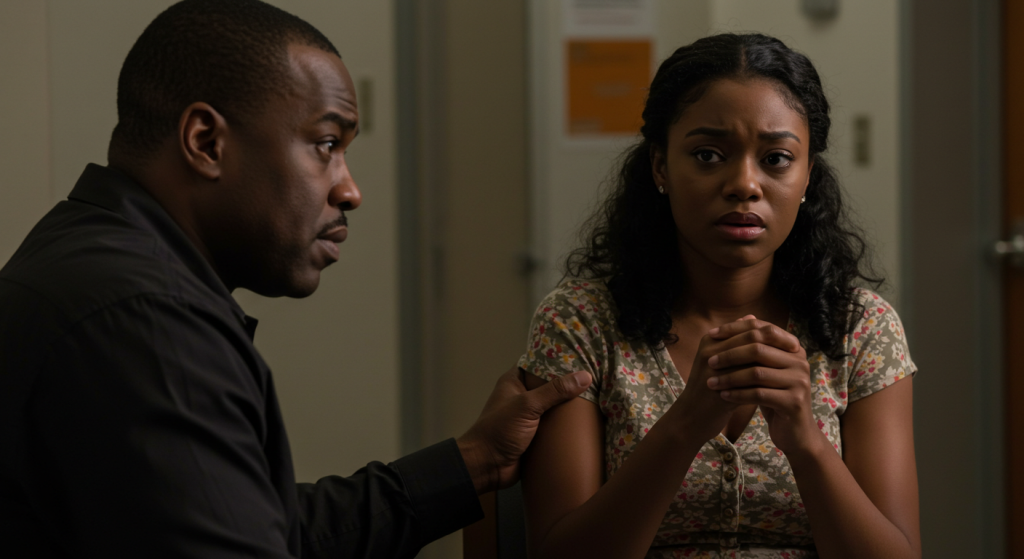
Trigger Warning: This story contains descriptions of Sexual Abuse.
is the act of compelling an individual to act against their will through the use of threats, intimidation, manipulation, or undue pressure. It can manifest in emotional, psychological, financial, sexual, or social forms, and its defining feature is the erosion of autonomy and consent. Unlike voluntary compliance, coercion relies on fear, obligation, or manipulation, leaving the individual with limited or no meaningful choice.
As told to Princess
When I was eighteen, my mother and I moved to a new area just outside Port Harcourt. Most days, it felt like a small relief, being closer to my aunties, to a circle that knew my childhood and could keep an eye on me. One of my aunties ran a big hotel that people in the neighbourhood used for weddings, coronations, and businessmen鈥檚 disappearances. It was the sort of place where the corridor lights stayed on late and the generator hummed steadily. I found myself there a lot: fetching water, folding napkins behind the scenes, or simply sitting in the dining room where the older women talked politics and recipes and stained the air with laughter.
That鈥檚 where I first saw him properly. He wasn鈥檛 employed by the hotel, just one of those men who did business with the owner, introductions, partnerships, payments done in envelopes and half-smiles. He had an air about him: sharply cut shirts, shoes that made a deliberate sound on tiles, a voice people quieted themselves for. To my aunties, he was 鈥渁ccomplished,鈥� a reliable friend to the family; to me, then, he was simply another grown adult who asked kindly about school and stayed to listen while I babbled about small things. I didn鈥檛 consider it anything more.
I had recently been through my first heartbreak and was still raw from the pain of it. He stepped into that hollow with the ease of someone who had practised gentleness as an art form; he let me cry on his shoulder, told me I was special and serious and not like the other girls in our compound. When he praised me in front of my aunties, they nodded and said things like 鈥淕ood man,鈥� the sort of approval that landed like a blessing. In those family circles, a much older man taking interest in a younger relative was often brushed off with jokes: 鈥淣a better catch,鈥� 鈥淵ou don blow, baby,鈥� or 鈥淗e go take care of you.鈥� People admired the age gap as proof of a woman鈥檚 rising value rather than an imbalance.
I was twenty the first time he told me I had to choose, date him or lose him. I remember the exact cadence of his voice: calm, almost tender, as if offering an ultimatum was the same as handing me a gift. To the aunts and cousins who saw us together, it made sense. In every family conversation afterwards, his age was replaced with compliments: he had means, connections, a car. 鈥淥lder men know how to handle women,鈥� they鈥檇 say, and when I hesitated, someone would laugh and call me foolish for refusing stability. Those voices made it harder to hear the alarm bells.
This was the beginning of our four-year relationship.
Also Read: I Spend Minimum Wage on My Vaginal Care Every Other Month
Once I said yes, everything softened and sharpened at once. He began telling me what to wear, which of my friends he thought were 鈥渢oo worldly,鈥� how I should spend the small sums I made from teaching and ushering. If I bought a dress from the market with money I had earned, he treated it like theft or like I did runs for the money, interrogating me about where it came from. He checked my phone constantly: names, timestamps, the tone of messages. I learned to delete conversations before I stepped into his car, learned to explain myself in the clipped, humble language that makes people think you鈥檙e grateful and quiet.
In the hotels, intimacy with him wasn鈥檛 soft. At night, he would pull me close, not for warmth, but so he could see my phone screen while I typed. It didn鈥檛 feel like safety; it felt like being checked.
When I told my friends at school, their reactions varied. One laughed and said, 鈥淭his your man is monitoring you like police.鈥� Another frowned and called it possessiveness. Someone else tried to play it down with, 鈥淎t least he likes you enough to care where you are.鈥� I remember sitting there, embarrassed, not sure how to explain that what felt smothering to them was what I thought love was supposed to look like.
I didn鈥檛 have the language then. To me, he was protective and invested. To them, it was control. And hearing that word made me uncomfortable because it forced me to look at something I wasn鈥檛 ready to face.
Some nights still play on repeat in my head, one of them ridiculous and cruel, the way the smallest things sometimes are when you鈥檙e living with someone who wants to make you small. We had eaten pasta that evening: Bolognese, something he ordered at the hotel restaurant to show off, to prove he could afford the pricier menu. Late into the night, after the lights were dim and the TV downstairs played something about a footballer I didn鈥檛 know, he shook me awake. He had his phone, eyes hard. He pointed to a message that said 鈥渟paghetti鈥� on an account he claimed was mine and demanded an explanation like it was a crime.
I was half-asleep, my brain slow and soft. 鈥淚t鈥檚 not even my account,鈥� I told him with the stubbornness of someone still clinging to logic. 鈥淚t鈥檚 a friend鈥檚.鈥� He didn鈥檛 care for facts. 鈥淪o why spaghetti?鈥� he asked as if the word itself was a confession. Why, indeed. How discussing spaghetti equated to an affair, I couldn鈥檛 have explained. Even now, that moment makes no sense to me.
When I tried to answer, he got louder, the corners of his mouth tight with something that looked like anger but felt like intention. The humiliation was sharp; my chest burned with the realisation that I could be uprooted at any seedling comment. I sat up and explained until my throat was raw, because explaining felt like the only way to make the accusation dissolve. It didn鈥檛. He walked around the room, citing sins I hadn鈥檛 committed and creating new ones. In that moment, the absurdity and the cruelty sat side by side, and nothing I said could bridge the gap.
The next morning, I woke before him and picked up his phone. I didn鈥檛 know whether I was searching for proof of something or trying to be even. The messages I found were not mine; they were his. He had been messaging an ex, the tone light, the kind of flirtation that exists comfortably between people who once knew how to be in each other鈥檚 bodies. They had been in a car together, laughing at something I couldn鈥檛 see. The chat bubbles felt like a shove at my ribs.
I carried the phone back to bed and shook him awake. He rubbed his eyes like a man who had been sleepwalking through another life. When I shoved the screen under his nose, I remember the fierceness in my own voice, first raw with hurt, then hot with anger. 鈥淔or all I know, you two could have fucked in that car,鈥� I said, because that was the image that flashed in my head when jealousy, shame and shameful love tangled themselves. 鈥淔or all I know. Since we鈥檙e all saying mad things.鈥�
He laughed. The laugh irritated every edge of me. It was the laugh of a man who could pare down a person鈥檚 pain into a joke and then present the joke as a truth. He pulled me close after that, smoothed excuses over the hurt like laying a cloth over a stain. 鈥淚t鈥檚 nothing,鈥� he said. 鈥淵ou鈥檙e being paranoid.鈥� Then he made me forget the words by making my body a place where his power could be reasserted. I remember thinking, in that disassociated way your mind does when you want to keep functioning, that giving in was easier. That night, sex was again not about tenderness but about entitlement: his need to confirm I was still there, pliant.
You鈥檒l Also Like: Pull-Out, Double Condoms & Other Safe Sex Lies You Shouldn鈥檛 Believe
The night everything changed is still clear in my head. We argued about something small, but it blew up like always. For the first time, I refused to back down. His face changed. He picked up a bottle from the table. I don鈥檛 even remember if it was water or wine, but the way he held it, I knew it wasn鈥檛 just to drink. His grip was tight, his wrist flexed, and in that moment, I was sure he could throw it at me.
Something in me froze. Then I ran. My feet hit the carpet and then the cool tile of the hallway. I ran, barefoot, so fast my bare soles made small clapping sounds. I didn鈥檛 stop until I burst into the hotel restaurant below. People looked up when I burst in. Staff glanced at me, then at him when he came down after me, but no one stepped forward. They kept their distance the way people do when they don鈥檛 want trouble with a wealthy man. I sat in a corner with a napkin clenched in my fist until my hands stopped trembling. I watched him through the partition glass as he returned to the room, walked slowly, and closed the door like nothing had happened.
That night in the restaurant, I felt the kind of exposure that leaves a person raw; everyone could see me, yet there was no rescue. That was my breaking point.
Leaving after that was messy and quiet. There were a thousand small absolutions to navigate: my own fear, the family whispers when I finally told my aunties, the way some people said gently, 鈥淓h, maybe find something to keep you busy,鈥� while others said 鈥済ood riddance鈥� in a way that was both balm and bruise. The family circles that had once excused his age now shifted; some defended him quietly, embarrassed at being wrong, while others wrapped me in the philosophical language of resilience: 鈥淵ou鈥檙e young; learn.鈥� In our community, the conversation often revolved less around ethics and more around scandal avoidance. That made it harder and easier at the same time. Harder because the truth was minimised; easier because I didn鈥檛 have to fight everyone to leave.
It took years to rebuild. Friends kept me fed and nudged me into new routines. My earnings from tutoring and eventually, my government job became a small declaration of independence; I paid my own bills, boarded my own buses, and began to sleep without someone鈥檚 shadowed presence in the doorway. The aftershocks of coercion stayed, a habit of softening my voice, a temptation to avoid making waves, but they faded. I learned that trauma鈥檚 echoes could be faced and that the body remembers bigger things than the mind sometimes allows.
Now, in my thirties, when I look back, I can say with a clarity that surprises me how much of what I lost to him was subtle and how much of it matters: confidence, a sense of entitlement to my own time and choices, the right to be left alone in my thoughts. To women reading and nodding because the details are familiar, because the surveillance or the jokes or the 鈥渋t鈥檚 normal鈥� chorus sound like an echo in your own life, ask yourself if your partner鈥檚 presence frees you or fences you in. If you can鈥檛 answer that without a catch in your throat, it may be time to step away.
Click here to see what others are saying about this story on Instagram
Coercion doesn鈥檛 always come with bruises or loud threats. Sometimes, it鈥檚 quiet: a partner guilt-tripping you, a boss dangling your job over your head, a parent reminding you of 鈥渆verything they鈥檝e done for you鈥� until you give in. At its core, coercion is about stripping away choice. It鈥檚 when someone pressures, manipulates, or corners you into doing something you don鈥檛 freely want to do.
Read Next: They Tried to Trick Me Into Marriage at 19


