Everyone likes to be celebrated, but gods and goddesses like it more. And it鈥檚 only right that they鈥檙e celebrated.
峄屘�峁n blesses her followers with wealth, health, beauty, healing, protection and children. So every August, for 12 days, no fewer than 60,000 people from across the globe visit the town of Osogbo in Osun state to honour the goddess of the river.
Here鈥檚 everything you need to know about 峄屘�峁n and the festival that celebrates her.
White is the colour of the day

The 峄屘�峁n priests and priestesses wear white robes in honour of the 貌r矛峁C� (deity) of fertility. They also plait their hair in the traditional way of ol贸r矛峁C� (those who are initiated in a Yor霉b谩 divinity).
The sacred 峄屘�峁n rituals
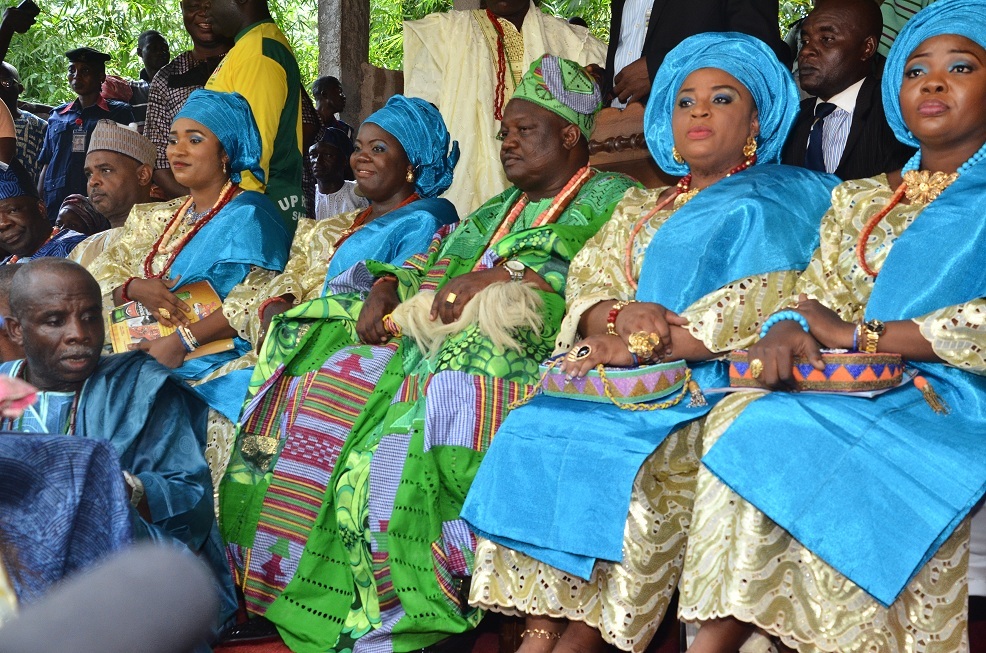
This part of the festival is done in private by the At谩峄嵦乯a (traditional leader of Osogbo) and 峄屘�峁n devotees, to reaffirm the sacred bonds and reopen communication between the goddess and her people.
Iwo Popo

The town鈥檚 main road is cleared of weeds to welcome visitors into Osogbo. And traditional security is provided to make them feel safe. Iwo Popo is also symbolic of the mission to find an alternate water source that led our ancestors to clear a path in the Osun grove and discover the Osun river.
The Osun Osogbo festival kicks off with the traditional cleansing of the city of Osogbo called 鈥業wo popo鈥�. The Iwopopo rite signifies the official commencement of the festivities to celebrate the Osun river goddess with pomp and pageantry.
The Ataoja of Osogbo leads the Osogbo Cultural Heritage Council, traditional chiefs, worshippers, devotees, government officials, and residents of Osogbo in a symbolic cleansing of the city.
Lighting the 16-point lamp
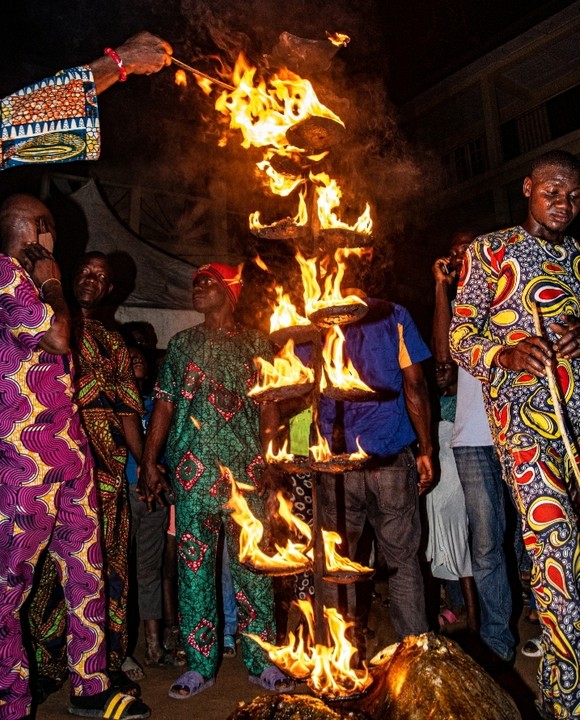
This ancient lamp called Atupa Olojumerindinlogun is made of brass. The trays are filled with palm oil and cotton wool and set to burn for a week. The lamp has great significance. While exploring the forest, the founders of Osogbo came across a group of spirits dancing around the lamp. They seized the lamp from the spirits, but when the goddess heard about it, she made them promise to celebrate the lamp just as the spirits did.
Bells to call on the goddess
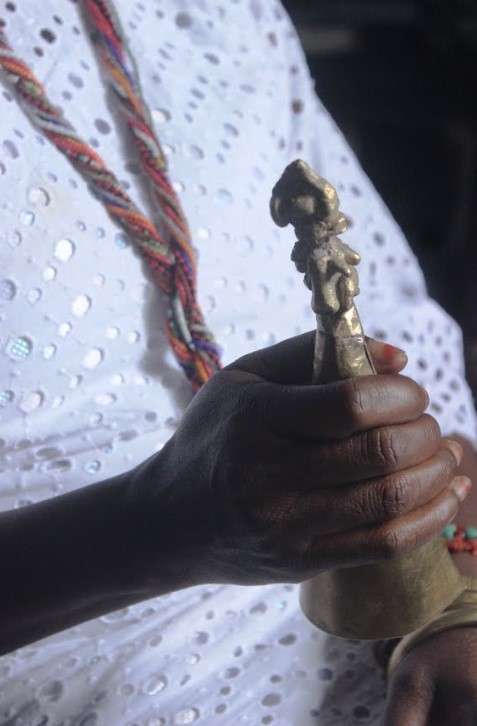
The devotees use a brass or bronze bell called 脿脿j脿 when offering prayers to 峄屘�峁n. The bell sound draws the attention of the goddess to her people. Many ritual items made of copper alloy symbolise the river deity.
The water is sacred
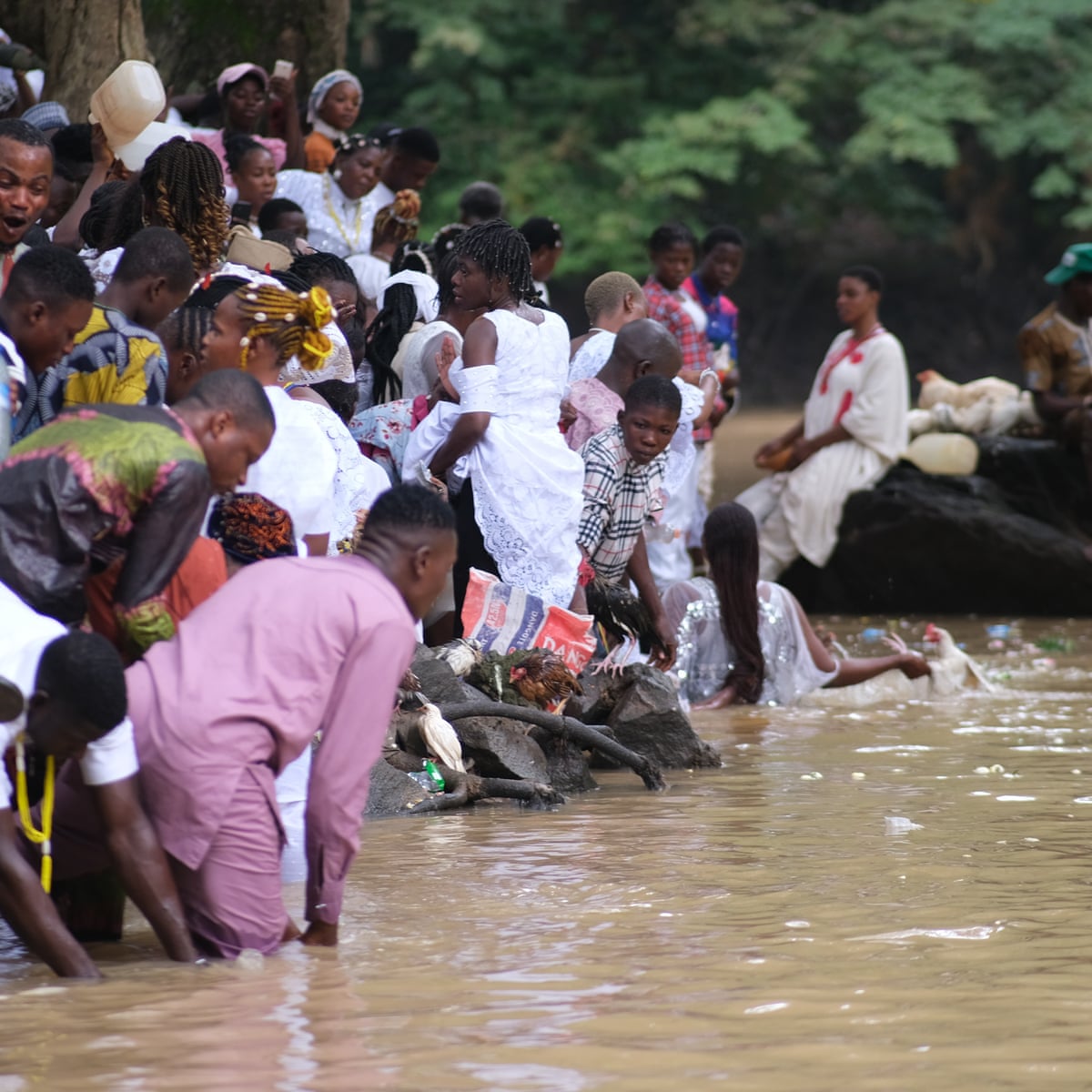
Traditionalists believe that the 峄屘�峁n river water, called agb貌 by devotees, is sacred. They believe the 貌r矛峁C� helps those who take her water, and that it has healing properties.
岷柑�y峄嵦� masquerades
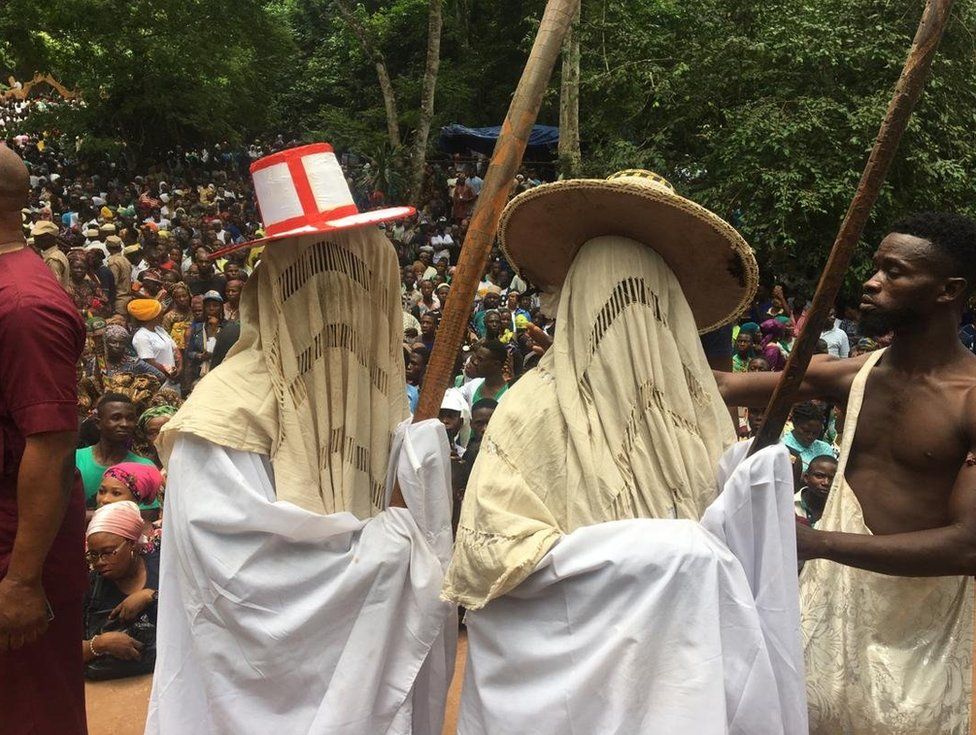
Traditionalists from all over the country take part in the procession and subsequent rituals, including the white-clad 岷柑�y峄嵦� masquerades. They represent the spirits of the dead and are a delegation from Lagos.
The Arugba Osun march
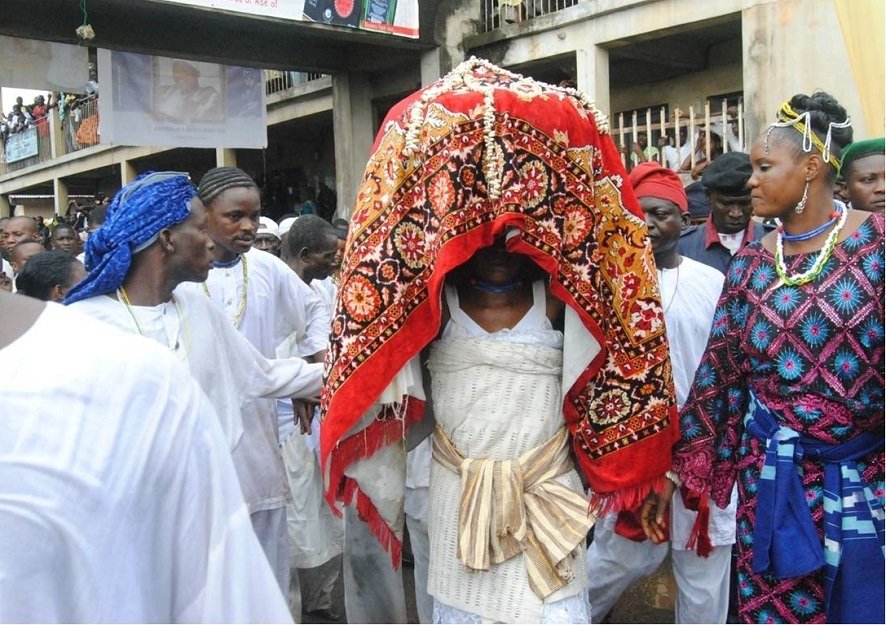
A virgin of royal blood walks to the grove with a symbolic calabash containing sacrificial items on her head. Her olose (whip boys) make sure she does this without stumbling or falling. The At谩峄嵦乯a offers the sacrificial items to the goddess by throwing them into the river, and this officially marks the end of the Osun festival.