Hear Me Out is a weekly limited series where Ifoghale and Ibukun share the unsolicited opinions some people are thinking, others are living but everyone should hear.
This Hear Me Out was written by Aladeselu Margaret Ayomikun.
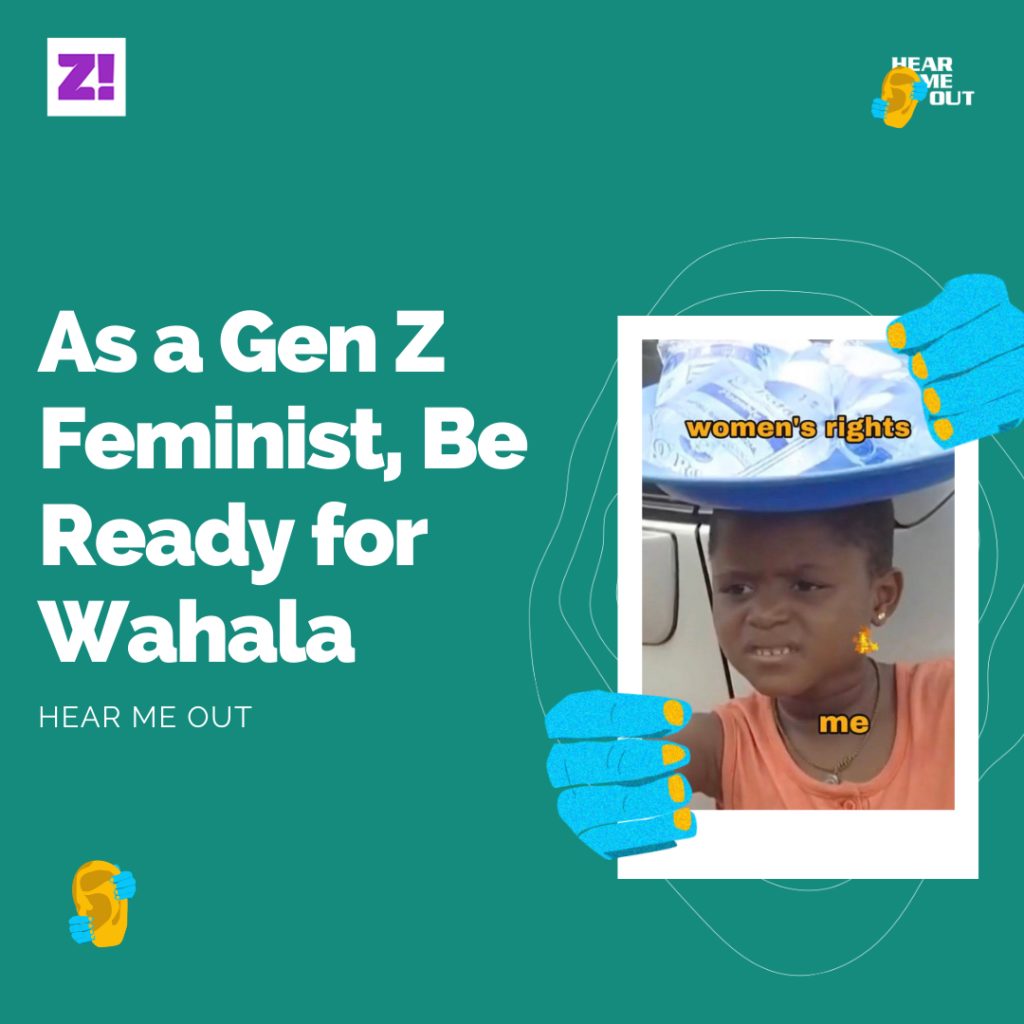
Of all the things a girl could be in this world, I chose to be a 19-year-old feminist in Nigeria. I was 9 years old the first time I read Chimamanda Ngozi Adichie’s Purple Hibiscus. Even though I could only understand the book the best way a child can, I still remember feeling like I had discovered the eighth wonder of the world.
鈥淏eing defiant can be a good thing sometimes.鈥漈hese words stood out to me. Aunty Ifeoma was just a character in a book, but she gave me permission to embrace my 鈥渄efiance鈥�.
It seemed almost impossible that somebody could give ordinary words so much power. And the more I flipped through the pages, the more I felt as if Chimamanda was writing my mother鈥檚 story. Then, it occurred to me that many women in Nigeria are just like Mama. In that very moment, I knew I had to know more about the author.
As a Gen Z feminist, you must be ready to become the topic of every family meeting.
I picked up my older sister’s phone and started my little quest for answers. It was during this process I discovered the word feminist, and when I knew what it meant, I knew I had found my identity.
I had found my identity.
The world will always come up with new ways to objectify and sexualise women. I grew up wearing mini-skirts and thin-strap tops my mother bought for me at bend-down-select. I was called a slut for the first time when I was only 10. And as weird as it might sound, it was my own mother who called me that. According to her, people were starting to talk, my breasts were poking through the thin fabric of my favourite tops. One day, she looked at me with distaste and called me a slut.
As a Gen Z feminist, you must be ready to become the topic of every family meeting. You should also prepare yourself for endless unsolicited opinions. I have come to realise my feminism terrifies a lot of people; it makes them angry. If I didn鈥檛 have such a coconut head, perhaps, I would鈥檝e cared.
I鈥檝e always been vocal about my feminism. I would walk into a room and somehow, start talking about women鈥檚 rights. The world has a long history of despising 鈥渓oud women.鈥� The result of that is I鈥檝e had to sit through painfully long hours of my parents giving me “the talk” about how no man will ever want a wife who won鈥檛 submit.
Several times, I鈥檝e listened to my brother try to convince me that identifying as a feminist would make people hate me. He suggested I try other terms like “gender rights advocate.” I鈥檝e seen my name become the butt of jokes about Nigerian feminists in my school. People have asked, “Oh, you’re a feminist?” I imagine they pity the person who would marry me.
And I can鈥檛 forget my religious friends who remind me that feminism is not part of God’s plan. As a matter of fact, I鈥檝e been bullied in church because of my feminism.
On a 鈥渟pecial Sunday鈥�, youth pastors were walking in circles, selecting random people in the congregation to answer questions. One pastor called me out and asked, 鈥淲hat would you do if your husband wants you to cook, do his laundry, do the dishes and clean the house, every single day?鈥� My answer was simple. 鈥淚 would tell him I鈥檓 his wife, not a slave.鈥�
I was walking back to my seat when a young man requested to speak next. 鈥淲omen like her are the problem of the church鈥�. Even though these words were coming from a complete stranger, they still stung. There is a common idea that feminists are 鈥渟trong鈥� and have a 鈥渢ough skin鈥�, but we鈥檙e only human.
What鈥檚 it about my feminism that terrifies people? Why does it make people’s blood boil?
I was publicly humiliated at school once. I was in the middle of a heated argument about how Nigerian culture needs to be reformed until it acknowledges that daughters deserve the same respect sons get without even trying. There was a look of disgust on the faces of the men I was arguing with because I was suggesting something as 鈥渟acred鈥� as culture needed to be reformed.
Not just that, the only woman who agreed with me expressed her view in low whispers. I was still trying to make people see the sense in what I was saying when I felt somebody yank my wig off my head. The loud echoes of laughter that followed right after broke my heart. I cried horribly for days because that was the smallest I鈥檇 ever felt in my entire life. I didn鈥檛 tell anybody about the new level of anxiety and self-doubt it unlocked inside me.
Memories like these leave me with questions I haven鈥檛 been able to answer to this very day. What鈥檚 it about my feminism that terrifies people? Why does it make people’s blood boil? Is it because I鈥檓 tired of seeing doors slammed in the faces of deserving women on the sole basis of gender? Is it because I believe women should not be denied their right to safe abortion? Or because I would never fit the 鈥済ood African wife鈥� narrative my mother has spent her entire life trying to fit?
Society claims to appreciate women, but in reality, they only appreciate women who deliberately dim their light just to allow men shine. As a woman, you鈥檙e expected to aspire to be a good wife and mother, to never prioritise anything over your matrimonial duties.
On some days, you鈥檙e allowed to have an opinion, but it鈥檚 usually better to keep those opinions to yourself. You can speak up about gender-based violence, but when you do, prepare for the 鈥渕aybe you shouldn’t have gone to that place, or worn that dress, or said that to him鈥� speech that would follow right after.
All my life, my mother shrunk herself just to stroke my father’s ego, and it鈥檚 never made much sense to me.
You鈥檙e expected to dress the way women are 鈥渟upposed鈥� to dress 鈥� everything knee-length or baggy, minimal accessories and NO cleavage 鈥� any other type of dressing would be seen as defiance. You should also smile even when you have no reason to. I鈥檝e watched many women shrink themselves to fit that little, demeaning image society has created.
All my life, my mother shrunk herself just to stroke my father’s ego, and it鈥檚 never made much sense to me. Even though we all knew how hard she worked to raise our school fees, she would give the credit to my father because that鈥檚 what good wives do. Just like my siblings and I, my mother had a curfew because 鈥済ood wives shouldn鈥檛 be outside past 8 p.m.鈥� And if God forbid, she ever misses her curfew, he would punish her the way bad wives should be punished, by locking her outside her own home.
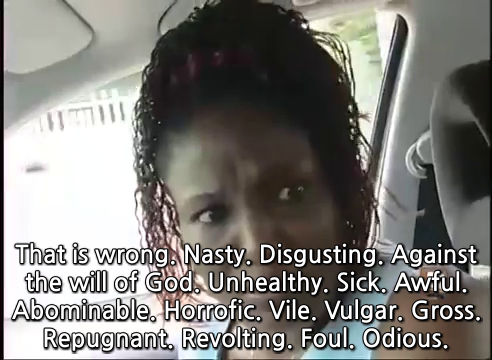
It鈥檚 very easy for people to ignorantly assume feminists are angry and unhappy women who hate men, and I鈥檓 tired of this misconception. You could spend your whole life educating people about the true meaning of feminism, and they would still choose to listen to those little patriarchal voices in their heads. I鈥檓 not naive enough to think the world would change overnight because of me, but I鈥檓 never going to stop clamouring for that change.
I was once the kind of feminist who only said the things men like to hear. Things like, 鈥淚鈥檓 a feminist but I still think a man should be the head of the family鈥�. I was at a point where I relied heavily on people鈥檚 validation for every aspect of my life. Even my feminism was tainted by societal stereotypes because I didn鈥檛 want my views to offend anybody. I would tell myself I could be a feminist and still be a 鈥淣igerian woman鈥�, the one who would master the act of compromising to seem nicer to men. A small part of me didn鈥檛 want to contradict everything the Bible says a woman should be.
But last year, I got selected for a women鈥檚 rights fellowship where I met 19 like-minded women. For the first time in my life, I had the opportunity to be in a room full of feminists, and they helped me realise that if I couldn鈥檛 be an unapologetic feminist, there was no point in being a feminist at all. I鈥檓 used to being hated now. As a matter of fact, it doesn鈥檛 bother me anymore because the kind of people who hate me for my feminism is exactly the kind I don’t want to be associated with.
I have a clear vision of how I want my feminism to impact the world. It starts with calling bullshit on all the misogynist nonsense society likes to preach. And on days when I feel like giving up, I remind myself of the different ways society robbed my mother of her voice and happiness. Like many Nigerian women, she deserved better. She still does.
ALSO READ: 8 Nigerian Women Talk About Why They Became Feminists