I鈥檒l start from 2013.
I was in SS 2 when I got pregnant and stopped going to school. I didn鈥檛 want people to notice when my stomach started to come out. So I stayed in my parents鈥� house trying to manage. The father of my child tried in his small way鈥� 鈧�1k here, 鈧�2k there 鈥� but money didn鈥檛 reach anywhere.
In 2014, I gave birth to my baby girl. With nothing else to do, I鈥檇 sometimes collect goods from traders and help them sell. The little money I added to the price was my profit. My gain wasn鈥檛 big, but at least I could use the money to buy things for my daughter and me. That鈥檚 what I did for a few years: waking up, finding things to sell, and managing the small profit.
Along the line, my first relationship ended. By 2021, I was dating someone else and pregnant with my second child. Things were okay for a while until my man鈥檚 business spoiled. To survive, we crossed the river together to buy used toys from containers and selal them. The money kept us alive.
After I gave birth to my second child, a boy, we started farming. We planted and harvested cassava for people. The money we earned from farm work was small, but we never had to beg.
One day, I asked a fisherman to sell me some fish I could resell in the market, but he refused. He said I didn鈥檛 have cash to pay. Also, people complained that his prices weren鈥檛 good. I decided that this fishing thing, I鈥檇 also try it. I went to one of my neighbours and asked her, 鈥淧lease borrow me 鈧�20k.鈥�
She asked me, 鈥淎re you sure you can do this?鈥�
I told her I鈥檇 try. I鈥檇 learn. She agreed to give me the money.
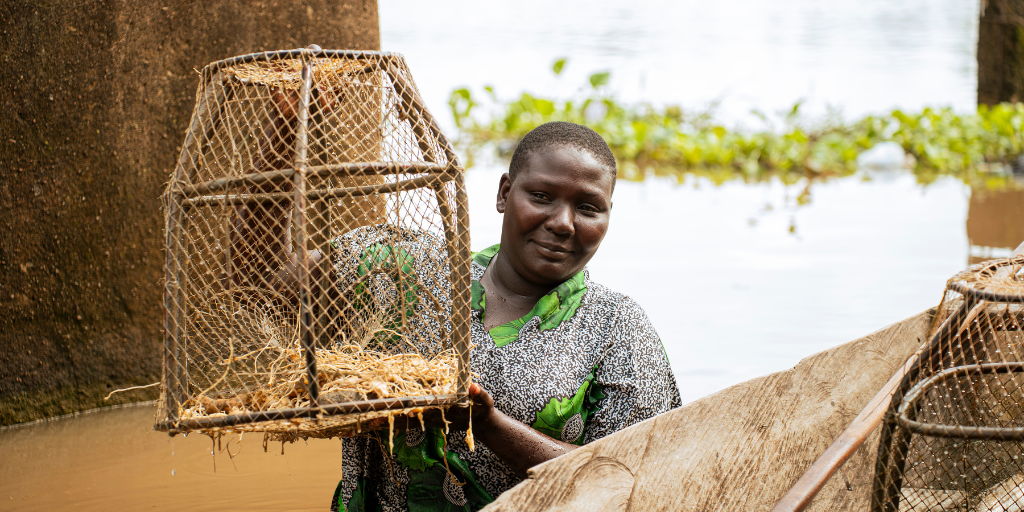
With that 鈧�20k, I found a man to weave ten fishing baskets 鈥� the ones we call Gura. After I paid him, nothing was left. Not even money for bait. A bucket of kuli kuli was 鈧�4k. The kind of money I didn’t have.

I asked my husband to help, and he told me he had no money. I believed him, but I was so desperate. So I asked him to give me the 鈧�2k he usually gave us for food every week. I told myself I’d manage.
I bought 鈧�1k worth of kuli kuli and 鈧�500 banga and set my traps. Once you set them, you just wait two days.
Those two days felt like forever.
When I returned two days later, I caught two small fish in two traps. Too small to sell. But it also told me the traps could work. So I cleaned the fish, used them to cook a pot of pepper soup, and told myself I would try again.
But I鈥檇 run out of money again. As I didn鈥檛 catch anything, I had nothing to sell. One fisherman saw me checking out my traps and asked why I looked so sad. I told him the truth. He said he liked my spirit and offered to sell me 鈧�10k fish if I showed him where I lived. He wanted to know where to go for his money.
I accepted the offer. After selling the fish, I made 鈧�3k profit. That became my new capital.
The next time I set my traps, one of them caught a big fish. I sold it for 鈧�15k. That money fed us for weeks. It felt like breathing properly for the first time in a long while.
I returned to the river to set my traps. Also, the fisherman and I have become friends. If he killed a lot of fish, he鈥檇 give me small to resell. In some weeks, I made 鈧�10k from this. Some weeks, I made 鈧�20k. Once, I made 鈧�40k.
This is a big part of my everyday life now. When my traps are empty, I鈥檇 look for a fisherman or another trader I can buy from. Sometimes, some of them sell to me on credit. They鈥檇 give me their account number or phone number, and I鈥檇 send them their money after I sell the fish.
Me, I sell to the fish traders at Swali market. They like my prices because I don鈥檛 charge them too much. So they can add money and make their own profit. The problem is that I have many customers, and I don’t always have enough fish for them, especially when things are slow.
And things are slow now.
The river is bad because the water is low.
When the water doesn鈥檛 move, the fish don鈥檛 move.
Before the river got bad, a trip to my traps fetched me 鈧�15k – 鈧�20k. It was also easy to ask the fishermen to sell from their catch. Now the traps don鈥檛 catch plenty fish. Nobody has anything to sell.
I don鈥檛 check my traps that much these days 鈥� I鈥檝e not even gone in two weeks. I spend more time on my farm, which I rented for 鈧�3k/yard, where I plant cassava, yams, some pepper and okra.
Farming and fishing. That鈥檚 how I survive.
I also try to save. Every day, I put 鈧�500 in my akawo daily contributions. The man comes to my house for the money and gives it back when I need it. But the money doesn鈥檛 grow. My family comes first, so money comes out to feed them.
I have three children now. My youngest is two years old. My eldest is 11 years old, and my second child is five years old. Both of them go to school. I want them to have that option.
As for me, I鈥檓 waiting for the rains. The fishing business is very good from January to March. I鈥檓 waiting for the river to rise, fish to return, and for work to continue. I鈥檓 happy that I found a way to make things work.
Yiteovie is part of the millions of people who make up Nigeria’s informal economy. This is the first of a five-part series highlighting their stories. Moniepoint spoke to thousands of them and combined their stories with internal data from over 5 million business owners in a report you’ll .