If someone handed you 100 million naira right now, would you make your own film or start a production company? Or would you be like me and spend 1 million on shawarma for all your friends first?
That was the question that opened the first panel I attended on Day 3 of AFRIFF, at the film and content market, where I鈥檇 shown up ready to take on the day. Film is Business: Building Sustainable Production Companies was one of the most honest panels I鈥檝e sat through at the festival so far.
Usually, when experts are handed a mic on these stages, you can feel a sheen of unintended fakeness. They hold words back, self-censor, count their thoughts. It鈥檚 not an indictment, it鈥檚 just how these panels tend to go. Today was different.
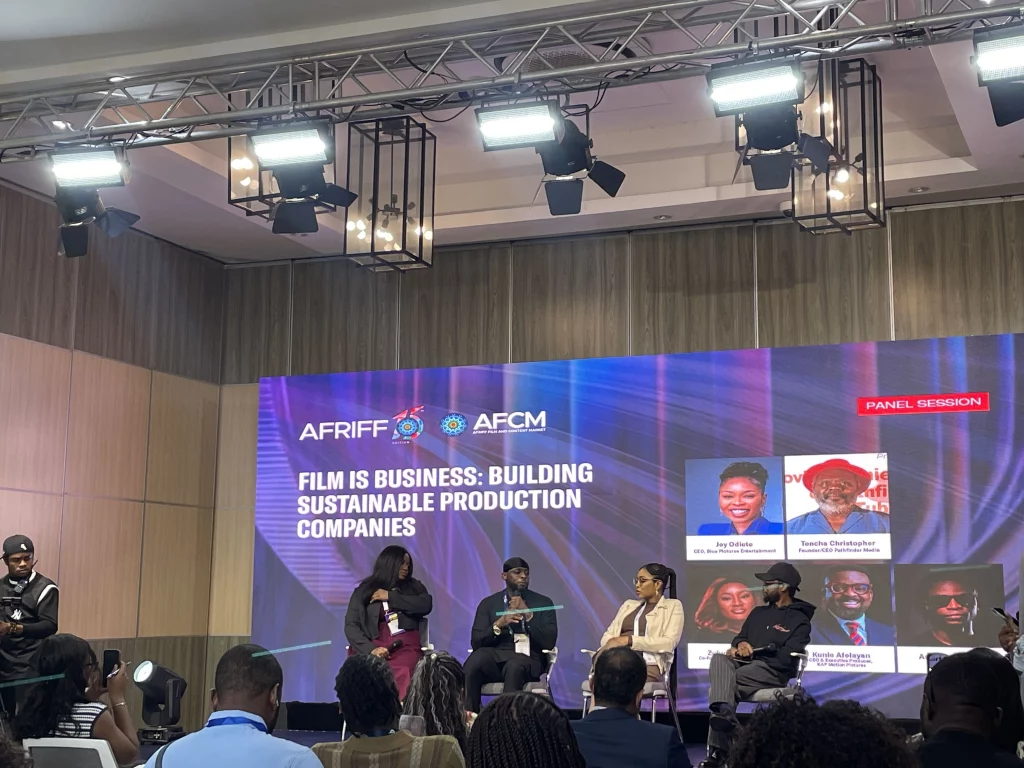
Three producers including Joy Odiete, CEO of Blue Pictures Entertainment, laid out the realities of producing in an age where content moves fast and money moves faster. They urged building a tiered portfolio: cinema releases, festival films, micro dramas, YouTube movies and more. Their core message was that spending should never be emotional. Odiete stressed the need for a cap on every expenditure, and she broke down what a producer actually earns from a theatrical release: roughly 28 million of every 100 million, with the rest going to exhibitors and distributors. The model is unforgiving, but the panel drove that point home without making it feel hopeless. It gave dreams a path to a more realistic existence.
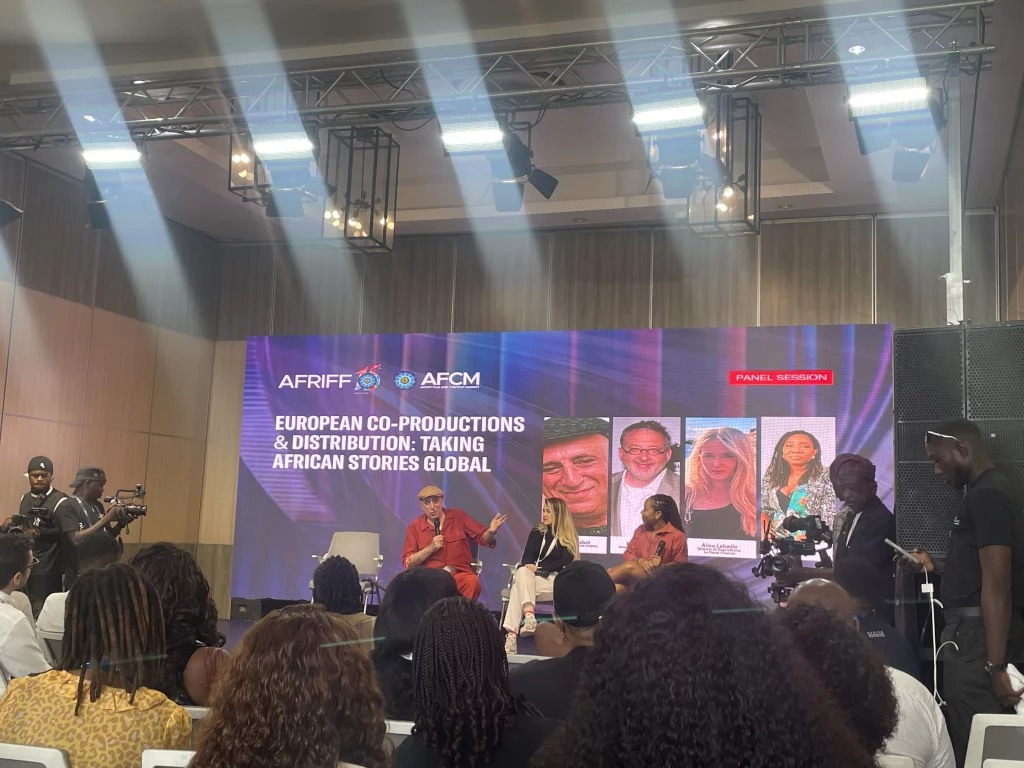
The next panel took us to Europe with Alice Labadie and Francis Nebot, French producers behind Juju Stories, My Father鈥檚 Shadow and La Bola Negra. Their session showed that acquiring a film has no set rhythm or rhyme. Alice picked up My Father鈥檚 Shadow at the script stage after watching Akinola Davies Jr.鈥檚 short film Lizard on her phone. Francis then waded into the murky waters of French financing: sharing how much work must remain in France when taking French money for production. Long story short, there鈥檚 money, but you鈥檒l have to work hard and pray for some luck. Tu comprends? I hope so, because that鈥檚 the best I can offer.
After that, I stepped out to meet a new friend who can鈥檛 get enough of the Nigerian film scene. He quizzed me about how films get made here with a child-like curiosity, hoping to take something back home. The conversation made me self-assess. I鈥檓 so used to talking about Nollywood with fellow Nigerian film people that explaining it to someone from another country forced me to slow down and break down the peculiarities of Nigerian filmmaking. In summary: e no easy, mehn.
My last panel of the day was Women Leading Africa鈥檚 Creative Future. It was fairly standard, with the same kinds of questions you鈥檒l expect from gendered panels and the same answers, until near the end. Ini Edo was talking about starting small as a filmmaker when Iyabo Ojo pushed back, saying: money is best spent on assured ventures, which cut against Ini Edo鈥檚. The tension energised a somewhat dull room. After a day of constant nodding, a disagreement was a welcome change of pace. And yes, I was on Ini Edo鈥檚 side, because
I spent the next hour with fellow media folks, turning a corner of the venue into a makeshift press room. We worked, ate and talked while waiting for a ride to Landmark for the screenings. One conversation is still swirling in my mind: Seyi Lasisi asked whether these festivals are pushing our industry to contort itself in ways it has never done, and whether authenticity gets sacrificed in the process. None of us had an answer. But that thread will always remain in my mind whenever another tussle breaks out between festival filmmakers and the mainstream ones.
At Landmark, I found the nearest coffee shop, bought an espresso shot to chase away the exhaustion, and went in for . Directed by Orobosa Ikponmwen, the film stars Onyinye Odokoro as a woman caught between the way her mother shaped her and the ripple effect on her own daughter. It鈥檚 steeped in Igbo pride and emotion, and it never retreats into cynicism.聽
Next was Which Way, directed by Jide Okeke, about a tormented man running from a past that threatens to destroy his family. It was one of the most unusual screening experiences I鈥檝e had at AFRIFF. I went in knowing nothing, and about twenty minutes in, the film reveals its genre in a sequence so bewildering it both stuns and impresses. I鈥檓 not spoiling it, so please don鈥檛 yell at me.
Midway through, a friend who doesn鈥檛 watch Nollywood found me, and we finished the film together, praising the director鈥檚 eye for a shot while staying stunned at the story鈥檚 place in its genre. They had fulfilled their one Nollywood film a year quota thanks to me.
That was the end of Day 3 for me. I trooped to my ride home, still wide-eyed from the espresso, wondering who would give me 100 million naira. The shawarma is on me.
See you on Day 4.