When Nas said, 鈥淗ip-Hop is dead鈥� as a proclamation and the title of his 2006 album, he didn鈥檛 just rustle feathers. He created a statement that became the go-to cry for people in any era who believe that music now lacks soul and substance.
A similar thing is happening to its distant cousin, Afrobeats, but in a different way. No Don of the genre has insinuated or straight-up said, through an album/single, that Afrobeats is dead. Instead, various voices, from music execs to fans and everyone in between, are singing, not cautiously, but dreadfully, that it might soon need a pinebox. While Nas was alluding to the focus-shift from quality to mass-market profit in his 2006 release, the people now declaring Afrobeats dead are mostly referring to the funding channels that have suddenly closed.
It鈥檚 a noble concern. And though the premise of the conversation is inaccurate, it鈥檚 not entirely incorrect. The discourse that Afrobeats is in decline is often fueled by cancelled international tours, unsold tickets, shrinking marketing budgets and a perceived plateau in the genre鈥檚 global novelty. However, to provide an accurate answer or context to this concern, there must be a distinction between cultural resonance and corporate finance. Afrobeats isn鈥檛 dying; it鈥檚 undergoing a severe financial market correction and a sonic transmutation.
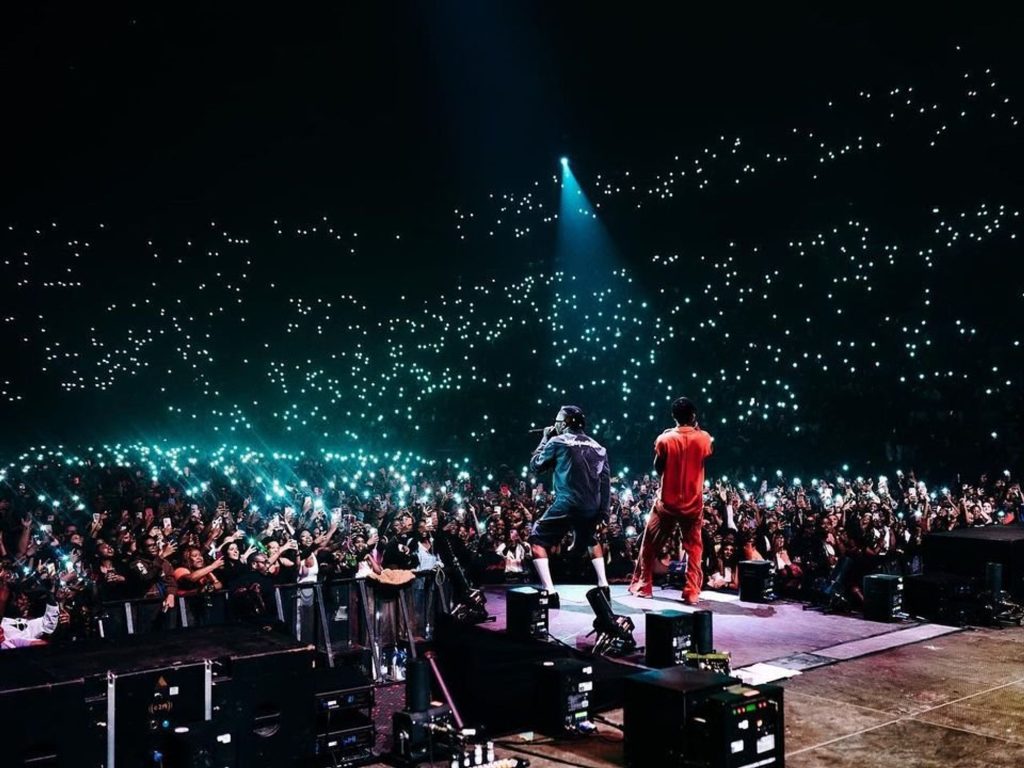
To declare a genre is in decline, the nature of that decline must be defined. In music, the death of a genre is rarely marked by a sudden disappearance. It鈥檚 usually characterised by three telltale signs, such as cultural stagnation (failure to attract new and young listeners or produce breakout stars), a drop in consumption metrics (streams, sales, radio plays, live performance attendance), and sonic petrification (no evolution, and heavy reliance on nostalgia instead of innovation).
When people claim Afrobeats is declining, especially at the moment, they鈥檙e pointing to the commercial and financial issues rather than the reality of the culture. This brings me to the point that there鈥檚 a mirage around the foreign capital and investment. Between 2018 and 2023, Afrobeats experienced a huge influx of venture capital and a corporate gold rush. Major international labels threw massive advances and inflated marketing budgets at many artists based on fleeting TikTok virality, driven by a fear of missing out (FOMO). When most of those massive advances failed to recoup, because global superstardom can鈥檛 be forced on every artist, the easy money dried up.
This sobering financial situation is thoroughly detailed in the . In this report authored by Professor Olufunmilayo Arewa, it鈥檚 revealed that Afrobeats generated roughly $100 million in global value, yet Africa remains the lowest royalty-earning region worldwide.
The report highlights that this gap isn’t accidental, but structural. The international major labels and digital streaming platforms control the distribution, metadata and royalty pipelines. African artists often enter this system from a position of disadvantage, so profits almost entirely flow offshore. Compounding this is Nigeria鈥檚 largely informal economy, which weakens copyright enforcement and revenue tracking. Therefore, the 鈥渄ecline鈥� in funding isn鈥檛 a sign that the music has lost its value. It鈥檚 a cautious reminder that our economic pipeline is functioning exactly as it was designed to. Local consumption is getting better, but the audience still needs international platform metrics to crown our stars. The live circuit is still crawling, even though events like Detty December draw millions. The lack of incoming investment is a symptom of structural flaws, not the death of Afrobeats.
READ NEXT: Why Are Nigerian Pop Albums So Forgettable These Days?
While we鈥檝e established that there鈥檚 no decline, there are arguments for the quiet phase that Afrobeats currently finds itself in. Things such as the slowdown in global milestones, the aforementioned funding drought that makes it harder for mid-level artists to finance high-end rollouts, promo and marketing. And lastly, there鈥檚 fatigue at the top: Afrobeats has been temporarily overly reliant on its veteran 鈥淏ig 3鈥�, so much that when their output slows or shifts in tone, international momentum stalls.
One counter-argument these days has been the rise of the underground, a space often filled by experimental, internet-native artists. But the few crop of artists gaining traction at the moment are a little fraction of the whole scene.
The history of music shows that genres rarely drop dead; instead, they transmute. They shed their skin and absorb new elements to survive the next generation.
When the mainstream excess of Disco 鈥渄ied鈥� in the late 1970s, its four-on-the-floor DNA didn鈥檛 vanish 鈥� it was stripped down by the marginalised youths of Chicago and transmuted into House music. In the 2000s, the classic boombap or sound of the Golden Hip-Hop era didn鈥檛 die; it absorbed the heavy 808s of Southern Trap to maintain global dominance. Even Afrobeats itself is a transmutation, born from the merging of forms of traditional Yoruba music, Caribbean Dancehall, American R&B and Hip-Hop, Pidgin English and local dialects, and cosmopolitan Lagos 鈥�
Afrobeats is currently in a heavy phase of transmutation. The silk-smooth pop sound of 2018 and early 2020s is making way for new, complex fusions. The genre is rapidly absorbing, from log-drums of Amapiano to Drill tempo, glitchy grunge and trap sounds and the vernacular storytelling of the streets.
The quality of music that bubbles to the mainstream can be a concern, but it should never dictate taste or be a growth graph. Oftentimes, the mainstream always rewards sub-par, mid, or KISS (Keep It Simple and Stupid) stuff. But this isn鈥檛 the first time that what鈥檚 considered shallow or 鈥渂rain-rot鈥� music has become popular. In fact, at every point in Nigerian pop music, just like we鈥檝e had brilliantly written and produced hits, we have had popular songs that are uncouth, morally decadent, incoherent or not just at the standard of yesteryear鈥檚 hits.
Also, what鈥檚 considered bad music in the context of this conversation is mostly a generational divide. When a lot of listeners resonate, is it really bad music? Listeners danced to Deebee鈥檚 鈥淐ollabo鈥�, Terry G鈥檚 鈥淔ree Madness鈥�, D鈥橞anj鈥檚 鈥淭ongolo鈥�, Durella鈥檚 鈥淲iskolowiska鈥� and P-Square鈥檚 鈥淏izzy Body part 2鈥� (What really did they have to say that they didn鈥檛 say in the first one?) It doesn鈥檛 matter how abstract, creative, glossy, poetic, slick or subtle they are written or delivered, most are songs about scams, soulless sexual encounters and nothing. The boomer and millennial stance that old music is better is delusional. Perhaps, a section of Afrobeats鈥� listeners has entered its 鈥渙ld taker鈥� stage.
To know if a genre is dying, one must look at what the kids are listening to. Youth culture always dictates the directional heading of music. Today, streaming numbers (radio is dead) reveal that the kids aren鈥檛 really looking backwards as much. They鈥檙e focused on making a weirder and more heavily localised music.
You see, while the export-ready sound plateaus, the youths at home have pivoted heavily to vernacular-driven music. This is where the rise of Street-Hop (Mara and other various forms) becomes the clearest proof of Afrobeats鈥� vitality. Artists like Shallipopi, Ayo Maff, Mavo and Zaylevelten are pulling huge streaming numbers. Street鈥揌op thrives on authenticity, uses algorithm-friendly beats, lamba and themes that speak directly to the economic and social realities of young Nigerians.
For a clearer understanding of the state of Afrobeats and a pathway toward real success, it must be noted that the ongoing 鈥渄ecline鈥� conversation is a misdiagnosis of a genre in transition. To put it clearly, cultural value and corporate investment aren鈥檛 the same thing. The easy money is gone, and the structural leaks are clearer, but hyper-commercialisation isn鈥檛 going to stop.
Since 2006, Nas has released over thirteen full-length projects, each arguably fashioned to accommodate the new sounds and voices of their times.
Afrobeats has many struggles caused by macroeconomic forces it can鈥檛 control 鈥� poverty, weak purchasing power, inflation and minimal government support. Decline isn鈥檛 one of them; the genre is just shedding old skin and preparing for its next inevitable, locally-driven evolution.