KC Obiajulu has always been a hustler.
Before stepping behind the camera to create visuals for songs like Essence by Wizkid and Tems, Monsters You Made by Burna Boy, Ocean by Asa, Black is King by Beyonc茅, Ozumba Mbadiwe by Reekado Banks, Pour Me Water by Kizz Daniel and Away by Ayra Starr, the acclaimed cinematographer had another version of global domination in his mind.
鈥淚 was selling clothes in university and my dream was to be a full-blown Igbo man with boutiques all over the world,鈥� KC says.
A chance encounter with a film set during his IT changed the trajectory of his life. He suddenly wanted to bring people鈥檚 imaginations and ideas to life. Now, over a decade since his first paid gig, KC breaks down his creative process for 91大神, letting us into the mind of one of the most hardworking cinematograhers in the Nigerian film industry.
If I asked you to explain your job to a four year-old, what would you tell them?
I鈥檒l tell them what I told my five year-old son when he asked what I did for a living: I bring dreams and pictures to life. That鈥檚 what I told him. I鈥檓 the guy directors and clients come to with their ideas and I find a way to translate all of that into visuals. I manipulate cameras to create the look and feel of a film.
If a world doesn鈥檛 exist, I have to create that world and make peple believe that it does.
So do you actually hold the camera or do you just show someone what to do?
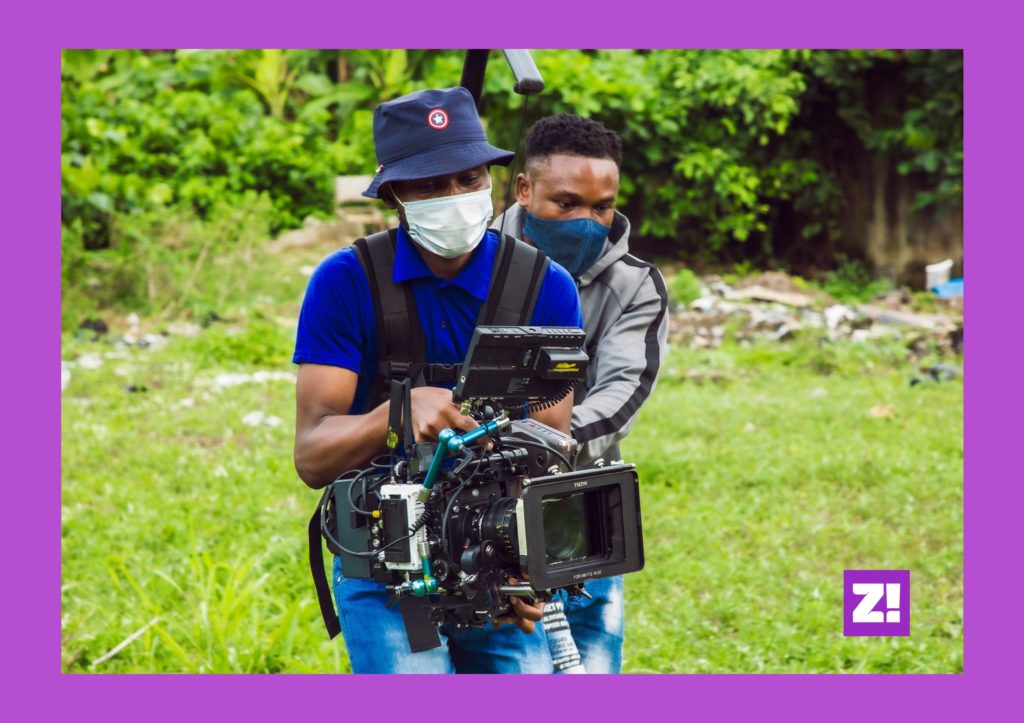
Ideally, a cinematographer is not supposed to hold the camera. We have camera operators for that. But in Nigeria, there鈥檚 a problem of trust, so you find us most times operating the camera just so no one messes up our shots.
Interesting. So how do you choose your projects?
My approach has changed over the years. When I was younger, it was all about the money for me. That used to be my first question, 鈥淗ow much is it?鈥� Thankfully, I鈥檝e outgrown that. These days, I make sure I ask what the project is about. I have to be interested in the project being discussed.
I haven鈥檛 done music videos in a while because I got bored with them and the money wasn鈥檛 enough reason to continue. Just a while ago, I got an offer to shoot a music video for a popular American artist, but I said no. I wasn鈥檛 connecting to the project and, worse, they were acting like they were doing me a favour because I鈥檓 Nigerian. I like people that work as collaborators, not dictators. If I’m working on a project, I鈥檇 like to be able to share how I feel and not just be told what to do. Filmmaking is collaborative and if I don鈥檛 get that sense from the start, I鈥檓 saying no.
RECOMMEND: 11 Things You Should Know About Nigerian Filmmaker Abba Makama
You鈥檝e mentioned that music videos got boring for you. So does that mean film is what you enjoy making?
Not films abeg; films are is too intensive. Documentaries are what I鈥檓 currently in love with. They feel more organic and there鈥檚 no acting involved. I like that I just get to film it as I鈥檓 going and if I miss something, there鈥檚 no way for me to recreate it. The emotions are real and beautiful. I do a lot of documentaries now.
I鈥檓 curious about how you approach your projects. What鈥檚 the step-by-step process?
The first thing I do is read and understand the script. Then I take out time to talk to the director because it鈥檚 important that I understand his vision and how best to bring it to fruition. Then I explain my ideas and we see if it aligns or how we can align our individual translations of the script.
Nex, I ask about the budget and plans for the film. I wouldn鈥檛 want to spend time working on a project that just sits on someone鈥檚 hard drive. If the budget and plan works for me, I鈥檒l move on to the hiring process because I must work with people I can connect with creatively.
When the director shares a treatment 鈥� a document describing what he wants the project to look like and references, I study them. Sometimes, I stick with what I鈥檓 given, and other times, I talk to them about exploring more. I also take out time to watch similar projects to open my mind. All of this requires time and no matter how good a project is, if I don鈥檛 feel like there鈥檚 enough time for me to prepare, I鈥檒l walk away.
You鈥檝e worked on both big features and short films as well. Which would you say is the most challenging and why?
Feature films torment you for a very long time because I have to deal with more people and work far longer hours. They also drain me financially, psychologically and physically.
Ouch. So what鈥檚 the craziest experience you鈥檝e had on a set?
I鈥檝e had an assistant director yell at me on a set before. Omo, I was confused, but I let it slide. Later, during filming, he started yelling at me and other crew members again. I called my team back and told the director we wouldn鈥檛 work on the project again unless he handled his assistant. He talked to the guy, but I don鈥檛 think he took me seriously because he kept laughing. I was very uncomfortable.
We managed to finish that project, but I鈥檝e been avoiding that director ever since.
Wild. But having worked on Nigerian as well as international projects, what do you think our industry needs to improve?
We need to deal with incompetence across different levels. Most people don鈥檛 take their jobs seriously. We also have poor hands when it comes to technical skills and planning..
Speaking of planning, what鈥檚 the plan for 2022?
I鈥檓 finally working on some personal projects of my own 鈥� short films and documentaries. This is my twelfth year in the business and until now, I hadn鈥檛 made any projects of my own, so I鈥檓 super excited. Hopefully, when people see my vision, they can get a glimpse into what goes on in my mind.
ALSO READ: Meet the Badass Female Directors Taking Over Nollywood in 2022