Editor’s Note: This article has been updated for clarity and balance.
As a Nigerian woman, two things are certain in life: people giving unsolicited opinions about your outfit, or even more crazy, a man telling you 鈥渉e has your type at home鈥�. Over the past weekend on Twitter, the former happened.
Ene Anabelle Ajogwu, an Affiliate marketer gave a presentation at the Mainstack Moment 2026 conference wearing a short skirt suit, and that was all it took for the Nigerian side of the internet to lose their collective shit.
Some argued that it was a corporate event and that she should have dressed 鈥減rofessionally.鈥� Others countered that it was a creator event and she should be able to wear what she wanted.
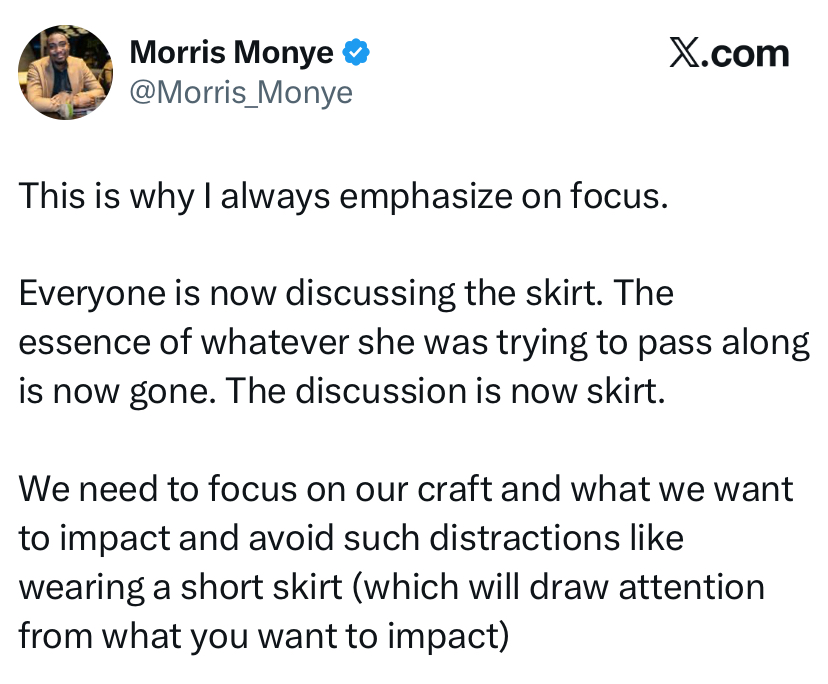
But the argument quickly moved beyond the event itself and became what these conversations always become about: a woman鈥檚 body and how she chooses to dress. And this points to a broader conversation to be had about why people feel entitled to police how women dress.
People on Beyonce鈥檚 internet have a habit of turning women鈥檚 appearances into public debates. You see it happen with celebrities all the time. Take Ayra Starr, for instance. She showed up to a recent interview sporting dark and dramatic eye makeup and that was somehow enough to upset people.
There were hundreds of incensed comments about how she looked tacky, which is frankly insane. How does someone trying a new makeup look trigger you that much?
It鈥檚 even funnier when you remember how hard people criticized her during her mini-skirt era, complaining about her revealing outfits and what message she was sending to young women. You鈥檇 think they鈥檇 be happy now that her style has morphed into something arguably more modest. Spoiler: They鈥檙e not and still have a lot of rubbish to say. And that鈥檚 the thing about these debates. You鈥檙e damned if you do and damned if you don鈥檛 because the mob is insatiable.
There鈥檚 also the respectability politics of it all. Many people genuinely believe that how a woman dresses reflects on her profession or the space she deserves to occupy. If a woman is in a corporate space, she must dress in a way that protects the image of that space. Just like that, her outfit becomes less about personal style and more about representing something larger.
That鈥檚 another thing about respectability politics. The goalpost is always moving. If you dress too modestly, you鈥檙e uptight and old fashioned. Dress in a way that shows your body and you鈥檙e an attention seeker with no self-respect. There鈥檚 literally no middle ground because at the end of the day, it is less about the clothes and more about entitlement to women鈥檚 bodies.

In a country like Nigeria where Christian and Muslim teachings strongly emphasize modesty, clothing is often interpreted through a moral lens. A short skirt is not just a short skirt. It is a litmus test for morality.
And then there is social media itself which acts as a lit fuse. Once one person starts the backlash, everyone else feels the need to add their own fuel to the fire. In a world where Elon鈥檚 Twitter payouts are treated like the holy grail, the platform鈥檚 average user鈥檚 pastime has turned into piling on random people, even when it鈥檚 none of their business.
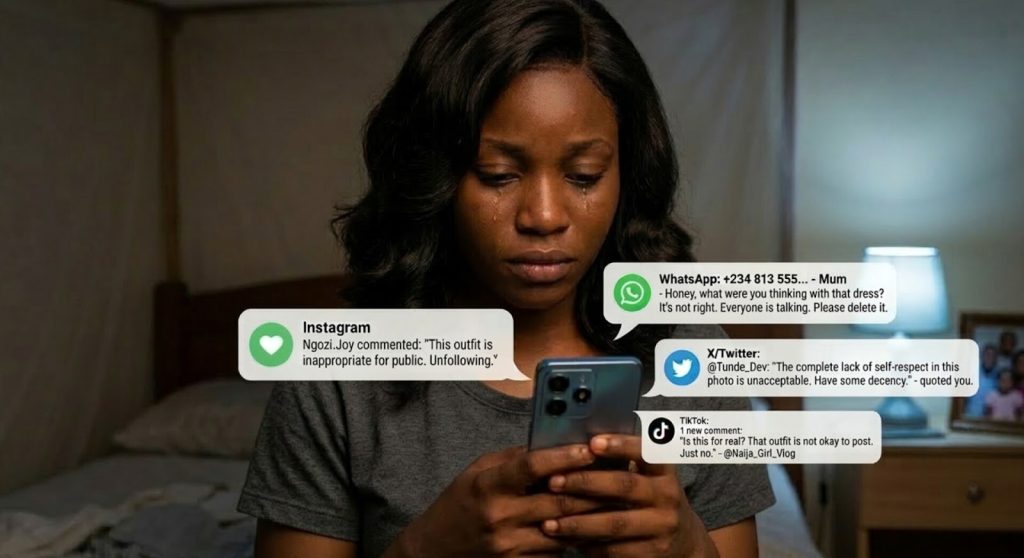
And that is how a woman giving a presentation at a conference ends up having thousands of strangers debating the length of her skirt. The exhausting part is that these debates are a constant reminder that no matter what you accomplish or do as a woman, someone will find a way to reduce you to your appearance.
Maybe the reason is simpler than we want to admit. All this is fundamentally about control. People are obsessed with controlling women. What they do. How they dress. What they choose to do with their bodies.
It鈥檚 truly insane and needs to stop.