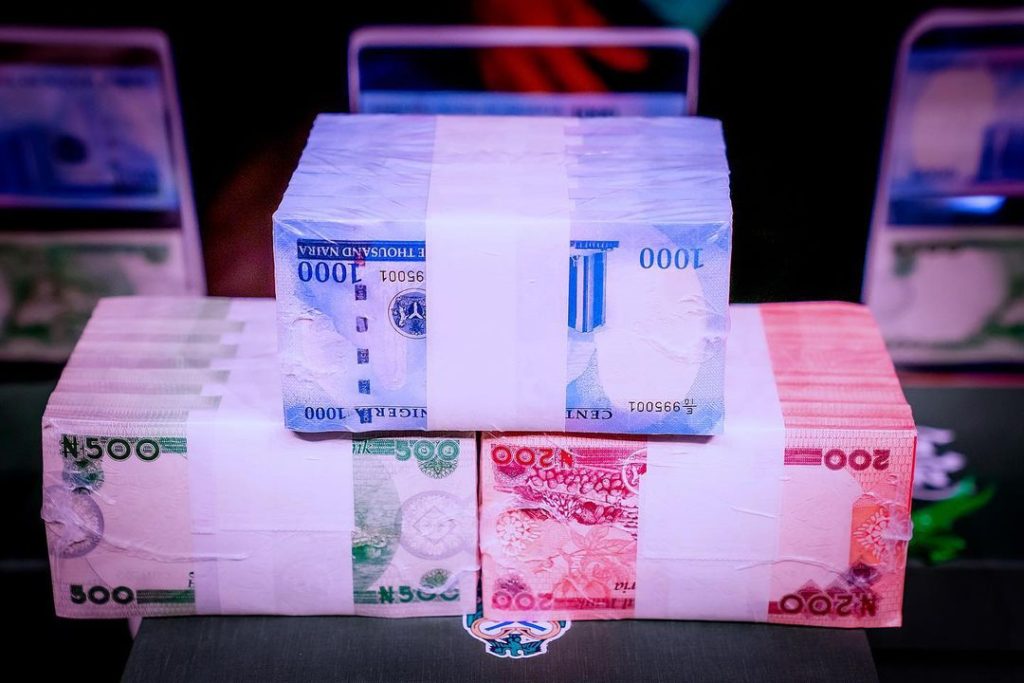
On December 6, 2022, Godwin 鈥淢effy鈥� Emefiele鈥檚 Central Bank of Nigeria (CBN) wrote a memo to bark orders at Nigerian banks over the rollout of the new naira banknotes.
The memo dropped just a week before the new notes are scheduled to enter public circulation on December 15, 2022. But the instructions won鈥檛 go into effect until January 9, 2023.
What鈥檚 in the memo?
Let鈥檚 run down the highlights:
- The maximum any individual can withdraw over the counter (OTC) per week is 鈧︹��100k. For corporate organisations it鈥檚 鈧�500k. Anything higher will attract processing fees of 5% and 10% respectively.
- Third party cheques above 鈧�50k won鈥檛 be paid over the counter.
- The maximum you can withdraw from an ATM is 鈧�20k per day, and 鈧�100k per week.
- Only 鈧�200 banknotes will be loaded in the ATMs.
- In serious situations where you need to go above these limits, the maximum you can withdraw as an individual is 鈧�5 million and 鈧�10 million for corporate organisations. And for that to happen, you need to meet some conditions, including uploading valid means of identification, your bank verification number (BVN), a notarised document of purpose, letter to the managing director of the bank, and approval from senior management of the bank.
To make sense of what it all means, Citizen spoke to Adedayo Bakare, a macro and investment analyst who works with Money Africa.
What do you make of the CBN鈥檚 withdrawal restrictions?
鈥淚 think the fundamental thing everyone should know is, the entire restriction is part of the CBN鈥檚 plan to phase out cash in circulation and cash outside the banking system. Regardless, it doesn鈥檛 matter.
鈥淐ash is the liability of a central bank because they鈥檙e the ones who issue it. Now, when the CBN issues cash, it doesn鈥檛 do so out of thin air. It prints it because people need it for transactions. When people need cash, they go to the commercial banks.
鈥淲hen customers request cash, it becomes the responsibility of the banks to get it from the CBN. What this means is that the excess of cash in circulation isn鈥檛 just because the CBN wants to put cash out there, it鈥檚 because people are demanding it. The CBN therefore has to print it.
鈥淭he CBN is trying to do so many things at once with the currency redesign. They think that there鈥檚 too much cash in circulation with some of it being hoarded. In Nigeria, the banknotes in circulation, the one we spend, is less than 2% of the gross domestic product (GDP). If you look at the UK or USA, the level of cash in the system relative to the size of the economy is consistent with what we have in Nigeria.
鈥淚n Nigeria, the level of cash in circulation compared to our GDP is lower than what you鈥檇 find in Kenya. Yet, Kenya has advanced payment systems. Nigeria, where such infrastructure hasn鈥檛 penetrated enough, is now saying it wants to introduce a cashless economy. According to the CBN, it鈥檚 to boost financial inclusion and to ensure their policies are more effective, fight money laundering, terrorism, kidnapping and all sorts of ambitious goals. But, cash isn鈥檛 the problem.
鈥淚f you want to fight money laundering, it鈥檚 to ensure regulation guiding the financial system is more sophisticated and more advanced to detect and prevent money laundering.
鈥淚f you want to stop terrorism, kidnapping and ransom payments, you have to ensure security is better in the country. You can鈥檛 do this by phasing out cash or saying people shouldn鈥檛 hold cash because there are more creative ways. If a kidnapper says they want ransom they鈥檒l get it whichever way they want because people will have to go and find that cash.鈥�
What does this new policy mean for Nigerians?
鈥淓ssentially, this policy will create hardship for Nigerians. When you go to the US, the EU, and even Kenya like I鈥檝e mentioned, people still need to hold cash. This is especially true in rural areas where people aren鈥檛 very educated, in lower income groups, and are elderly. These people rely on cash.
鈥淲hen you look at the purpose of cash itself, it鈥檚 the most inclusive payment system we have in the country. For me to use my bank app, I need to have access to the internet. To use USSD, I need to have access to mobile phones. For internet banking I need to have a smartphone. How many people have these? How many people have the education to use Paystack, Flutterwave, or any of the other payment systems?
鈥淐ash also doesn鈥檛 rely on any third party. Once you have it, there鈥檚 complete autonomy to conduct transactions. True, holding it comes with its security risks and it loses value, but that鈥檚 people鈥檚 preference. Think about it, this new policy is saying the money you have in the bank you can鈥檛 do this with it, you can鈥檛 withdraw it all at once. If I鈥檓 holding cash, nobody can tell me that. Cash is also instant which is why people use it for settlement. There are cases where people get fraudulent alerts, which is why they resort to cash instead.
鈥淐ash won鈥檛 affect monetary policy. Banknotes in circulation relative to total money, that is, money available to be spent, including the deposits in your bank account, is just 6%. So when you say 6% of the money you have in your economy is what is slowing down the effectiveness of your economic policy, it doesn鈥檛 make any sense.
鈥淵ou can鈥檛 say you want to restrict one of the primary ways people conduct transactions in your economy. This policy will only slow down transactions in the informal economy and affect the economy negatively in terms of output, job opportunities and what they can earn. It鈥檚 not a crime to hold money.
鈥淭here are rumours that the policy might be connected to the current political cycle, I can鈥檛 speak on that. All I know is, the benefits the CBN has outlined and the decision to redesign the currency and the timeline and suddenness of its decision to restrict withdrawals won鈥檛 lead us to a cashless economy, won鈥檛 make policy effective and won鈥檛 lead to financial stability.
鈥淥verall, the CBN is using the currency redesign and the withdrawal restrictions as a silver bullet to achieve things it can鈥檛 do. We鈥檝e had experiences in India where these policies failed woefully because fundamentally, cash is a way to ensure transactions. The government needs to do its work to solve insecurity and other issues, not the CBN.
鈥淎t this point one has to ask, why should Nigerians bear all this pain? Why should Nigerians bear all the cost for a policy that鈥檚 likely to achieve nothing? These are questions the CBN has to answer.鈥�