What was it like growing up in Edo state?
It was fun. I grew up in a town close to , my father鈥檚 village in Edo Central. Family was a huge part of my upbringing; I have five siblings, but there were always other people around, even people who weren鈥檛 family by blood. There鈥檚 a warmth that Edo people have. You might not necessarily agree with how people lived their lives, but you loved them anyway, despite their moral choices.聽
What sort of moral choices?
Let me tell you a funny story. There was this family we were always intrigued by: they were step-siblings, but everyone got along nicely. The legend was that Mr A was sleeping with Mr B鈥檚 wife and vice versa. When they all found out, there was a huge scandal, and one of the couples had to move, but they eventually switched partners. So now, Mr A鈥檚 wife is with Mr B, and vice versa.
Many girls I went to primary school with were pregnant for boys their age by the time they were 14 or 15. I never judged them. Of course, people would talk, but they were never ostracised because it happened often. It was also expected for the girl to move in with the boy鈥檚 family. That鈥檚 how many marriages started.
You鈥檇 just hear, 鈥淥h, this babe has gone to her husband鈥檚 house o.鈥� Not because the bride price was paid, but because she got pregnant, and that was it. And these were young 16 to 17-year-olds, and sometimes, they got pregnant the first time they had sex.
So there鈥檚 value in investing in sex education in that part of the country
Absolutely. If anything pushed me into development communication, it was the fact that some things people term as 鈥渘ormal鈥� can be prevented with better education. For instance, someone gets pregnant at 16 because they didn鈥檛 know they could get condoms. And despite how seemingly open the society is, they were ashamed to talk about it.
The culture is also very brutal on women, specifically. I remember one day, we were driving home from school, and we saw a woman being paraded naked for adultery. Our driver said it needed to be done to prevent a curse on her household.
That鈥檚 awful. Did it affect your mindset?
That was a turning point for me. My feminism started because I saw a lot of marginalisation of women growing up. I鈥檇 see stuff and say, 鈥淕od forbid.鈥�
When men beat their wives in public, people would say she probably offended him, she didn鈥檛 behave right, etc. The patriarchy is strong in these parts. The women who live in Edo are strong and outspoken, but the moment they鈥檙e with a man, it鈥檚 almost like all that they are exists to be a feather in a man鈥檚 cap.
After I saw the woman who was paraded naked, I started reading books about Edo culture because I was curious to find out if what the driver said was true. I was very studious and serious about school, and reading and people kept saying to my dad that 鈥淚鈥檒l marry a man, so he鈥檚 spending all that money just for a man to marry me.鈥� It was all very misogynistic.
Moving to Abuja in 2016 made me realise that women there could have more agency. A lot of the women I was told were bad women when I was growing up were just women who didn鈥檛 get married or want to remarry. The core of who I am, my feminism and belief in women鈥檚 rights was shaped by those experiences.
I guess it鈥檚 a microcosm of the larger Nigerian society.
But there were good parts, too: the most beautiful part about growing up in Edo state is that you鈥檙e never alone. Everybody is invested and cares about your success, and always tries to contribute. There鈥檚 a strong sense of community based on the fact that we know we鈥檙e a minority tribe.
Recommended: I Needed to Cut Myself to Feel Something
Minority in what sense?
Edo state is one of the states where the people who speak the language live predominantly. For instance, Yoruba people are spread across different indigenous states and some other countries. The Edo language has about four main languages and 14 dialects. My father is Esan, while my mum is Bini. Although the groups are within the same state, they have different cultures. Another thing with Edo State is that you鈥檙e always in proximity to jazz whether you like it or not, so you have to be very prayerful.
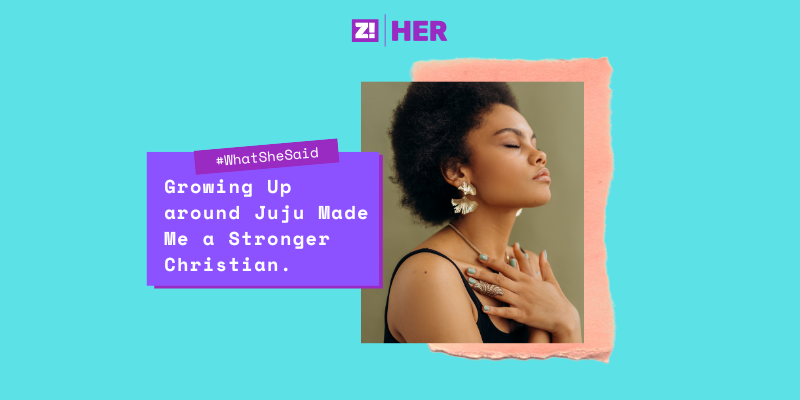
We鈥檙e Catholic, and my family is very prayerful, especially my mum. We’ve seen first-hand what jazz can do. People say they don鈥檛 believe in it, and that鈥檚 fine, but I鈥檝e witnessed it. One thing about growing up in Edo state that shaped me is that even though I have first-hand experience, I鈥檓 not afraid of jazz. How we see it in my family is that people will try, but we believe it won鈥檛 work. It鈥檚 helped my Christian faith become stronger. Understanding that juju exists and people would go to any length made me a better believer.
Do you remember a specific incident with juju?
Yes, I distinctly remember how my dad kept getting the urge to sell the house when I was 11. He talked about it constantly for about three months, which was odd because he had no reason to sell the house. My mum tapped me and told me it wasn鈥檛 ordinary and that we should go and meet God. My family doesn鈥檛 believe in jumping from pastor to pastor; we just open our Bibles and pray indoors. So we prayed and prayed, and one day, we heard that our neighbour was sick and had been for a while. It wasn鈥檛 unusual because she was an older woman in her 70s. One day, my parents decided to visit her just to check on her, and the next thing, people followed them back home and started helping them to cut down a plant.
When I asked my mum, she said the woman was glad they came and that she would鈥檝e come but was too sick to move. She said that she was angry that we bought the land from someone in her family she didn鈥檛 like, so she wanted us to be frustrated and leave it by force.
She asked my dad if he鈥檇 felt the urge to sell the land, and he said yes. She said she was the one who did it but hadn鈥檛 had peace of mind since then. She had broken some sort of code of conduct. If you鈥檙e from a certain place, you can鈥檛 do juju against people from certain villages because your ancestors might have been siblings and all that.
Meanwhile, the bigger the plant grew, the bigger my dad鈥檚 urge to sell the house. When they plucked it out, my father stopped talking about selling. The experience was surreal to me. It didn鈥檛 make sense that a plant was linked to someone鈥檚 mind. I kept saying, 鈥淭his doesn鈥檛 make sense, ” and my mum was laughing at me.
That鈥檚 crazy. Was there ever a time when you realised how you grew up was different?
My father was insistent on us travelling a lot, so we used to travel out of the state and country, but in short bursts, and we never travelled without family. So the first time I left Edo state for an extended time was when I went to Abuja for NYSC in 2016. The things that make you different aren’t apparent until you鈥檙e far from home and by yourself. It wasn鈥檛 until Abuja that I realised I鈥檇 grown up differently.
The first culture shock was that my voice was very loud. People used to tell me I was shouting whenever I spoke. On the other hand, I used to wonder why people were whispering instead of speaking out or why they cowered when trying to make points. It was different from the way we communicated back home.
In Edo, people are confident; they speak their minds without fear. Conversations were always about being confident and knowing that the other person is secure in themselves. There鈥檚 always room for debate, storytelling and general expression. People could disagree with you without being seen as malicious. In fact, cowering while speaking was seen as a reason to distrust you because why are you avoiding eye contact? Why are you shaking? Are you lying? Are you spineless?
What else did you notice?
Another thing that was odd to me was that people were very judgmental. Not that we don鈥檛 gossip where I鈥檓 from, but for instance, if a girl got pregnant, people would talk and stuff, but there was always a helping hand.
And a lot of people were barely close to their extended families. They cut family members off easily. It was fascinating to me because people behave like they don鈥檛 know what a mistake looks like. Even if you don鈥檛 agree with people, you don鈥檛 cut them off completely. I don鈥檛 have to agree with you to love you. I don鈥檛 believe in cutting people off.聽
If you鈥檇 like to be my next subject on #WhatSheSaid, click to tell me why
So you never cut people off?
Not immediately. There are people who鈥檝e done crazy things to me, but I have my way of dealing with it. I give them space, but they鈥檇 never doubt my love for them.
I had a friend who had a whole relationship with my man. I only found out because she got tired of him and threw him under the bus. It was jarring for me because I鈥檓 so happy-go-lucky. I talk everything out; it鈥檚 another thing I learnt from home. So I called her, and we talked it out.
I asked questions, and her answers made me realise that I didn鈥檛 want that kind of person close to me at that time in my life. So I kept a distance for three years.
One day, she called me, and we spoke at length. I could see that she had grown, and so had I. That’s the caveat for me; once I can see you鈥檝e changed and evolved, I鈥檓 open to renegotiating the terms of our relationship. We鈥檙e not best friends like we used to be years ago, but we鈥檙e still way more than acquaintances.
The only people I don鈥檛 talk to anymore are people who promise change and don鈥檛 change. The way my brain works, it doesn鈥檛 remember the person until someone mentions them. But if I see they鈥檙e evolving, and doing the hard work, I give them space and then renegotiate the terms of my relationship with them when they鈥檙e in a better place.
That鈥檚 fair. Your upbringing is a factor in that, for sure.
Yes. I grew up being able to separate people from the actions they take. I know it鈥檚 flawed, but it鈥檚 my way. We are a sum of our actions, and we should be held accountable for them. That said, I find it useful to know what the motivation for the action was. So that as you鈥檙e facing punishment, you know you are not alone, and there is room for redemption if you decide to evolve. People are not just one way, and life is not black and white.
For example, I had a relative living in our house, who was really mean. When we were strapped for cash, and she had money, she鈥檇 lock herself in her room to eat. One day I asked why, and she told me all the horrible things that had happened to her. How different men got her pregnant and left her, and how even the kids don’t talk to her anymore because they believe she intentionally kept them from their fathers. I had more empathy for her after hearing her story and realised that she was mean because she was lonely.
I鈥檝e learnt to separate people from their actions, especially their mistakes. The concept of people being multi-dimensional was very evident in the type of people I grew up around. I know people who are cultists and still the sweetest, kindest, people who鈥檇 always answer my questions when I was younger. They deserve to go to jail for their crimes, but they don鈥檛 deserve for their humanity to be stripped off them.
While growing up, I saw people make mistakes over and over again, and still reinvent themselves. I don鈥檛 discard people based on mistakes. And that鈥檚 who I am.聽
For more stories like this, check out our #WhatSheSaid and for more women-like content, click here
Fair enough. Do you think your environment influences your work too?
For sure. I grew up in a small town, and apart from travel 鈥� which my father insisted on 鈥� the only other conduit between me and the world was the media. I was also always inquisitive and sought clarity all the time.
The most interesting thing, though, was that I saw firsthand how hard it was for my community to get the infrastructure it needed because of broken systems. So, I began to challenge those systems and did a mini-speaking tour, and eventually, I started some community reporting and decided to pursue it. Everyone assumed I鈥檇 study law because of this, but it never felt like a fit for me. My choice to pursue development journalism came from realising that communities need people who understand the intricacies of their layered lives to report them.
There鈥檚 context behind every behavioural pattern, and there is work that needs to be done to put young people in communities on the right path, and the media is the perfect tool for this.
Agreed. Any final words?
Stop stereotyping Edo babes. Just stop it, abeg. Someone hears you are from Edo and thinks the most, but there are different personalities within tribes.
Also, I find it fascinating that when people hear 鈥淚 grew up in a small town鈥�, they imagine Africa Magic Epic, when in reality, my town looked loads better than the places most people live in within big cities.
My siblings and I were always disappointed when we visited a Nigerian city, and it had so many slums. In Irrua, we didn鈥檛 see slums. I think people even build their best houses in small towns and villages, but what do I know?聽
Also read: I Couldn鈥檛 Bond With My Mum Because of My ADHD

Find out more here.