Bola Ahmed Tinubu was sworn in as President of Nigeria on May 29, 2023. Since then, the country has experienced significant economic shifts, including the removal of and naira devaluation, which have directly impacted the cost of everyday items.
We compared prices from April 2023 (the last full month before Tinubu took office) with current 2026 prices to highlight the increase in the cost of some basic commodities. Official averages are from the National Bureau of Statistics (NBS), where available, current retail or online market listings, and reports from major news outlets.

1. Petrol
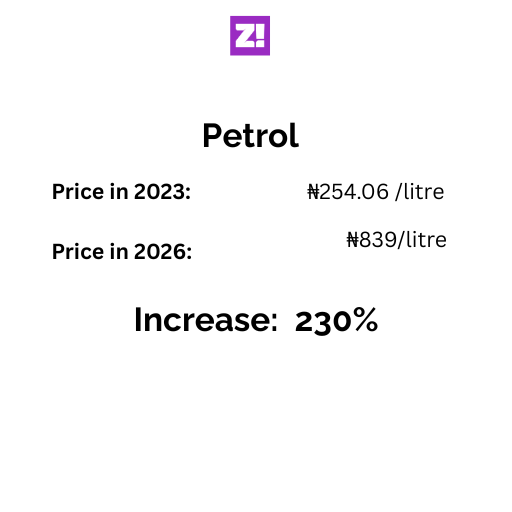
Price in 2023: /litre
Price in 2026: /litre
The 鈧�254 per litre Nigerians paid in April 2023 has jumped to 鈧�839 at petrol stations, marking a 230% increase. This spike began immediately after President Tinubu announced the subsidy removal and has compounded over the years. The increase rise across the board.
2. Cooking Gas (12.5 KG)
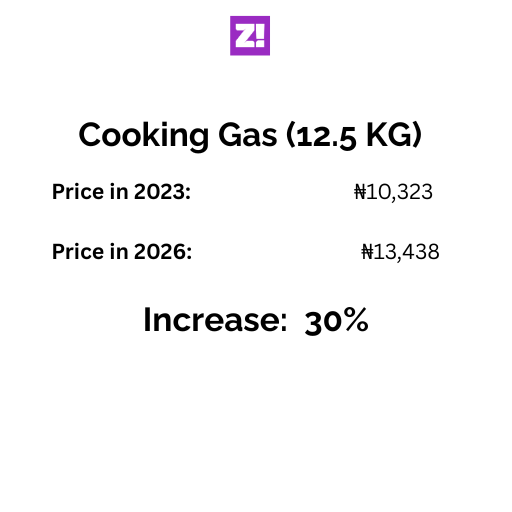
Price in 2023: Price in 2026:
A 12.5kg cylinder of cooking gas now costs about聽 30% more than it did in 2023. While prices to 鈧�13,438 as of December 2025.聽
3. Diesel
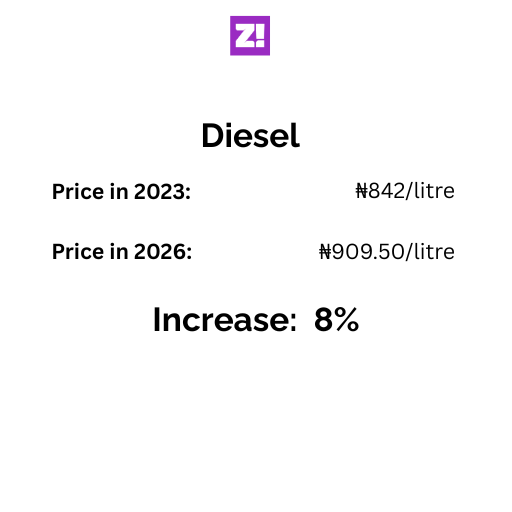
Price in 2023:/litre
Price in 2026: .50/litre
Diesel has seen relatively modest price movement, rising 鈧�842 in April 2023, to approximately 鈧�909.50 鈥� an 8% increase. It is one of the more stable items on this list.
4. Vegetable/groundnut oil (1L)
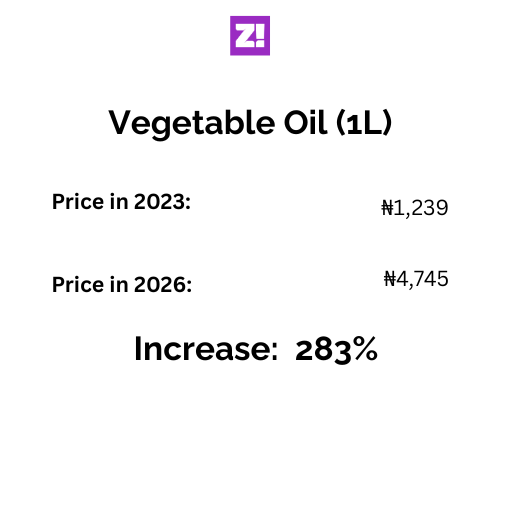
Price in 2023: Price in 2026: 鈧�4
Cooking oil has also seen one of the sharpest increases. A litre that cost 鈧�1,239.58 in April 2023 now sells for 鈧�4,745.
5. Rice (50 kg)
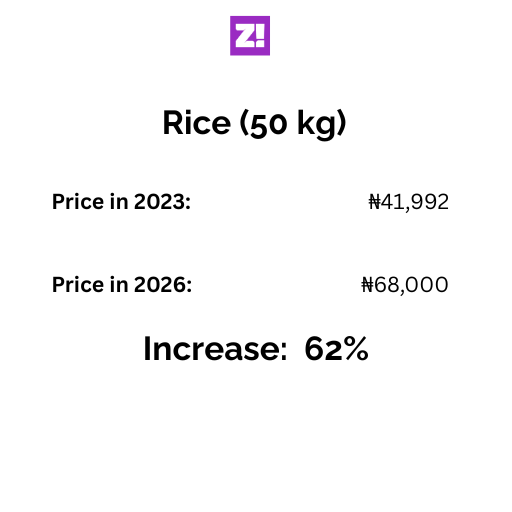
Price in 2023: Price in 2026: ,000
Rice prices have increased by 62%, but with notable volatility. The current 鈧�68,000 for a 50kg bag is down from February 2025, when prices ranged from 鈧�95,000 to 鈧�106,000. This fluctuation reflects both production challenges and government interventions in stabilising the staple grain market.
6. Beans 1 kg
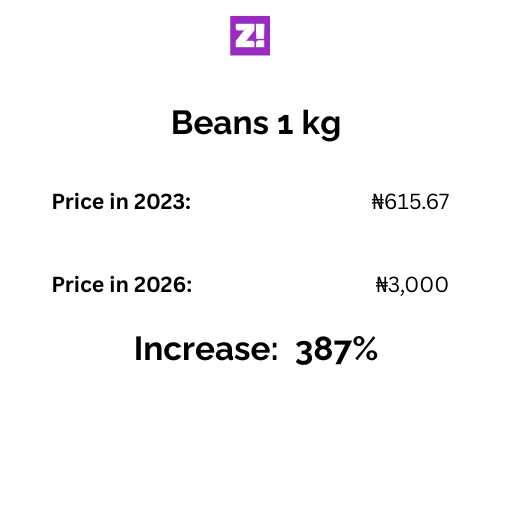
Price in 2023: Price in 2026:
Beans have recorded one of the most dramatic price jumps, rising from 鈧�615.67 to 鈧�3,000 per kilogram 鈥� a 387% increase. As a primary protein source for many low and middle-income households, this surge has
7. Gaari (1 kg)
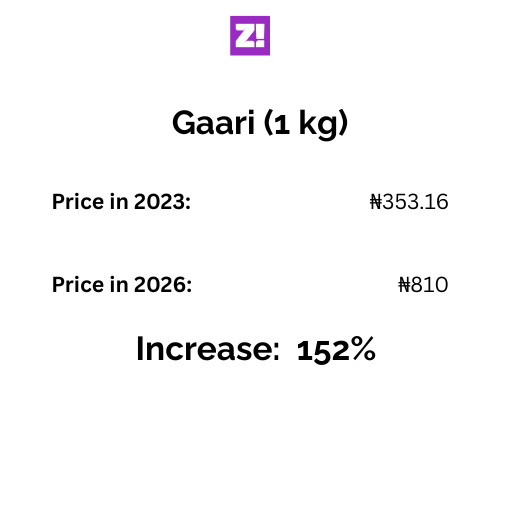
Price in 2023: 6
Price in 2026: 鈧�
Garri, a cassava-based staple, has more than doubled in price. The increase from 鈧�320.98 to 鈧�810 per kilogram reflects higher costs across the cassava value chain, from cultivating to processing to distribution. As one of Nigeria’s most affordable staples, this 152% increase affects a particularly large segment of the population.
8. Beef Boneless (1 KG)
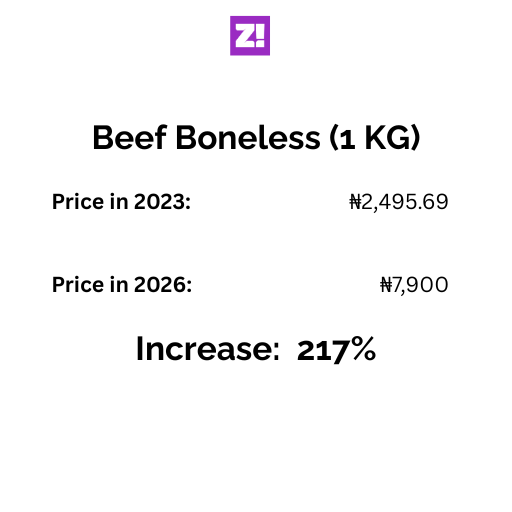
Price in 2023:Price in 2026:
The cost of beef has increased by 217%, moving from 鈧�2,495.69 to 鈧�7,900 per kilogram. The rise is attributed to insecurity in cattle-rearing regions, the high cost of animal feed, and higher transportation costs. This has made meat a less frequent purchase for many households.
9. Sachet Water (Per Bag)
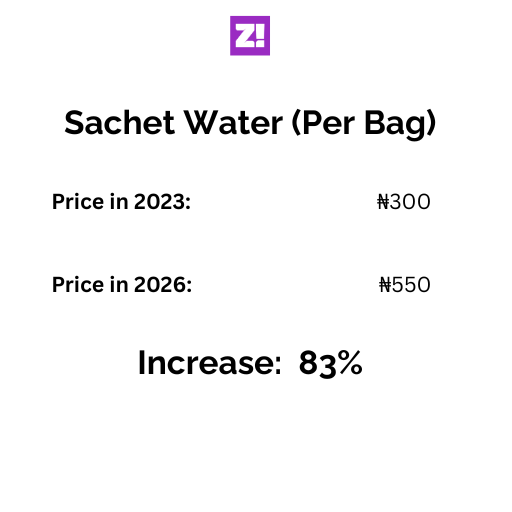
Price in 2023: 鈧rice in 2026: per bag
鈥淧ure water鈥� bags have risen from 鈧�300 to 鈧�550 鈥� an 83% increase. While smaller in absolute naira terms when compared to other staples like beans, rice, and cooking oil, this affects daily consumption for millions of Nigerians. The increase reflects higher packaging, distribution, and general production expenses.
10. Sardines
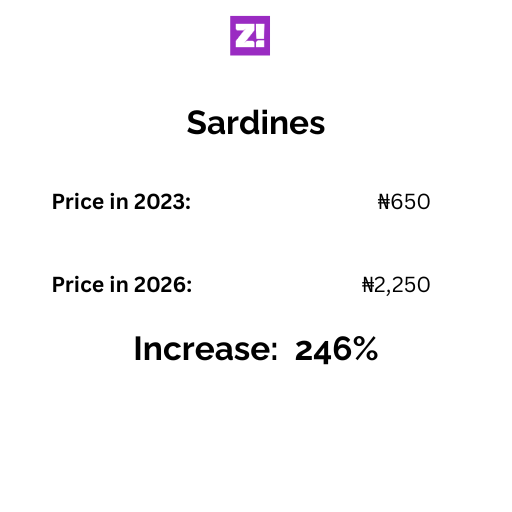
Price in 2023: 鈧�650 naira
Price in 2026: 鈧�2,250 naira
Canned sardines have recorded high price increases, jumping from 鈧�650 to 鈧�2,250 per tin, representing a 246% increase.
Bottom Line
In under three years, basic commodity prices have increased anywhere from 8% to 387%. While diesel and some items, such as rice, have shown occasional price corrections, the overall trend is sharply upward. The data reflects the combined impact of subsidy removal, currency devaluation, and broader economic pressures on household purchasing power.