Ramadan is a deeply personal journey, but experiencing it with a partner adds a new layer to the experience. For some, the early years of fasting together were filled with the excitement and struggle of waking up late for sahur, arguing over who should cook iftar, or figuring out how to balance religious devotion with relationship expectations. Years later, things have either settled into a comfortable routine or changed in ways they never expected.
We spoke to five married Muslims at different stages of marriage 鈥� newlyweds, young parents, and those who have spent years together 鈥� about how Ramadan as a couple has evolved for them over the years.
“We鈥檙e figuring out what works for us”
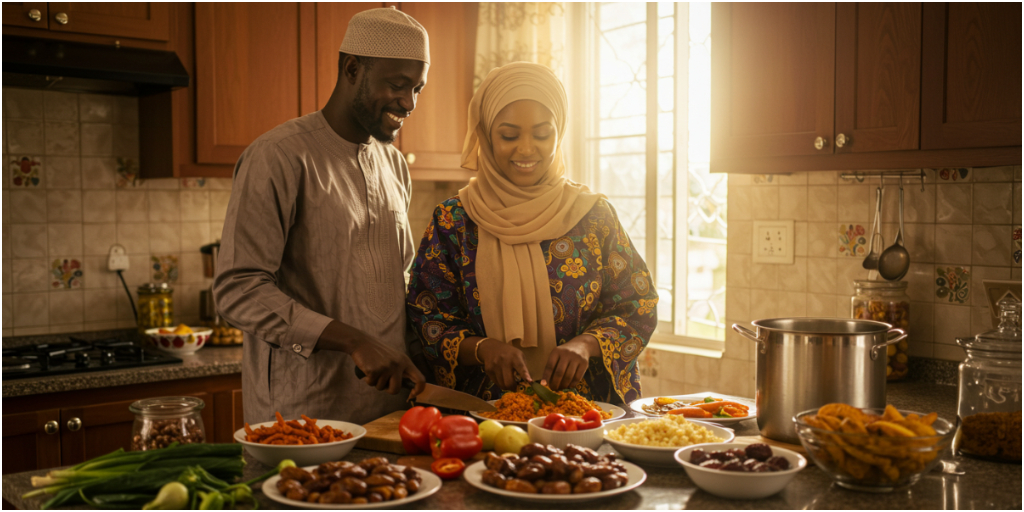
The first Ramadan as a married couple is often a reality check. Before now, *Nasir (30) and *Barakat (27), spent Ramadan with their families, where everything 鈥� from meal prep to wake-up calls 鈥� was taken care of. But now, it’s just the two of them, and nothing is going as planned.
“We thought it would be romantic waking up together for sahur, cooking iftar side by side, having deep spiritual bonding moments. But in reality? We’ve missed sahur twice already, and half the time, we just order food for iftar.”
Between work stress and adjusting to a new routine, they鈥檙e struggling to keep up. But even in the messiness, they鈥檝e found small wins, like meal prepping on weekends to make things easier.
“I grew up watching my mum do everything during Ramadan,” Nasir adds. “But now, my wife and I are learning to share responsibilities. It鈥檚 our first, so we鈥檙e cutting ourselves some slack.鈥�
ALSO READ: How to Make Time Faster During Ramadan
“We used to struggle, now we鈥檙e each other鈥檚 rock”
Long-distance during Ramadan can be lonely, but for *Fatima (33) and her husband, it also built the foundation of their relationship.
“Our first Ramadan together wasn鈥檛 really together. I was still in school, and he was working in another city. We tried virtual iftars, but the bad internet didn鈥檛 always let us be great. The loneliness used to hit hard because Ramadan is such a communal experience,鈥� Fatima recalls.
Now, five years in, things are different. They share their fast-breaking moments in the same space, wake each other up for sahur, and even plan their sadaqah together.
“Long-distance taught us not to take our time together for granted. Even if we鈥檙e too tired to talk much, just knowing we鈥檙e here for each other makes all the difference.鈥�
“It鈥檚 the absolute trenches with kids”
Having kids changes everything, and for *Amina (41) and her husband, Ramadan is no exception.
“Before kids, Ramadan was our time. We鈥檇 cook together, have long talks after iftar, and even go for taraweeh together for most of the 30 days. Every Sunday was also for one Ramadan lecture or the other. It was really peaceful back then. Romantic, even.”
Now? Their Ramadan looks completely different.
“With two kids under six, it鈥檚 all about survival. The MVP is whoever wakes up first to sort sahur while the other steals a few extra minutes of sleep. Sometimes, we鈥檙e too exhausted to even eat properly. If one of us makes it to the mosque for taraweeh, it鈥檚 a miracle.”
Despite the exhaustion, there鈥檚 an unspoken teamwork between them. Ramadan may not be romantic anymore, but the love is still there, just expressed through moments of rest and shared responsibilities.
鈥淪ome nights, we barely get to pray together. But we remind ourselves that this is a phase. In a few years, the kids will be part of our Ramadan traditions too, insha Allah.鈥�
“We鈥檝e found a rhythm, but we鈥檝e also changed”
At the start of their marriage in 2013, *Kareem (49) and *Toyin (36) had an unspoken rule: Ramadan meant doing everything together.
“We tried to wake up at the same time, break our fasts at the same time, pray every prayer together. It was sweet and exhausting but we didn鈥檛 feel it so much because of ground rule of togetherness, 鈥淜areem鈥� shares.
Over time, they realised that faith is a personal journey for each individual.
“I was in a really bad place spiritually some years ago and wasn鈥檛 praying. My iman was weak, and my wife would get worried and sometimes involve other family members especially during Ramadan. It caused a lot of rift because I felt I was being forced against my will, but alhamdullilahi, I found my faith again. However, that period taught us to be more understanding. Now, we give each other space. If one of us is extra tired and wants to skip sahur, that鈥檚 fine. If one person prefers to pray at home while the other goes to the mosque, it鈥檚 no problem. Ramadan isn鈥檛 about performing together, it鈥檚 about supporting each other鈥檚 spiritual journey.”
What started as a relationship built on doing everything as a unit has now evolved into one of understanding and balance.
“It鈥檚 more meaningful now. We鈥檙e more intentional about encouraging each other鈥檚 individual faith rather than forcing a routine that doesn鈥檛 always work for both of us.”
“It鈥檚 no longer about the merriment, it鈥檚 about faith”
In their early years, *Rahman (44) and his wife saw Ramadan as an opportunity for extravagant iftars and hosting big gatherings.
“Back then, Ramadan was all about the thrill of good food and hosting our friends and families. We鈥檇 spend hours planning the best meals, trying new recipes, inviting people over. It was fun, but looking back, it was also a bit excessive.”
Now, in their 40s, their focus has shifted.
“We keep it simple. We eat less, we pray more, and we spend more time giving back. We used to be so caught up in the material aspects of the month. Now, we鈥檙e more at peace. We鈥檝e learned that Ramadan isn鈥檛 about how much you do, but how sincerely you do it.”
READ THIS NEXT: 7 Nigerian Muslims on Navigating Loneliness and Temptation During Ramadan